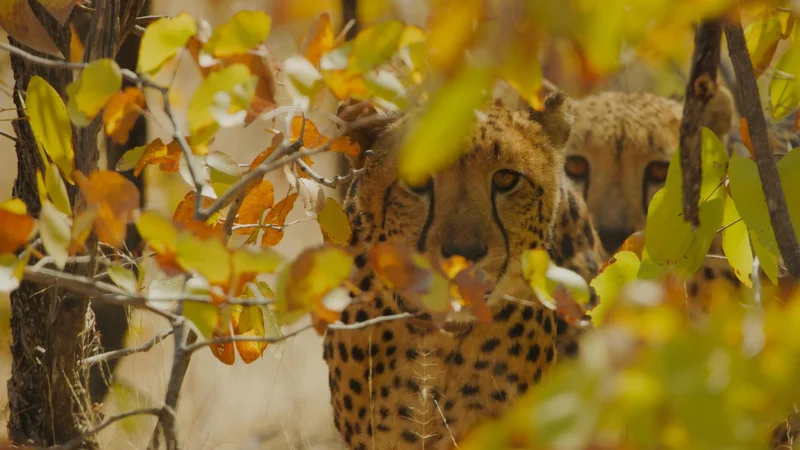
While lions, elephants and rhinos dominate conservation headlines, cheetahs have been quietly disappearing from Africa’s landscapes.
Now, six South African cheetahs have been moved to Zambia in an ambitious bid to restore the species to Zambia’s Greater Luangwa Ecosystem, where it was last recorded in 1998 after disappearing from the landscape more than 30 years ago.
Olivia Sievert, the coordinator of the Endangered Wildlife Trust’s Cheetah Range Expansion Project, said cheetahs were disappearing rapidly across southern Africa, largely because most of the species’ remaining range lay outside protected areas where they increasingly came into conflict with people.
“At the moment, I would say that cheetahs have been facing a really silent crisis,” she said. “While a lot of the focus has been put on the other megafauna like elephants, rhinos and lions, cheetahs have been silently disappearing.”
The International Union for Conservation of Nature estimates there are about 6 500 mature cheetahs remaining globally. The species is listed as vulnerable, with populations estimated to have declined by about 37% over the past 15 years because of habitat loss, human-wildlife conflict, illegal wildlife trade and declining prey populations.
Once widespread across Africa and parts of Asia, cheetahs now occupy only a fraction of their former range. “For a long time, the general public has put it at ‘oh, well, they’re just really elusive,’ but that’s not necessarily the case,” Sievert said. “And we’re seeing massive declines over the last few generations … incredibly concerning declines across their range.”
Southern Africa was once seen as a stronghold for the species, she said. “One of the most concerning things that we see in Southern Africa is that the vast majority of their remaining range is in unprotected land.
“So, they’re constantly at risk of coming into conflict with farmers and just our general infrastructure and that’s where we’re seeing a lot of our decline. If we want to see cheetah numbers be safeguarded or ideally increase, we really need to be increasing populations with large protected landscapes.”
Restoring cheetahs to the seven million hectare Luangwa Valley Ecosystem is a key step towards safeguarding the species as a whole, she said.
The last confirmed sighting of a cheetah in the ecosystem was in 1998, after successive anthrax outbreaks and other pressures are believed to have contributed to the species' disappearance from the landscape.
The founder animals for the restoration project all came from South Africa, whose network of fenced reserves supports one of the world's few growing wild cheetah populations.
Sievert said South Africa’s network of fenced reserves collectively represented “one of the only growing wild cheetah populations remaining globally”, making it one of the few countries able to provide founder animals for international reintroduction projects.
The reintroduction follows more than a decade of planning led by Zambia’s department of national parks and wildlife, with support from several conservation organisations, including the EWT.
In South Africa, many wild cheetahs are managed through a coordinated metapopulation programme established by the EWT in 2012, which allows animals to be moved between fenced reserves to maintain healthy genetics and stable populations.
According to the EWT, the programme has achieved an average annual population growth of 8.8%, creating opportunities to supply animals for strategic reintroductions such as the Zambia project.
The six animals, three males and three females, were sourced from private reserves in South Africa, including Thanda, Manyoni, Nkomazi and Dinokeng game reserves. After a quarantine period near Mbombela, they were flown to North Luangwa National Park in Zambia.
Cheetahs, Sievert said, are probably one of the most difficult large carnivores for this type of restoration project.
Reintroducing cheetahs is particularly challenging because they occur at low densities, roam over vast distances and rely on scent-marking “communication hubs” to establish territories. Without those markers, newly-released animals can wander far beyond protected areas and come into conflict with people.
“Where we’ve reintroduced them to is actually a completely open system, made up of a few national parks and some game management areas and because it’s open, it’s particularly tricky to reintroduce cheetah into.
“This is where this project is so unique because we’ve created this temporary sanctuary to try to restrict those big movements and encourage the development of those scent-marking sites, those communication hubs … We know it’s not going to be easy but if we can gather as much data as possible ... we might be successful.”
Sievert said success would be measured in stages, beginning with the cheetahs safely adapting to their new surroundings, establishing territories and developing the scent-marking sites they rely on for communication.
“Ultimately the success we're looking for isn’t even in the first cubs being born but it’s in the second generation being born ... It’s in females being able to produce females that then produce offspring.”
“That’s really where we’re going to start to say, ‘hey, this project has been successful.’”
The project team plans to introduce at least 18 cheetahs over the first two years of the reintroduction. Another six are expected to arrive later this year to increase the chances of breeding in the vast landscape.