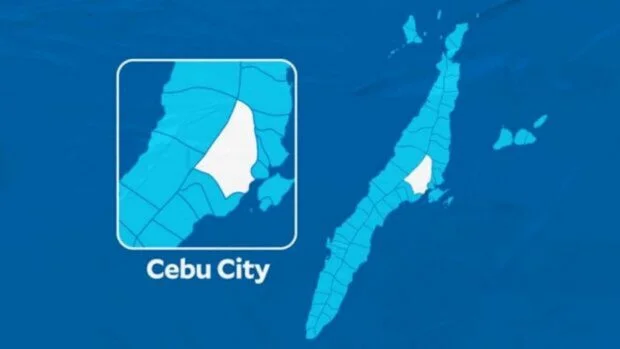
Proposed Taptap eco resort faces probe over protected-area status
CEBU CITY, Philippines — The Cebu City Council will probe the proposed eco resort in Barangay Taptap after the Department of Environment and Natural Resources (DENR) flagged the property as falling within the Central Cebu Protected Landscape (CCPL).
The council on Tuesday approved an executive session on Sept. 8 with the project’s owner, DENR, the City Environment and Natural Resources Office (CENRO), and the Protected Area Management Office to clarify the project’s location, permits, and status within the protected landscape.
The council took up the matter after DENR Region 7 transmitted to the DENR Provincial Environment and Natural Resources Office-Cebu (PENRO) a city council resolution seeking information and appropriate action on the proposed development.
The July 9 memorandum from DENR Region 7 dated April 7, which sought action on the proposed eco resort at Sitio Proper, Barangay Taptap.
Councilor Sisinio Andales, the council’s minority floor leader, raised the matter during Tuesday’s session and asked the body to summon the project proponent and concerned government agencies.
Andales said the council needed to establish exactly where the property sits within Taptap and determine what documents and approvals cover the proposed development.
“We want to know also which portion of Taptap Proper this Peak View is located because it seems we don’t have any papers and documents which portion is this,” Andales said.
Councilor Mikel Rama clarified that DENR-PENRO Cebu had referred the matter to the Protected Area Management Office, whose assessment remained pending.
Rama suggested inviting the office to the executive session so the council could receive an update on the project’s status.
Protected landscape questioned
The proposed eco resort in Taptap also prompted concerns among councilors about development within the CCPL.
Councilor Jun Alcover said development has already expanded significantly across areas covered by the protected landscape, particularly along the upland corridor from Busay toward the Balamban boundary.
“Kun imong tan-awon, grabe na kaayo ang mga development diha sa so-called protected area” (But if you look at it, the developments there are already many in the so-called protected area), Alcover said.
He added, “Dili na gani na matawag og protected area kay dako na kaayo’g mga development” (That can’t even be called a protected area anymore because of the number of developments there).
Alcover supported the proposal to invite DENR and the Protected Area Management Office to explain the situation and specifically address concerns surrounding Matahom Peak.
The CCPL covers portions of the Central Cebu mountain range and carries protections under Republic Act No. 9486, which established the protected landscape.
The council’s discussion, however, did not establish that the Matahom project had violated environmental or protected-area laws. DENR’s referral to the Protected Area Management Office also indicates that the project’s status remained under review.
Cebu Council wants answers from DENR, CCENRO
Andales also questioned how upland development could continue amid the city’s environmental programs, including tree-planting activities.
He criticized government agencies for allegedly allowing vegetation clearing and development in mountain areas while the city continues to invest in tree planting.
“What’s the use of tree planting nato (of ours)? Just to show the public nga (that) we are concerned about our environment?” Andales said.
He then urged the council to call the attention of the DENR and the CENRO and push for tighter controls over upland development, linking watershed degradation to flooding.
Andales moved to hold an executive session and invite the project proponent, DENR and CENRO.
The council approved the motion, setting the executive session for Sept. 8.
Matahom case opens wider upland issue
The Matahom proposal also revived a debate within the council over how Cebu City should regulate development in its upland areas.
Councilor Joel Garganera cautioned against treating Matahom as an isolated case, pointing to his earlier call for a moratorium on upland development.
Garganera first raised the proposal in a privilege speech on Dec. 16, 2025, urging the city to halt new upland developments and review existing projects amid concerns over watershed protection and flooding.
The council later sought an accounting from Mayor Nestor Archival’s administration on what it had done since the mayor backed the proposal.
During Tuesday’s discussion, Garganera said the city should examine upland development as a whole rather than address projects individually.
He also cited a planned inspection of around 65 upland developments, which he said the city would conduct on Aug. 27, with a report expected by the end of August.
Garganera said the inspection should also cover the Matahom project.
“Let us not look at it on a per-project basis. We have to do it holistically because we’re looking here on the watershed area,” he said.
He linked the issue to the city’s continuing flood problems, arguing that downstream flood-control projects cannot fully address flooding without intervention in the uplands.
Disclaimer: The comments uploaded on this site do not necessarily represent or reflect the views of management and owner of Cebudailynews. We reserve the right to exclude comments that we deem to be inconsistent with our editorial standards.