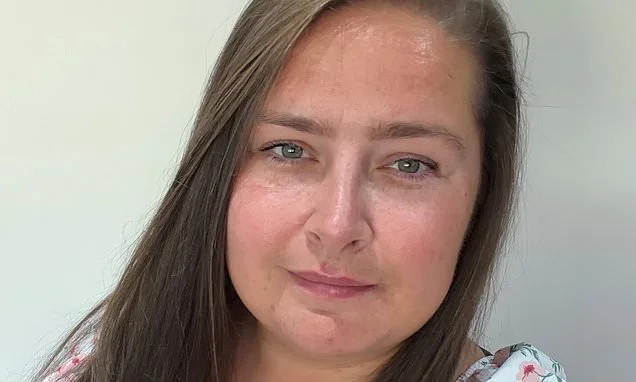
Amy Colby was just 11 years old when painful lumps and boils began appearing on her groin. An active schoolgirl who played football, hockey, netball and rounders, Amy was showering up to three times a day – and yet nothing seemed to help with her embarrassing symptoms.
When she visited the GP, they blamed her weight and hygiene, making her feel that the agonising lesions were somehow her own fault. Rather than being referred to a specialist, she was dismissed and humiliated. ‘I was made to feel dirty’, she says.
And the emotional consequences were profound, triggering acute depression and anxiety, years of shame and increasingly severe pain as she struggled to understand why her body was reacting this way.
She began hiding the condition from others; at secondary school, while other girls changed in the changing rooms, Amy would hide in a toilet cubicle so nobody could see her wounds. And as she got older, that fear followed her into her relationships.
‘I look fine sitting here with my clothes on,’ she says. ‘But I was thinking – if I take my clothes off, are you going to be horrified?’
Since the symptoms started they have progressed to more areas of her body, and increased in severity. When lumps first come up, the skin is hot and tight. She feels ill and sometimes gets a temperature. But boils can turn into abscesses, scarring and even tunnelling in the tissue, and can often have an unpleasant smell and require draining.
Amy’s wounds affect her armpits, breasts, groin and buttocks, and new abscesses can develop overnight. Often she struggles to sit down, has to spend much of her time lying in bed to avoid pressure on painful areas, and the irregularity of her condition has also affected her ability to work, so ‘I can’t have a fixed job because it’s so unpredictable’.
It has a major impact on her everyday life, with pain, difficulty moving, sleep issues, fatigue and the practical burden of changing dressings – the wounds often leak, meaning special clothing and bandages need to be worn constantly. The physical, mental, social and emotional burden is compounded by a significant financial cost, as she goes through large quantities of these products.
Amy Colby, 33, says she suffered from acute depression and anxiety because of the lumps
Scarring on Amy's thigh from the lumps, which can be so painful she has difficulty moving and sitting down
Amy’s physical pain has had a devastating psychological toll. She has experienced suicidal thoughts alongside her depression and anxiety, and has been diagnosed with complex PTSD following a hospital admission in 2023.
After those repeated hospital admissions, she also lost her job in London and plunged into a ‘very, very dark depression‘. She tells me: ‘I don’t know how I’m still here right now, to be honest.’
Amy believes an earlier diagnosis could save many other sufferers from enduring the same ordeal. It took years for her to be diagnosed; she was an adult working in London by the time she got the first breakthrough. Scrolling on the Daily Mail website, she spotted an article about a woman with painful boils. The photographs and story immediately struck a chord. For the first time, she was reading about somebody in the UK who appeared to have the same symptoms – and, crucially, knew what condition she had.
Amy eventually contacted the woman through Instagram. The pair became friends, and her new acquaintance encouraged her to take the information to her GP and ask to be referred to a dermatologist. That was in 2016.
In total, it took 15 years before Amy was finally diagnosed with hidradenitis suppurativa (HS) – a chronic inflammatory skin condition. The relief that came with a diagnosis was palpable. She tells me: ‘I felt a weight lift off my shoulders. I had a reason. I had a condition. It wasn’t actually my fault.’
Eventually Amy began posting about her experience online. And then the messages flooded in. People she had never met told her they had experienced almost exactly the same thing, from the painful lesions to being made to feel like they were to blame. Those stories are painful to hear. ‘It’s sad that other people have gone through it,‘ she says. ‘But at least I feel like I’m not alone.’
Despite spending considerable time in hospital and speaking to doctors, it took Amy years to finally get a diagnosis
Scar tissue, tunelling and abscesses in Amy's armpit. While reading a Daily Mail article, Amy discovered she was not the only one suffering from this condition
Amy giving a talk on HS as she strives to raise awareness of the condition and help anyone else who may be suffering
HS isn’t caused by poor hygiene and is not contagious. Around 700,000 people in the UK have it, but there is no single diagnostic test for the condition, with doctors instead having to look at an individual’s pattern of symptoms and monitor the affected skin.
Moreover, if someone has HS not only are they more susceptible to other conditions, they are at risk of serious secondary infections if not treated correctly.
In 2023 Aleisha Rochester, a 33-year-old mother, died from sepsis after she was given the wrong antibiotics a procedure to remove the abscess from her left armpit. She sought medical help several times for her deteriorating condition, but wasn't given the correct medication to tackle the bacteria causing her infection.
One of her biggest frustrations is that she believes too many patients are left to research their own symptoms.
She now gives presentations to nurses around the UK about living with the condition. At first, she was embarrassed to stand in front of crowds of medical professionals and talk openly about her body, but something unexpected happened. Nurses began to approach her afterwards saying that they had never encountered HS before. ‘I hadn’t realised how important my voice is as a patient,' she says.
That’s become central to Amy’s mission. Now she wants to take HS awareness into secondary schools, particularly as it so commonly begins around puberty. Her hope is that children who develop unexplained, recurring painful lumps can recognise that they have a medical condition, and know that they should ask for help.
She wants to stop another 11-year-old child spending years in pain and confusion, believing she is dirty, feeling betrayed by her own body and hiding painful wounds from her friends.
Amy notes that ‘the more awareness out there, the sooner people will be diagnosed and hopefully be able to live a more fulfilling life’.
If you recognise symptoms described in this article, speak to your GP.