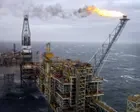
Great Britain risks running out of gas in the 2030s despite its growing clean energy sources, unless ministers take “unprecedented” action to guard against a future gas supply shock, according to an official assessment of the country’s gas security.
The government is considering plans to provide direct financial support to safeguard the country’s ageing gas infrastructure after a consultation found that a “high stress scenario” could mean homes and businesses run out of gas within the next decade.
A range of measures to support Britain’s gas sector is now being considered after most respondents said the industry was not likely to prepare for “low probability, high-impact events,” which could see gas supplies run dry as North Sea supplies continue to deplete.
Three-quarters of respondents agreed with a warning issued last year by the National Energy System Operator that an “emerging risk to gas supply security” could mean that by 2030 homes and businesses would be left without gas during a prolonged period of cold weather.
Michael Shanks, the energy minister, said: “Any form of government intervention or investment in the gas market would be unprecedented and cannot be a decision we take lightly.”
These could include offering financial support to the owners of gas storage facilities and gas pipeline operators, to make it economic to upgrade and maintain them in the decades ahead.
Shanks said the UK would continue to cut the UK’s reliance on fossil fuels by growing its clean energy source. “However, we recognise that this transition will not happen overnight; the gas system will still play an important role in our energy system for decades to come.”
“We have a responsibility to the millions of households that will be heated by gas for years ahead, the industries that rely on it for essential production, and the power system in which gas continues to play a key role,” he added.
The government set out its renewed focus on securing the country’s gas supplies as it prepares to deliver a verdict on the future of two controversial North Sea oil and gas field proposals at the Rosebank and Jackdaw fields.
The prime minister has said he would take a “pragmatic” approach to oil and gas drilling in the North Sea. He told journalists last month: “There is a resource there. When people are struggling, we can’t ignore that.”
The UK relied on gas for more than a third of its energy consumption last year, according to government figures. While the UK’s gas use is expected to plummet by just over three-quarters by 2050 under the guidance of the Committee on Climate Change, its domestic supplies are likely to fall faster.
The government expects the North Sea’s oil and gas production, which has been in decline for 25 years, to fall by about 5% each year, raising concerns over the UK’s future gas security.
The energy system operator’s first official gas supply assessment warned that even as the country turns from gas towards clean energy, there could still be potential supply shortfalls on colder than usual days – particularly if they occur when Europe’s storage levels are low, or in the event of an unexpected outage at a gas import terminal or pipeline.
The UK’s North Sea fields provided almost half of the gas used in UK homes and businesses over the last five years, while Norway provided just over a third. Gas imports from the US and the Middle East via tankers made up a fifth of the UK’s gas while 1% was imported via pipeline from continental European countries.
In a statement, Shanks said: “Gas will continue to play a key role in our energy system as we transition to clean, homegrown energy. We are delivering a gas system that is fit for the future, maintaining secure supplies, ensuring value for money for consumers, and giving the sector the certainty it needs to invest in Britain’s energy.”