Your support helps us to tell the story
From reproductive rights to climate change to Big Tech, The Independent is on the ground when the story is developing. Whether it's investigating the financials of Elon Musk's pro-Trump PAC or producing our latest documentary, 'The A Word', which shines a light on the American women fighting for reproductive rights, we know how important it is to parse out the facts from the messaging.
At such a critical moment in US history, we need reporters on the ground. Your donation allows us to keep sending journalists to speak to both sides of the story.
The Independent is trusted by Americans across the entire political spectrum. And unlike many other quality news outlets, we choose not to lock Americans out of our reporting and analysis with paywalls. We believe quality journalism should be available to everyone, paid for by those who can afford it.
Your support makes all the difference.
Read more
More than just a ring of dough, the humble bagel tells a profound story of migration, resilience, and cultural integration in America. From its origins in Eastern European Jewish communities, it arrived on American shores, a culinary emblem carried by those fleeing poverty and antisemitism, quickly becoming a staple from New York street carts to breakfast tables nationwide.
The first bite offers a unique sensory delight: a satisfying crunch that gives way to a soft, yet dense, interior. This interplay of textures, combined with a chosen topping, delivers a simple joy that has captivated countless palates.
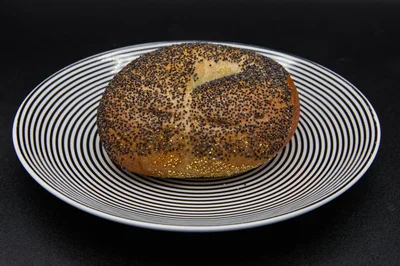
Whether it’s a classic ‘schmear’ of cream cheese, a more adventurous flavoured spread, or an elaborate stack piled high with fish, tomato, cucumber, and red onions, the bagel offers endless customisation. The flavour choices themselves are vast, from the understated plain or egg bagel to those adorned with poppy or sesame seeds, shards of onion, or a sprinkle of salt. For many, however, only an ‘everything’ bagel, with its diverse cascade of flavours in every bite, truly suffices.
Whether it’s a classic ‘schmear’ of cream cheese, a more adventurous flavoured spread, or an elaborate stack piled high with fish, tomato, cucumber, and red onions, the bagel offers endless customisation (Getty Images)
Its journey began in Jewish communities in Poland, brought to the United States by Eastern European Jews seeking refuge from escalating antisemitism in the late 19th and early 20th centuries. A poignant example is Harry Lender, who, after arriving from Poland, toiled in a New Jersey bakery to save enough to bring his family over. His sons later expanded the family's enterprise from their New Haven, Connecticut, bakery, introducing frozen bagels to supermarkets across the country.
The bagel thus stands as another testament to the success of immigrants in America. The bakeries and shops that now sell them are often run by descendants of those original immigrants, alongside new groups who have also sought a better life. Yet, regardless of its widespread appeal, the bagel retains a particularly special place within American Jewish culture.
It features prominently in many significant moments within the Jewish ‘circle of life’ in America. From the celebration following a baby boy's ritual circumcision to the joyous conclusion of a Bar Mitzvah, bagels are often stacked high, serving as both sustenance and symbol. Even in times of grief, such as during a Shiva house mourning, the offering of bagels provides a familiar comfort.
In these varied contexts, the bagel consistently offers solace and connection, just as it has for generations of American Jews, immigrants, and indeed, anyone seeking their own place at the table.