Ryan Reynolds has become one of Hollywood’s most reliable movie stars. After spending years bouncing between raunchy comedies, rom-coms, horror, and supporting action roles, Reynolds finally found the perfect showcase for his particular brand of sarcastic charm with Deadpool. Since then, he’s brought that same quick-witted energy to movies like Free Guy and The Adam Project, even lending a little sass to Pokémon as the voice of Pikachu in Detective Pikachu. More recently, Deadpool & Wolverine became another massive hit, proving that a Reynolds-led superhero comedy still has plenty of box-office muscle. Of course, not every superhero movie Reynolds has touched turned to gold. Five years before Deadpool gave him the role that would define his career, he starred in a very different comic-book adaptation that became one of Hollywood’s most infamous superhero flops.
Released in 2011, Green Lantern was supposed to turn Reynolds into the face of a major DC franchise. Instead, the $200 million sci-fi blockbuster was savaged by critics, disappointed at the box office, and quickly became a punchline that Reynolds himself has spent years making fun of.
Now, 15 years later, audiences are apparently giving it another shot. Green Lantern is currently the No. 1 movie on HBO Max in the United Kingdom, according to FlixPatrol, giving one of the biggest misfires of Reynolds’ career an unexpected second life on streaming.
What is Green Lantern about?
Green Lantern stars Reynolds as Hal Jordan, a cocky test pilot whose life changes when a dying alien chooses him to inherit a powerful green ring. The weapon makes Hal the first human member of the Green Lantern Corps, an intergalactic police force whose members use willpower to create almost anything they can imagine.
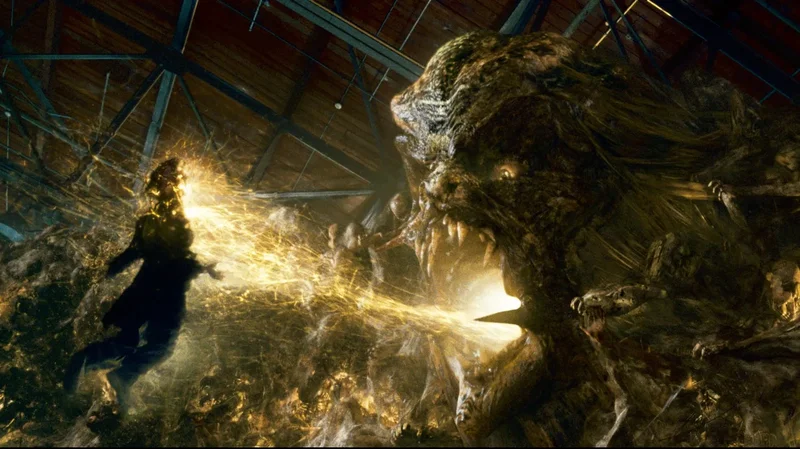
Hal is initially reluctant to embrace the responsibility that comes with the ring, but he’s forced into action when the fear-powered cosmic entity Parallax threatens Earth. Along the way, he also clashes with scientist Hector Hammond, played by Peter Sarsgaard, who develops dangerous powers of his own.
The supporting cast includes Blake Lively as Hal’s fellow pilot and love interest Carol Ferris, Mark Strong as veteran Green Lantern Sinestro, Angela Bassett as Amanda Waller, and Tim Robbins as Senator Robert Hammond.
Despite its huge budget and franchise ambitions, Green Lantern never connected with audiences. The movie was widely criticized for its thin story, uneven tone, and heavy reliance on CGI, particularly Hal’s fully digital superhero suit. It currently holds a 25% critics score on Rotten Tomatoes, while its roughly $220 million worldwide box office haul wasn’t nearly enough to justify a reported $200 million production budget.
Reynolds has been especially candid about the movie in the years since, repeatedly poking fun at it and acknowledging that the project never really had a strong creative identity.
Boosted by a new TV show
The timing of Green Lantern’s sudden streaming success isn’t a coincidence. HBO’s Lanterns premiered in the U.S. just before arriving on HBO Max in the U.K. on Aug. 17, putting the Green Lantern mythology back in the spotlight just as Reynolds’ movie climbed to the top of the service.
The new series stars Kyle Chandler as veteran Green Lantern Hal Jordan, the same character Reynolds played in the 2011 movie, alongside Aaron Pierre as John Stewart. Rather than another traditional superhero origin story, Lanterns takes a more grounded detective-drama approach, following the two intergalactic cops as they investigate a murder in the American heartland that has much larger cosmic implications.
In Polygon’s review of Lanterns, the series was praised as an “exceptional” superhero detective drama that successfully blends Green Lantern’s cosmic mythology with the grounded tension of shows like True Detective.
There’s no direct connection between the two adaptations, but Lanterns gives curious viewers an obvious reason to revisit DC’s last major live-action take on Hal Jordan. And with both projects available through HBO Max, it’s not difficult to imagine viewers finishing the new show’s premiere and deciding to see — or perhaps reassess — Reynolds’ famously troubled version of the character.