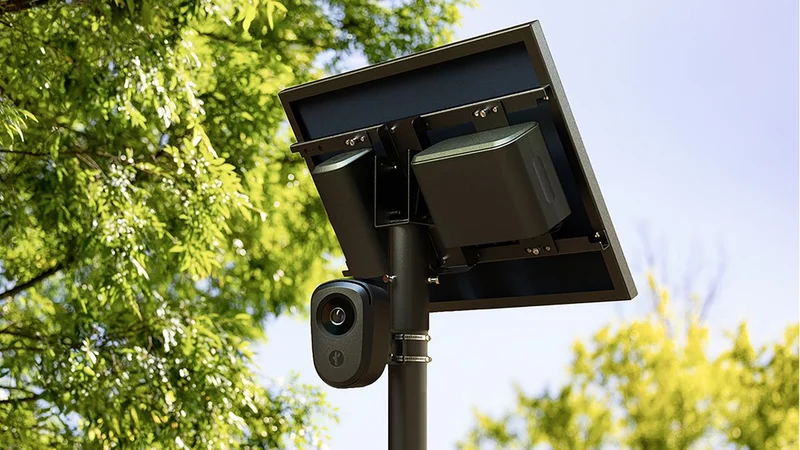
- The Flock backlash is growing, and city officials have started covering ALPR cameras with trash bags
- Some cameras are even being smashed up
- A handful of Flock cameras have been spotted inside speed signs out of sight from drivers
The recent backlash to security company Flock highlights severe privacy concerns with its Automated License Plate Recognition (ALPR) systems — and local authorities are taking matters into their own hands.
In an article by 404media, city officials of Verona, Wisconsin have been protesting Flock’s ubiquitous surveillance cameras by covering them with black bags. The move follows a council vote to remove three cameras from the area, which Flock refused to take down according to recently exchanged emails.
“We kind of looked at the contract, talked it over amongst staff, and the thing we felt most comfortable with was just covering them so they could stop spying on people … I’m 100% certain that they were still working," said Luke Diaz, Mayor of Verona.
But for some residents, covering Flock’s ALPR systems with trash bags simply isn’t enough to give them peace of mind — some are going the extra mile by smashing Flock’s surveillance cameras, according to an article shared to Reddit.
Just yesterday (July 22), Flock decided to abandon its plans to roll out its ‘human distress detection’ feature beyond the trial period. This tool used Flock’s urban acoustic microphones to detect sounds such as human screaming, and would then alert local police allowing them to reach the incident quickly.
Though these detectors are still in place, they can no longer pick up on human activity, and instead listen out for sounds such as gun shots or vehicle crashes. For those who have actively campaigned against this, it’s a huge win, but the microphones that remain in place are still sparking widespread concern regarding civil privacy, even though Flock says these systems cannot understand or analyze speech.
The People vs Flock
Since Flock’s ALPR systems became a means of public surveillance, the tech firm has been met with waves of backlash to the extent where the American Civil Liberties Union (ACLU) has launched campaigns against these types of systems — claiming Flock is “quietly trying to build a nationwide mass surveillance system”.
Sign up for breaking news, reviews, opinion, top tech deals, and more.
Public concern has become so heated, some local authorities are pumping the breaks on introducing Flock cameras to certain areas. The LAPD is one of the most recent police departments that has acted on this, making the decision not to renew its contract with the tech company.
However, there are countless cities across the US that still have these systems in place and not only is the number increasing, the tech is getting smarter. ALPR systems don’t just capture your license plate, they are designed to identify your vehicle’s make and model, as well as its color and things such as bumps, scratches, and accessories like bumper stickers.
As a result of the rapidly advancing technology, drivers have been seeking ways to avoid areas where these systems are in place — the website DeFlock allows you to plan routes that actively avoid Flock’s cameras. Naturally, some local authorities are camouflaging its Flock ALPR systems to prevent vandalism.
In a video shared to X by @OrwellDay (see above), the user captured footage of what looks like a regular speed-display sign, but uncovered a hidden Flock camera placed around the back. “Someone did some custom metal fabricating,” they say.
Quite a sneaky tactic, right? It doesn’t end there, and according to the replies on Reddit, these systems aren’t just being concealed inside speed signs. One user claims that ALPR systems are being hidden in fake cacti in some parts of Arizona, making it more difficult for tools like DeFlock to list the locations of cameras.
It's becoming increasingly difficult to avoid the watchful eye of Flock's ALPR cameras, but it seems that residents will stop at nothing to find ways to combat the rise of these counteractive measures.
Rowan is an Editorial Associate and Apprentice Writer for TechRadar. A recent addition to the news team, he is involved in generating stories for topics that spread across TechRadar's categories. His interests in audio tech and knowledge in entertainment culture help bring the latest updates in tech news to our readers.