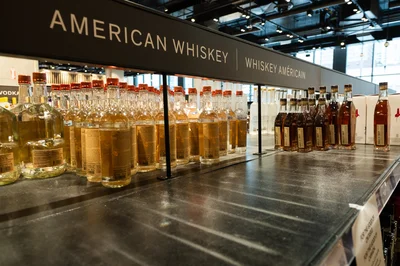

A half-empty shelf of American whiskey is pictured at a LCBO in Toronto on March 4, 2025.Laura Proctor/The Canadian Press
U.S. President Donald Trump has imposed new 50-per-cent tariffs on a range of Canadian goods in an escalation of the trade war against Canada.
He signed three proclamations on Monday invoking Section 338 of the Depression-era Tariff Act, which has never previously been used, to issue levies on Canada in retaliation for the country curbing imports of U.S. autos, alcohol and dairy.
The tariffs take effect on Aug. 19 and will not include an exemption for goods trading under the U.S.-Mexico-Canada Agreement, broadening the economic damage.
Here’s a breakdown of which products are affected and why.
What are Trump’s new tariffs on Canada?
There are more than 500 product categories that will be targeted by the new tariffs. The tariffs cover items directly related to trade irritants, such as provincial boycotts of American alcohol and Canada’s supply-managed dairy system, as well as other seemingly random products.
Canadian alcohol
One of Mr. Trump’s orders hits back by tariffing Canadian beer, wine, cider, whisky, vodka and numerous other alcoholic products, including prune wine and sake. Imported cocktail ingredients, such as bitters, will also be subject to the levy.
Here’s the full list of targeted products.
Canadian dairy
Another order targets milk, cream, whey, lactose and molasses in response to Canada’s supply management system, which limits dairy imports from the U.S. and other countries.
Here’s the full list of targeted products.
Canadian household goods and other items
The U.S. will not further increase auto tariffs on Canada, but will instead hit a list of other imports. These include honey, down for stuffing pillows, bedsheets, horsehair, flowers, chandeliers, fake beards and “mosses and lichens.”
The President’s new levies will also hit a grab bag of hundreds of other goods, ranging from hockey sticks to Christmas ornaments to cement to electronic equipment, such as video game consoles, projectors and cameras. They will also target items such as clothing and wigs, plywood, furniture, swimming pools, essential oils, perfumes, candles, dog leashes, office and school supplies, seeds, fishing rods and antiques, among other things.
U.S. Trade Representative Jamieson Greer’s office said the tariffs would apply to nearly US$20-billion worth of Canadian goods, roughly five per cent of the country’s exports to the U.S.
What is exempt from the new U.S. tariffs?
The new tariffs will not apply to Canadian oil, gas, potash, fish or critical minerals, even though oil and gas is the main source of the U.S.’s trade deficit with Canada, which Mr. Trump has said he wants to eliminate.
It will also not apply to other goods already facing separate sector-specific tariffs under Section 232 of the Trade Expansion Act, such as steel, aluminum and autos. For example, the list of products facing 50-per-cent tariffs does not include any motor vehicles or auto parts, despite Canada’s retaliatory tariffs on the industry.
Why is Trump imposing new tariffs on Canada?

Cows are fed at a dairy farm in Granby, Que.Christinne Muschi/The Canadian Press
The new tariffs are in response to three specific trade irritants: provincial bans on U.S. alcohol, Canada’s supply-managed dairy system and quotas on certain U.S. vehicles.
The Trump administration has been particularly offended by most Canadian provinces – except Alberta and Saskatchewan – banning the sale of U.S. alcohol since early 2025. The U.S. order says that Canadian imports of U.S. alcohol dropped by 81 per cent since the boycotts took effect.
Canada’s supply management system, which has been in place for dairy, poultry and eggs since the 1970s, has also been a sore point. The federally mandated policy sets production limits and import controls to restrict supply and stabilize pricing for farmers. It is touted as a way to protect farmers and food sovereignty.
But in the order, the Trump administration complains that Canada allows in more dairy under its Comprehensive Economic and Trade Agreement with the European Union than it does under the USMCA.
Lastly, Canada’s 25-per-cent retaliatory tariff on imports of U.S. motor vehicles – which has been in effect since April, 2025 – is also a source of contention for the U.S., with Washington saying it has caused a 22 per cent drop in American auto exports to Canada.
Mr. Greer on Tuesday suggested that the latest round of tariffs are designed to crank up the pressure on Ottawa in negotiations over the future of the continental trade pact. He also said Mr. Trump wants to move all auto production to the United States.
He accused Canada of failing to make sufficient concessions in talks with the U.S.
“The Canadians have always been willing to engage, if engagement means talking and meeting,” he told CNBC in an interview from the White House.
What is Canada’s response?
Prime Minister Mark Carney said on Tuesday that he and Mr. Trump have agreed to “intensify” talks on a long-delayed deal to reach a new trade pact with the U.S.
“I’ve spoken with the President, we agreed to intensify discussions, we’ll begin that right away,” Mr. Carney told reporters outside the Prime Minister’s Office in Ottawa.
He said he would speak with the premiers who are all meeting in Charlottetown later on Tuesday afternoon. He will join them in PEI for events and meetings on Wednesday and Thursday.
Prime Minister Mark Carney says trade talks will pick up in the coming weeks as the White House readies a new barrage of tariffs.
The Canadian Press
With reports from Adrian Morrow, Nathan VanderKlippe, Mark Rendell and Marieke Walsh.