Coroner criticises psychiatrist over death of patient who accidentally took conflicting medicines
A Whangamatā man, who died after taking conflicting medications, suffered 'serotonin syndrome', which caused his organs to fail.
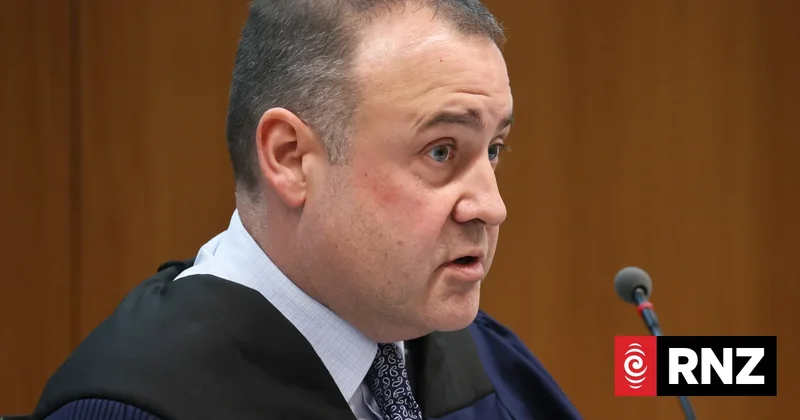
A coroner says better oversight by his psychiatrist could have helped prevent his death.
Blake Williams had been taking tranylcypromine, a powerful and rarely prescribed anti-depressant, for 18 months when he started hallucinating on 9 August 2022.
The 26-year-old was living with his grandparents, who noticed he was "dripping in sweat and really agitated", before rushing him to the Thames Emergency Department that evening.
Less than 24 hours later, Williams was dead.
In a report on his death, coroner Ian Telford concluded Williams, who had depression and anxiety, had taken several unprescribed medications that conflicted with his prescribed anti-depressant tranylcypromine.
Telford said the medicines that contributed to his death were anti-depressant citalopram and stimulant Ritalin, which belonged to his uncle living in the same house, and antihistamine chlorphenamine, which he likely obtained from a pharmacy.
"Blake appears to have lacked a full appreciation of the risks associated with taking these additional drugs in conjunction with the tranylcypromine prescribed by his psychiatrist," Telford wrote.
When he arrived at the Thames ED, Williams was sweating profusely, hallucinating, and moving involuntarily and aggressively, including accidentally kicking the gear selector in his grandparents' car into neutral during their drive to the emergency room.
"By 9.50pm, Blake's condition had deteriorated further, and nursing assessment established that his heart rate had risen to 188 beats per minute, his temperature to 39.5 degrees and his blood pressure had dropped," Telford continued.
Williams stayed at the ED overnight, until he was next assessed at 2am on 10 August.
"By this time, Blake's condition had deteriorated markedly," Telford wrote. "In fact, the incoming doctor said that he was 'horrified' by what confronted him."
He was soon diagnosed with serotonin syndrome, caused by an oversupply of serotonin in the brain and nervous system.
Williams was taken to the Waikato Intensive Care Unit, where he died at about 2pm that day.
Coroner Telford said Williams' use of tranylcypromine should have had more oversight.
"The clinical consensus is that tranylcypromine is a particularly high-risk medication," he wrote.
The psychiatrist, referred to as Dr P in the report, had started Williams on 10mg of tranylcypromine and, over seven months, increased his dosage to 60mg, but MedSafe only recommends dosages of up to 20mg a day.
"Dr P stated that he was not aware of this guidance, but had consulted his clinical community regarding the upper limits for tranylcypromine," Telford wrote.
"However, all other clinicians who contributed to my inquiry noted - often with some concern - that the maintenance dose of 60mg prescribed for Blake significantly exceeded the maximum dose recommended by MedSafe."
While giving evidence at the inquest, Williams' mother, Kim Williams, criticised Dr P's conduct during an after-hours phone call.
"I explained to him that Blake was in the emergency department," she recounted. "I asked him whether or not there was anything he could tell me that I could share with the medical professionals there.
"To say he was unhelpful would be being generous. He actually said to me: 'I'm at home, I don't have his records, they're at the office', and 'you'll have to call in the morning to get that information'."
Dr P claimed not to remember that phone call, which appalled coroner Telford.
"Although he was notably articulate in responding to questions, a central feature of his oral evidence was a repeated inability to recall material matters, including the astonishing assertion that he had no independent recollection of his interactions with Blake," Telford recounted of his evidence. "The absence of any recollection of this particular call is striking.
"On Kim's evidence, this was not a routine administrative exchange. It was an after-hours call from the mother of a patient taking tranylcypromine, during an acute hospital presentation, shortly before that patient's death."
Telford referred Williams' death and his findings to the Medical Council, "particularly as it pertains to the treatment provided by Dr P", he wrote.
"For the avoidance of doubt, I make no determination as to whether those matters raise issues of competence, conduct, health, fitness to practise or any other regulatory response. Those are matters for the Medical Council."
Coroner Telford made several recommendations, including suggesting a public campaign urging people not to take other people's prescribed medicines, and not to keep and take old medicines.