Topline
For the first time, a majority of American adults under 30 say they are more concerned about AI than excited by it, according to a new Pew Research Center survey, which found excitement about AI has declined among all age groups since 2021.
Key Facts
A Pew Research Center survey, which asked American adults their feelings on the increasing use of AI in daily life, found 55% of adults under 30 said they feel more concerned than excited, a sharp uptick from just two years ago, when 39% of adults under 30 said they felt more concerned than excited about AI.
Across all age groups, the survey found a majority of U.S. adults, 52%, feel more concerned than excited about AI, roughly on par with the past several years—but higher than the 38% of respondents who said they were more concerned than excited in 2022.
Excitement about AI has dropped among all age groups since 2021, according to the Pew survey, with the steepest fall-off happening among American adults under 30, among whom only 11% of respondents say they are more excited than concerned about AI—down from 25% five years ago.
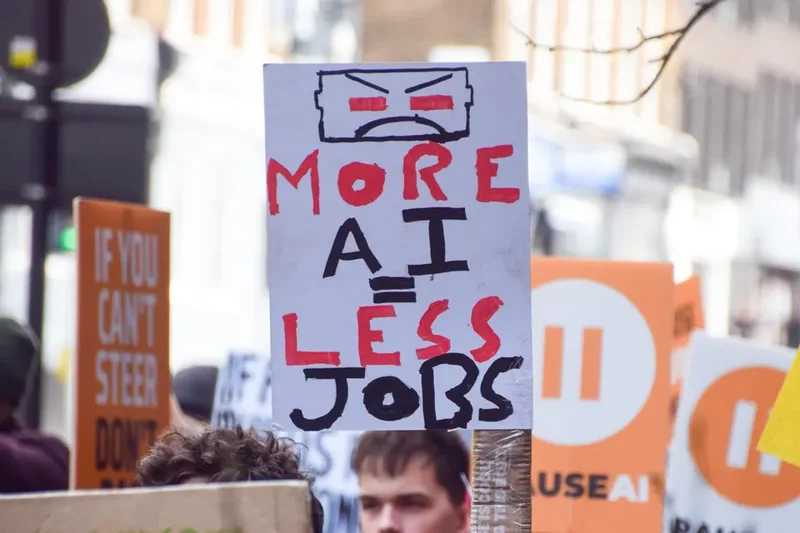
More Americans also believe AI stands to take people’s jobs over the next two decades, according to the Pew survey, which found 71% of people believe AI will lead to fewer job opportunities—up from the 64% of people who said so in 2024.
The belief that AI will lead to fewer jobs particularly spiked among American adults under 30, rising from 61% who said so in 2024 to 73% this year.
tangent
Other Pew surveys have found increasingly negative attitudes about AI among young adults. A survey published in June found 48% of American adults under 30 said they felt the impact of AI on society over the next 20 years will be negative, the most of any age group and much more than the 14% of Americans under 30 who said AI will have a positive impact on society. The survey also found about 20% of adults under 30 believe AI chatbots hurt their creativity, the highest percentage of any age group. A survey published in September found 61% of adults under 30 said AI will worsen people’s abilities to think creatively and 58% of adults under 30 said AI will worsen people’s abilities to form relationships, both of which were the highest percentages of any age group.
contra
Despite various Pew surveys finding negative attitudes about AI among young Americans, adults under 30 are the most likely to use chatbots, a June Pew survey found. That survey found 66% of American adults under 30 said they use chatbots, up 11 percentage points from two years prior. Nearly half, or 49%, of Americans of any age group said they use chatbots, and usage for all age groups has increased since Pew’s 2024 survey. About 20% of adults under 30 said they use chatbots for emotional advice; 27% of adults under 30 said they use chatbots for medical advice; and a much higher percentage, 54% of adults under 30, said they use chatbots for information searches.
surprising fact
A CNBC survey published last week found most Americans aged 18-34 distrust CEOs of AI companies. The survey question, which asked respondents which CEOs they trust to act responsibly on AI, found 81% of respondents distrust Palantir’s Alex Karp, while 79% distrust Peter Thiel, 76% distrust Anthropic’s Dario Amodei, 71% distrust Meta’s Mark Zuckerberg, 70% distrust Elon Musk and 69% distrust OpenAI’s Sam Altman.
further reading
Young Americans Don’t Trust Billionaire AI Leaders, New Poll Finds (Forbes)