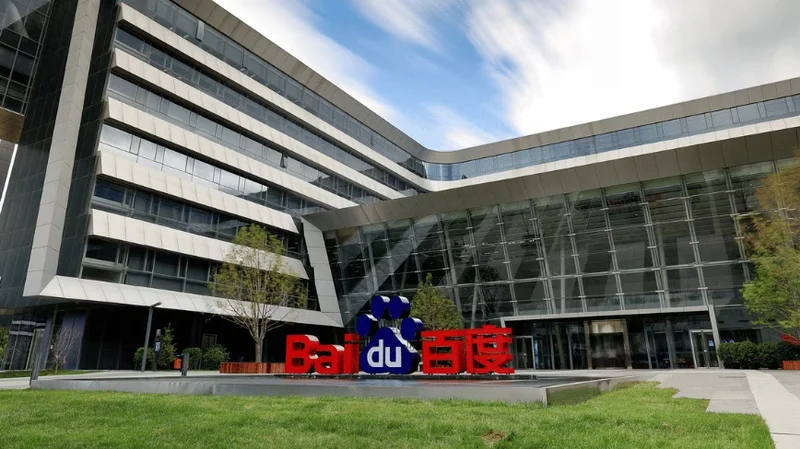
Baidu revenue fell for a fifth straight quarter. The advertising business kept shrinking faster than the AI business could grow. The Chinese search company reported its results on Tuesday, with second-quarter revenue of RMB31.3bn ($4.62bn). That is down 4 percent on a year earlier and 2 percent on the previous quarter.
Net income attributable to Baidu was RMB2.3bn ($342mn). That is down from RMB7.3bn a year earlier, a fall Bloomberg put at 68 percent. The company’s US-listed shares fell after the numbers. They dropped as much as 10 percent to $93.70, according to Bloomberg. Reuters reported a 7 percent slide in early trading.
The revenue figure missed analyst forecasts. The South China Morning Post put the consensus at RMB31.6bn from a Bloomberg poll. Reuters cited an LSEG average of RMB31.96bn. Either way, Baidu came in short.
The two halves of Baidu are pulling apart
The problem is the old business. Online marketing revenue, Baidu’s traditional mainstay, fell 19 percent year on year to RMB13.1bn. Reuters attributed the drop to a weak Chinese property sector and cautious consumer spending. Both have pushed companies to cut marketing budgets.
The AI side is growing fast off a smaller base. Baidu’s Core AI-powered Business brought in RMB12.5bn, up 25 percent. It now accounts for half of the company’s general business revenue. Inside that, AI Cloud Infra rose 50 percent to RMB7.3bn.
The sharpest number is GPU Cloud, the business of renting out AI accelerators. Its revenue rose 283 percent year on year, accelerating from 184 percent growth the quarter before. Clients are rushing to rent computing power. Baidu renamed the line this quarter. It previously called it subscription revenue from AI accelerator infrastructure. The company said the growth reflects mounting demand for public cloud AI computing.
Baidu restructured its reporting late last year to break the AI businesses out on their own, spanning cloud, applications and marketing. That segment passed half of Baidu’s core sales for the first time in the March quarter, Bloomberg noted. It held roughly there this time.
Ernie has fallen behind, and the CEO knows it
Baidu’s Ernie model has gone months without a major upgrade, Reuters reported, while rivals ship newer ones. Bloomberg wrote that Ernie now trails open-weight models such as Moonshot AI’s. Those rivals perform on par with OpenAI and Anthropic on key benchmarks, Bloomberg said.
Chief executive Robin Li made regaining that ground the centre of his message. He told analysts that Baidu would return Ernie to the frontier of AI, Reuters reported. “In a market like this, we believe long-term competitiveness ultimately comes down to sustained technology investment, application-driven approach, and patience,” he said.
Those rivals are the ones the desk has tracked closing the gap. Alibaba’s Qwen model has been closing on Moonshot in size. Moonshot in turn trained its Kimi K3 model on 20,000 Nvidia chips rented through Alibaba’s cloud.
The AI bet is expensive
Winning the AI business costs money up front. Excluding its streaming unit iQIYI, Baidu’s capital expenditure tripled in the quarter, Bloomberg reported. It reached RMB11.4bn, up from RMB3.78bn a year earlier. That spending on chips and data centres is what analysts expect to keep pressuring margins even as AI revenue climbs.
Baidu is not alone in that squeeze. Its rival Tencent this month reported that its AI compute bill outgrew its cash flow, the same pattern of heavy upfront spending on models that have yet to pay their way.
Baidu’s own cash position is still large. It reported RMB283.1bn ($41.72bn) in total cash and investments, and operating cash flow of RMB3.4bn, positive for a fourth straight quarter. It has returned $259mn to shareholders through buybacks since the start of this year, under a programme it set alongside its first dividend in February.
Robotaxis and a Hong Kong listing
Beyond software, Baidu is leaning on autonomous driving. Its Apollo Go robotaxi service has reached 28 cities and logged more than 350mn autonomous kilometres, over 240mn of them fully driverless. It began open-road testing in London with Uber and Lyft, launched driverless commercial rides in Dubai, and won Hong Kong’s first fully driverless testing permits.
That expansion follows a setback at home. A fleet outage in Wuhan in April triggered an industry-wide safety review and a three-month freeze on new robotaxi permits, Bloomberg reported. China has since resumed issuing them. The Apollo Go push abroad builds on approvals such as its Level 4 clearance in Switzerland in June.
On the corporate side, Baidu said its dual-primary listing in Hong Kong should take effect this year, giving mainland investors direct access to its shares. It is also spinning off its chip unit Kunlunxin, which is targeting a Hong Kong listing to tap demand for local alternatives to Nvidia.
Baidu is casting the whole shift as a change of identity. Chief financial officer Haijian He said operating cash flow stayed positive for a fourth consecutive quarter, and that the company remains committed to investing in AI as its core growth driver. The company’s flagship Baidu App still reached 644mn monthly active users in June, the release said, giving it a large base to sell AI features into.
Whether the pivot pays is unproven
Not every analyst is convinced the AI push can carry Baidu. Bloomberg Intelligence’s Robert Lea wrote that the company’s prospects rest on turning money-losing AI businesses profitable, and that he doubts it can, because it lacks the scale to compete with China’s largest platforms.
Three numbers would settle the question over the coming quarters. Whether AI Cloud growth keeps outrunning the advertising decline in absolute terms, not just in percentages. Whether the tripled capital spending starts converting into profit rather than eroding it. And whether an upgraded Ernie can actually close the gap on Moonshot and Alibaba that opened this year. None is answered yet.
Get the TNW newsletter
Get the most important tech news in your inbox each week.