I rarely think about my phone's emergency features, and to be fair, I would want to keep it that way.
Still, in case something goes wrong, I want to know what my phone can do without searching and fiddling through settings.
Android offers plenty of useful safety tools, including Emergency SOS, medical information, crisis alerts, and location sharing.
While some of these Android emergency features can be helpful while traveling, the complete package still depends on which phone I buy. Plus, you can't choose one emergency feature over the other.
Google gives me the Personal Safety app on the Pixel, but Samsung organizes similar features through its own platform, which is confusing.
I'm all for novel and exclusive features, but with emergency protection, all phones should feel similar.
Android already has the right foundation
The basics already cross brands
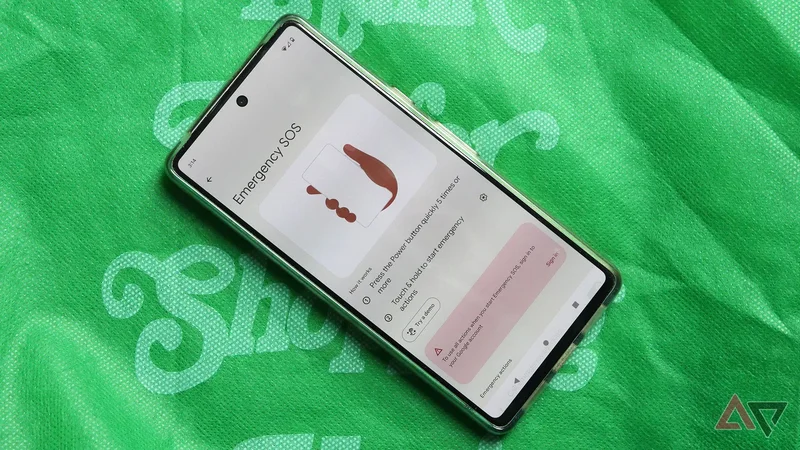
Android has not started from scratch. Ever since Android 12, Emergency SOS has been activated by pressing the power button five times or more.
Depending on the selected settings, my phone can call emergency services, alert my custom-set contacts, share my location, or record a video. I can also set up Emergency SOS in advance, so it's ready if I need it, and it is recommended to do so.
Android also has Emergency Location Service, which can send a more accurate location when I call or text an emergency number.
According to Google, ELS works on over 99% of active devices running Android 4.4 or newer versions with Google Play Services. However, support still depends on where you are and the local emergency infrastructure in the region.
The foundation for the feature is excellent, but I'm frustrated that some of the most useful tools are tied to a particular manufacturer.
Pixel phones get the complete safety package
Proactive tools still stay Pixel-first
Pixel phones are one example of what a properly coordinated safety system looks like.
The Personal Safety app includes services like Emergency SOS, emergency sharing, crisis alerts, medical information, Safety Checks, and car crash detection on supported models.
Safety Check is one feature that stands out. It can help me before an emergency is confirmed. I can choose a time for my device to check on me, and if I cannot respond to the alert, it will notify my emergency contacts and share my location.
It's handy while traveling solo, taking a late walk, or meeting someone in an unfamiliar spot. It gives me peace of mind when I go out on a side quest.
Similarly, Car Crash detection can contact emergency services if a supported Pixel detects a serious collision and doesn't get a response.
Compatible models also offer features like Satellite SOS, allowing me to contact emergency services even in remote areas.
These nifty tools turn a Pixel into more than a phone with straightforward emergency shortcuts. It can notice and detect a problem, check on me, and take action on its own when I cannot respond.
Samsung solves the same problem differently
Similar tools but not quite
Samsung is no slouch when it comes to safety. Compatible Galaxy phones can store my medical history, add emergency contacts, activate Emergency SOS through repeated side button presses, and share information with selected contacts.
The Emergency Sharing feature can provide selected contacts with useful information, including my location. Galaxy phones also support Emergency Location Service, wireless emergency alerts, and earthquake alerts, where available.
My issue is not related to the quality of features on different platforms. Switching from Pixel to Galaxy means learning new menus, labels, and sometimes different activation triggers.
These differences are fun to learn when I'm exploring camera controls, but much less welcome in an emergency.
Emergency features need one common language
Panic leaves no time to relearn
An emergency feature can't afford to be hidden or confusing. I rely on muscle memory when I'm injured, frightened, or unable to focus on the screen for navigation.
The core experience should remain consistent no matter what phone I'm using. This includes the activation gesture, countdown, cancellation method, contact setup, and confirmation screen, all of which should work in a familiar way.
I would also love Android to include a dedicated safety walkthrough when I set up a new phone. It can ask me to fill out details like medical information, emergency number, contact, and practice the SOS gesture without placing a real call.
Some limits are completely reasonable
Hardware sets real boundaries
I do not expect every Android phone to provide every emergency feature. Satellite communication requires compatible hardware, network partnerships, and regulatory approval. Crash detection requires proper sensors and carefully tuned algorithms.
Feature availability also depends on the local emergency services, carriers, and regional laws. A mere software update cannot fix these dependencies.
Regardless, those limits do not explain why software-based features like Safety Check and location sharing cannot reach more phones. Google could set a stronger baseline that allows manufacturers to add advanced emergency features if their hardware supports them.
Google should make safety an Android standard
Safety should follow me across phones
Emergency Location Service proves that Google can deploy safety features across manufacturers without asking companies to build multiple versions of the same thing.
Emergency Live Video is a new example that supports the point I'm making. During an emergency call or text, a dispatcher can request a live camera feed.
Google says sharing takes a single tap, requires no advanced setup, and the entire procedure is encrypted.
Google introduced it as a wider Android feature than a Pixel exclusive. It is delivered through Google Play Services, and eligible phones running Android 8 or newer can receive it without a full OS update.
Safety checks, emergency contact management, and setup guidance can be added the same way. Manufacturers should still add features dependent on specialized hardware, including satellite communication and crash detection.
I enjoy the exclusive camera modes, AI tools, and customization options that make an Android phone different, but emergency protection is one area where consistency matters more than exclusivity.
Until that happens, I can at least make an emergency plan with my Android phone before I ever need one.