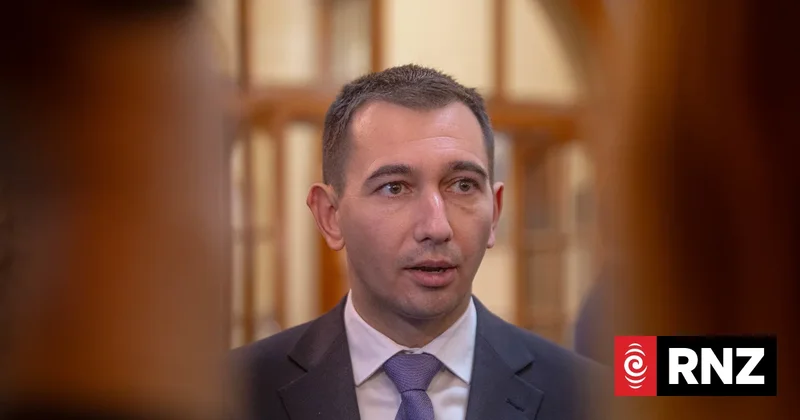
The Energy Minister says there's "no silver bullet" for reducing power bills.
The Ministry of Business, Innovation and Employment (MBIE) has produced a discussion document - asking whether legislative changes are needed to make the sector more efficient and affordable.
Energy MInister Simeon Brown said he was seeking advice from gentailers and the Electricity Authority on tackling higher power bills.
But he would not tell Morning Report who had answered him so far.
"It's critical we get this right," he said.
However, there was "no silver bullet" to tackle the problem.
Instead, he said that only focusing on wholesale prices missed one of the biggest drivers of rising bills - line companies.
Network charges which cover things like substations, poles and wires make up a quarter of household bills and accounted for two-thirds of recent price increases.
"We also have to focus on all of the things which are driving up power bills for customers. As I said, wholesale prices are reduced, we expect the big companies to pass that on to customers."
He said the document suggested a price-quality pass for all line companies to "ensure customers get a fair deal" and to "put downward pressure for consumers to make sure they're getting a fair deal".
He said the Commerce Commission did not have the powers it needed to regulate the "natural monopolies" lines companies represented.
Brown also called for ringfencing money from power bills like water companies do to ensure the money goes back into the infrastructure people pay to use.
In a media statement Brown said distribution companies needed to come to the affordability party.
"There are 28 Electricity Distribution Businesses (EDBs) in New Zealand, responsible for local infrastructure like power lines, poles and substations. Some EDBs are subject to price-quality regulation in which the Commerce Commission sets their maximum revenue and minimum service standards.
"Regulated revenues were last set in 2024 when interest rates had risen substantially following record inflation. Unfortunately, due to the high interest rates at that time, consumers are paying right now for that excess, on top of the cost of preparing networks for the greater electrification that is under way, and the increased demand that is coming."
The minister said an affordable electricity system was one of the government's priorities.
"The discussion document released by MBIE today sets out options to strengthen the performance of EDBs so they can provide reliable and affordable services to consumers while supporting increased electrification and innovation."
The three key areas the government was aiming to take further action regarding EDBs were:
- Collaboration and standardisation
- More responsive economic regulation
- Stronger governance and accountability
"The cost of electricity and potential for rising bills is front of mind for New Zealand households and businesses. I expect the sector to play its part in improving affordability for Kiwis by boosting efficiency, including through greater collaboration and standardisation," Brown said.
"Positive work is underway, but more change is needed to make the system more affordable for households and businesses."
Commerce and Consumer Affairs Minister Cameron Brewer said the scale of investment required for New Zealand's energy transition raises questions about whether the current arrangements will continue to deliver the best outcomes for consumers in the future.