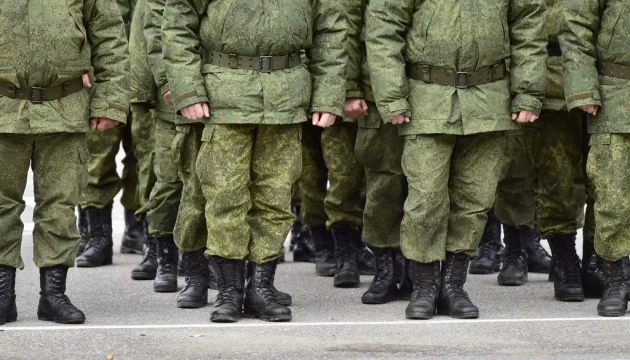
Andrii Kovalenko, head of the Center for Countering Disinformation at Ukraine's National Security and Defense Council, said this in a Telegram post, Ukrinform reports.
"A number of economists in Russia and some political elites continue to advise Putin against announcing mobilization. Closed-door polling conducted weekly by Putin's administration across the regions also indicates a lack of public support for such a move. Instead, the possibility of covert coercive measures to increase the share of people signing contracts is being considered," he said.
According to Kovalenko, Putin wants mobilization, but carrying it out could undermine the existing social contract between the Russian authorities and the population. The war is generally perceived as something distant from most Russians, while participation in it is associated with financial compensation.
"Simply put, it is life in exchange for money. Mobilization would destroy this arrangement," Kovalenko said.
At the same time, he said Putin does not plan to end the war at least until 2028 and is already drawing up plans for military operations throughout 2027. However, not everyone supports these ambitions, meaning there is still room to influence Moscow.
"There are tools to exert such influence – our strikes on the Russian economy, EU support, all multiplied by the will of the United States and China," Kovalenko said.
Read also:Russian propaganda spreads panic over food shortage in Ukraine — CCD
He noted that this room for influence is limited but not hopeless. At the same time, he said, it is important for Ukraine to maintain internal unity, as Russia will devote significant resources not only to the battlefield but also to the information and political spheres.
"They will support certain potential political [projects] in Ukraine, bringing money into the country and looking for leaders. This track has not gone away," Kovalenko concluded.
Photo: Center for Countering Disinformation