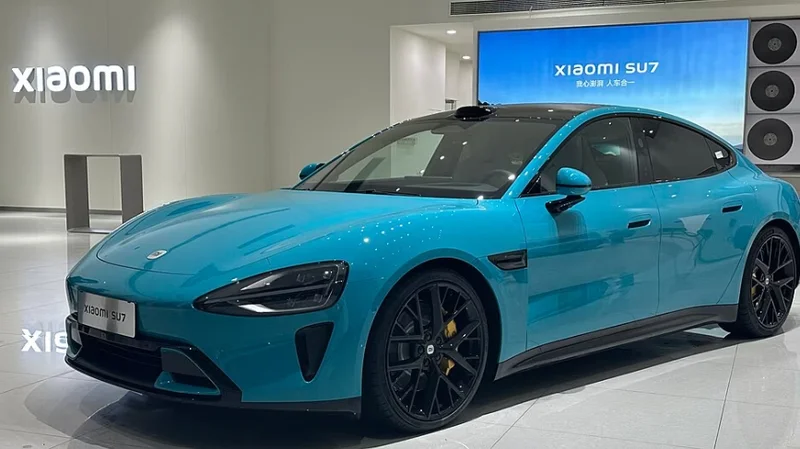
Xiaomi’s SU7 sedan passed 500,000 cumulative deliveries on 17 August, 28.5 months after the first handover. Deliveries of that model are down 43.6% this year, even as the company’s overall volume rose almost 15%.
Xiaomi’s first car has passed half a million deliveries. The SU7 reached 500,000 on 17 August, 28.5 months after the first one was handed over.
The number moving in the other direction is more interesting. Xiaomi delivered 101,540 SU7s in the first seven months of 2026, down 43.6% on the same period last year.
That is a model problem rather than a company one. Across the range Xiaomi delivered 216,322 cars in those seven months, up 14.8%, so the sedan is losing ground to its own showroom.
The YU7 is what happened to it. Xiaomi’s SUV arrived to take on the Tesla Model Y, and its chief executive later admitted the first version was not cheap enough, before launching a cheaper one.
July shows both cars in the same month. The SU7 took 21,044 deliveries and the YU7 10,223, with the SUV falling 28.6% from June’s 14,324.
The awkward figure is the target. Xiaomi has told the market it will deliver 550,000 vehicles in 2026, and seven months in it has reached 39% of that.
The arithmetic from here is unkind. Hitting the number needs close to 67,000 deliveries a month for the rest of the year, against a current pace of about 31,000.
That is not a strong finish, it is a different company. Xiaomi has cleared 30,000 deliveries for four consecutive months, which is a record it would need to double.
Two things are meant to close the gap. The boxy Sky Nomad range brings extended-range models with a petrol engine on board, aimed at family buyers the SU7 never reached.
The other is Europe, where Xiaomi plans to start selling in 2027. Chinese brands already took a record 14.2% of the region’s battery electric market in the first half of this year, without a single Xiaomi on sale.
None of which makes this a company in trouble. It sold half a million copies of its first model in under two and a half years, then set itself a number that assumes the rest of 2026 looks nothing like the start of it.
Get the TNW newsletter
Get the most important tech news in your inbox each week.