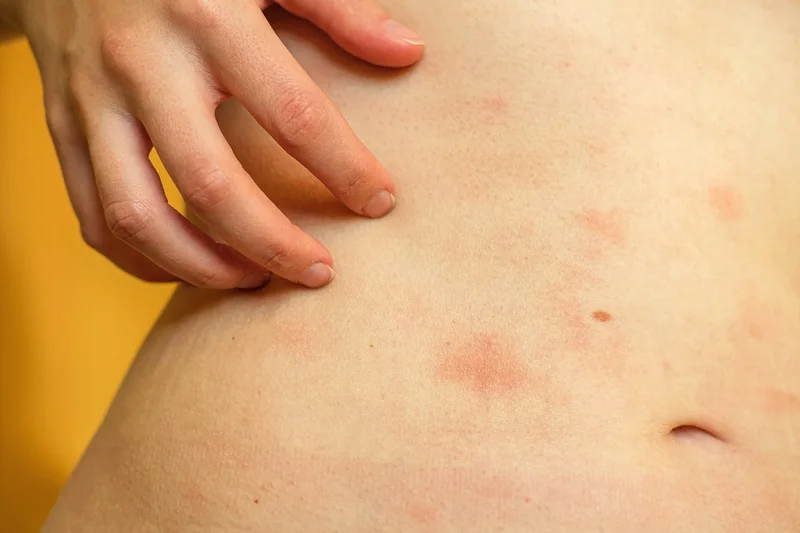
Simply directing attention toward inflammation-related sensations produced smaller, faster-resolving skin responses, revealing how conscious attention may influence immune regulation through both sensory feedback and autonomic control.
Study: Voluntary attention regulates acute immune responses in humans. Image Credit: Mitriakova Valeriia / Shutterstock
A recent study in the journal Nature Human Behaviour investigated whether voluntary attention can acutely regulate immune responses in humans and sought to identify the underlying cognitive and physiological pathways involved.
Cognitive Modulation of Acute Inflammation
Attention is a core cognitive mechanism that prioritizes sensory information for neural processing. By shaping neural activity, attention influences the intensity of bodily sensory events, such as pain and itch. These signals are vital for regulating immune responses.
Rodent studies suggest that disrupting neural pathways carrying nociceptive signals can dysregulate immune responses. Although shifting attention away from pain or itch lessens discomfort, this withdrawal of attention may also interfere with the integration of bodily sensations and neural control of immune regulation, a possibility that remains largely unexplored.
Recent theories suggest that cognition supports biological regulation through allostasis, the brain's ability to maintain internal stability by predicting and responding to bodily needs. Attention contributes by modulating sensory signals related to bodily state, shaping both perception and regulatory responses. Autonomic circuits, especially the parasympathetic vagus nerve, provide top-down anti-inflammatory control. Therefore, attention could influence acute inflammation by altering both sensory signaling and autonomic activity.
Despite these insights, no study has directly tested whether voluntary attention can regulate acute inflammation in humans. Acute inflammation, which is a rapid, protective response to injury or infection, has traditionally been viewed as reflexive and beyond conscious control. However, immune activity is closely linked to sensory and autonomic circuits, and mounting evidence suggests that the brain can influence inflammation. Determining whether cognitive states can shape acute immune responses in humans could redefine the current understanding of neuroimmune regulation.
Researchers Tested How Attention Modulates Acute Inflammatory Responses
This study investigated whether directing attention toward or away from bodily sensations during acute inflammation modulates the immediate immune response.
Between February 2024 and July 2025, 59 participants were recruited through online screening, with 57 included in the final analyses. Three pre-registered, within-subject experiments were conducted. Experiment 1 comprised 37 participants (75% women, ages 21–42), Experiment 2 included 20 participants (60% women, ages 22–33), and Experiment 3 involved 17 returning participants (88% women, ages 21–31). Experiments 1 and 2 involved independent cohorts, while Experiment 3 recruited participants who had participated in those earlier experiments.
In Experiments 1 and 2, participants maintained gaze on a screen and directed attention either to sensations at the test site or to external distractors for 20 minutes following inflammation induction. Acute cutaneous inflammation was induced via a standardized histamine skin prick test, eliciting a rapid, well-characterized immune response. Swelling (wheal) and redness (flare) were measured to quantify the inflammatory response, which emerges within minutes and peaks at 15–20 minutes. Smaller responses and faster resolution were interpreted in this experimental model as reflecting more regulated inflammatory activity.
A counterbalanced design enabled direct comparisons of attentional focus on both the magnitude and timing of inflammatory responses. The experiments varied the attentional tasks: one contrasted internal attention with video-based distraction, another matched visual and task demands while manipulating attentional focus, and the third examined the role of sensory signaling by adding internal attention while attenuating sensory input with topical lidocaine. Autonomic pathways were assessed in all experiments.
Experimental design. Acute cutaneous inflammation was induced via histamine SPT while participants directed attention either internally to sensations at the test site (itch, burning) or externally to distractors (Exp. 1, video clips, n = 37; Exp. 2, shape plausibility task, n = 20) in a counter-balanced, within-subjects design. Eye gaze was maintained on the screen in both conditions. Diagonal arrows indicate the temporal progression of the 20-min cognitive manipulation. Wheal (oedema) and flare (erythema) were measured at six time points (1–20 min) following SPT, alongside continuous autonomic recordings (heart rate, skin conductance, pulse, skin temperature and respiration). b–f, Internal attention (INT, green) yielded smaller and faster-resolving inflammatory responses than distraction (DIS, pink).
Attentional Focus Modulates Inflammatory Response
In the first experiment, participants with histamine-induced skin inflammation either focused internally on sensations at the site or externally on distracting videos for 20 minutes. Internal attention produced a significantly smaller and more regulated inflammatory response than distraction: about 90% of participants showed greater inflammation when distracted, with wheal-and-flare responses increasing by roughly 1.5-fold under distraction. Internal focus also promoted faster recovery, with significant differences in wheal responses emerging within 3 minutes and peaking at 20 minutes; in an exploratory recovery analysis, nearly 90% of internally focused participants showed stabilization or decline in inflammation, compared to only 46% in the distraction condition.
The second experiment controlled for visual and cognitive factors by giving both conditions identical visual stimulation and task structure. Participants either redirected their attention to bodily sensations with each shape change or judged whether each shape could exist in real life. Internal attention again led to much smaller inflammatory responses (about a 1.6-fold reduction), supporting the interpretation that the effect reflected the direction of attention rather than differences in visual stimulation or task demands. Participants also reported a stronger perception of inflammation-related sensations during internal focus.
The third experiment tested whether sensory feedback was necessary for this regulatory effect. Topical anesthesia was used to reduce sensory signaling during internal attention. Because lidocaine can itself diminish flare responses, the researchers focused this analysis on wheal responses. Although reducing sensory input weakened the benefits, internal attention still reduced inflammation compared with distraction, suggesting that both sensory and non-sensory mechanisms are involved. Exploratory analyses suggested that intact sensory signaling was particularly important during the later resolution phase. However, lidocaine did not completely eliminate sensory input, so residual sensory signaling could not be ruled out.
Physiological measures revealed no differences in arousal or anxiety between conditions, but heart rate variability (HRV), an indirect index of parasympathetic vagal activity, was higher with internal attention, even when sensory input was dampened, consistent with the possibility that top-down attention may engage autonomic anti-inflammatory pathways independently of sensory feedback. Together, the findings indicate that voluntary attention to bodily sensations can actively regulate acute inflammation with complementary contributions from sensory-dependent and top-down processes.
Conclusions
The current study revealed that voluntary attention can regulate localized, acute histamine-induced inflammation in healthy adults, emphasizing the significant influence of cognitive processes on physiological control. The findings indicate that attention not only shapes perception but also modulates acute inflammatory responses, consistent with an attention–perception–regulation loop. This highlights the crucial role of subjective sensory experience in immune regulation and expands brain–body interaction models to recognize attention as an active regulatory factor.
Several limitations restrict the extent to which these results can currently be interpreted broadly. The study examined a localized histamine-induced skin response in healthy, predominantly young adults, rather than infectious, chronic inflammatory, autoimmune, or systemic immune responses. It did not directly measure molecular or cellular immune pathways; HRV provides only an indirect measure of vagal activity, and reduced inflammation is not necessarily beneficial in every setting because an adequate inflammatory response can be essential for host defense.