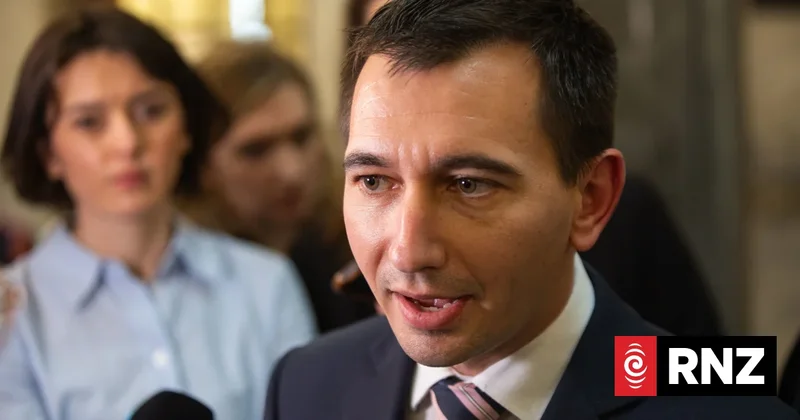
The Health Minister insists he never accepted a policy by senior health officials to keep tight controls on hiring frontline health staff.
But the Greens have accused Simeon Brown of "weaponising" a bureaucratic process to save costs in the health system.
Politicians have weighed in following RNZ's revelations of the hiring controls at Health New Zealand.
In a briefing to Brown in March last year, then health commissioner Professor Lester Levy and interim chief executive Dr Dale Bramley said tight controls on recruitment were crucial to meeting last year's budget, and hiring frontline workers required the sign off of the deputy chief executive.
An internal document also revealed that regional panels had been set up in June 2024 to sign off all hiring decisions, while there was a freeze on hiring non-clinical roles.
The documents were released under the Official Information Act to the Public Service Association (PSA), which says the policy led to crucial roles being left vacant for months, and patients suffering as a result.
Brown hit out at the PSA on Wednesday, saying he never accepted the policy, and had made a speech last March stating the need for regional decision-making.
"It doesn't surprise me that the PSA union, which is literally campaigning for a change of government, is pulling up a document from the beginning of last year when I first became the minister of health."
He said there had been a "huge amount of change" since the briefing document last year was provided to him.
"Since then, we've got a new board, a new CE. We've put in place devolution, which is devolving decision-making back down to regions and districts so that these local decisions are made closer to home so that recruitment can be sped up."
Brown said he sent a letter of expectation to the agency in November last year, reiterating the need to devolve decision-making to regions and speed up hiring.
"It's a big bureaucracy that was set up by the previous government during the middle of a pandemic. We've been very clear about our expectations that these decisions need to be made closer to the regions and the districts."
When asked whether Health NZ had continued the policy after his March speech, or made the hiring changes quickly enough, Brown said he wants the agency to "move faster to speed up recruitment".
PSA national secretary Fleur Fitzsimons said the policy had meant crucial roles were kept vacant for months, including six months to hire three neo-natal nurses, and stroke patients suffering from a lack of services due to under-staffing.
When asked about patients, Brown did not directly say whether people had suffered as a result of hiring lags, adding he was intent on fixing a "really bureaucratic machine".
But Green Party co-leader Marama Davidson said the documents revealed that Te Whatu Ora deliberately delayed filling clinical roles to save money.
"The PSA provided damning evidence that the minister of health has knowingly weaponised the bureaucracy to slow the recruitment of health workers as a cost saving measure."
The government had consistently said it would not cut front line services to balance the budget, Davidson said, but the union's report had revealed "reckless cuts to funding".
"It's appalling to see that more than three quarters of staff have had to wait more than a month to get approval to fill a vacancy, including delays to staff three neo-natal intensive care unit nurses at Capital, Coast and Hutt Valley hospitals."
Labour Party leader Chris Hipkins said it was becoming clear the National government was forcing the health system to breaking point.
"The hiring freeze they've had across the country, stopping vacancies being filled is causing real harm to New Zealanders. It's meaning that Kiwis are not getting the health care that they are entitled to under our health system."
A Health NZ spokesperson has previously said that it has now changed its hiring processes, and the four regional recruitment panels for budgeted staff no longer existed.
The agency had introduced a devolved operating model earlier in 2026 to ensure decisions were "clinically led and met local need", the spokesperson said.