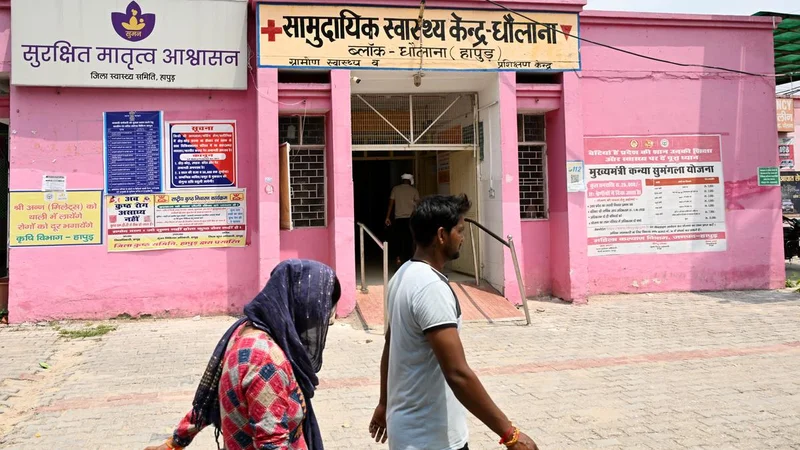
On World Humanitarian Day, observed on August 19, we honour the people who provide care in crises and the communities who endure them. Often when we look at health crises, we look at large-scale disasters such as disease outbreaks, armed conflict or extreme weather events. But, on this day, let us push the envelope a little further and talk about the kind of crisis that does not show up at our doorstep overnight. This is the kind of health and humanitarian crisis that brews over years, decades, feeding off inefficient policies and profit-driven systems.
In South Asia, this crisis is especially urgent. The region is home to proven medical talent, pharmaceutical capacity, public health experience, and community resilience. Yet it also carries a heavy burden of preventable illness, malnutrition, infectious diseases, climate-related health risks, and out-of-pocket expenditure. For millions here, a health crisis begins not when an ambulance arrives, but when a treatable condition becomes unaffordable, diagnosis comes too late, or when a family must choose between food, rent, education, medicines, and a day’s pay.
World Humanitarian Day should therefore prompt a harder question: why do so many people need humanitarian assistance in the first place?
Personal crisis
For Médecins Sans Frontières/Doctors Without Borders, these questions are not theoretical. Across our medical interventions in South Asia, we repeatedly see people reaching free care only after they have exhausted their savings, sold assets, borrowed money or spent heavily in private health facilities. And by then, the illness has often evolved into a personal crisis — monetary and social.
The warning signs are visible across the region. Out-of-pocket expenditure remains a major barrier to care. When illness pushes families into poverty, the cost is not only personal. It is also social and economic. A region that hopes to benefit from its demographic dividend cannot afford to have large numbers of people sick, untreated, indebted or forced out of work because healthcare is inaccessible.
Over five years from 2018-19 to 2022-23, the per-capita out-of-pocket expenditure(OOPE) in India rose 28.4%. In the same period, though India’s public share of total health expenditure grew to around 48%, it still stands far below that of China, Brazil and many OECD countries. Meanwhile, medical costs continue to rise sharply. One corporate health report placed medical inflation in India at 14%, while also finding that 71% of workers paid for healthcare out of pocket and only 15% had employer-supported insurance.
Of course, insurance does play a role, but it cannot replace public investment. A health card is not the same as a functioning primary healthcare network. A reimbursement package is not the same as a staffed clinic with doctors and nurses who are not burnt out, a reliable laboratory, affordable medicines, counselling, nutrition support or community follow-up. If public foundations are weak, purchasing care from private providers will not automatically create equity. It will simply move public money into private systems without ensuring long-term care for those most in need.
Investing in public healthcare is, therefore, not a welfare expense to be minimised. It is an investment in productivity, resilience, and human dignity. Healthy children learn better. Healthy adults work, care, innovate and contribute. Families protected from catastrophic health costs are more likely to invest in education, livelihoods and long-term wellbeing. Public health systems do not only treat disease; they protect the future capacity of societies.
South Asia also has lessons within its own borders. Sri Lanka, despite resource constraints and economic pressures, has been recognised for stronger public-sector health delivery and impressive progress on key health indicators, including maternal and child health, immunisation and life expectancy. Its experience shows that health outcomes are not determined only by national wealth. They are also shaped by political choices: sustained investment in public services, accessible primary care, trained health workers, and a commitment to care that is not dependent on a person’s ability to pay.
Multiple challenges
This matters because South Asia’s health challenges do not stop at borders. Outbreaks, antimicrobial resistance, climate shocks, displacement, conflict and access to medicines are regional issues. A weak surveillance system in one place can affect communities elsewhere. A climate disaster can displace people across districts and borders. Drug-resistant infections do not respect national boundaries. In such a context, investing in public health is also an act of regional preparedness. Preparedness therefore cannot begin when disaster strikes. It must be built into everyday public health systems. Humanitarian response can save lives in moments of crisis, but it cannot substitute for sustained public investment.
The region also needs to strengthen the public character of medical education, research and health workforce planning. Expanding medical seats is important, but numbers alone are not enough. Public medical colleges need adequate funding, training quality must be protected, and research capacity must be strengthened. South Asia needs doctors, nurses, laboratory staff, public health professionals, counsellors, and community health workers prepared to serve in diverse and difficult settings, not only in profitable urban markets.
India, as the region’s largest country and a major producer of medicines and health technologies, has a particularly important role to play. Its choices influence not only its own population but also wider regional access to medicines, diagnostics, research, manufacturing and public health cooperation. But the core message is larger than any single country: South Asia’s future health security depends on whether governments treat health as a shared public good.
On World Humanitarian Day, we should recognise those who respond when systems fail, and the most authentic tribute to them would be to acknowledge and act on the urgent need to build systems that fail fewer people in the first place. The measure of our health systems should not be how much profit they can generate, but whether a person with the least power can receive timely, affordable, respectful care.
South Asia does not need health systems that treat illness as a market opportunity. It needs systems that treat health as a shared public good — and build from the last person first.
Parthesarathy Rajendran is Executive Director, MSF South Asia
Published - August 19, 2026 12:05 am IST