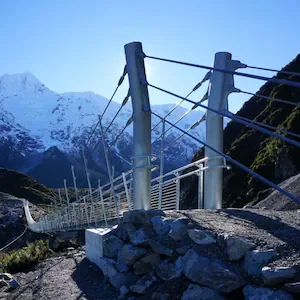
The Department of Conservation said that at 189m, the new one was the longest suspension bridge in the country.
Workers faced 180km/h winds and multiple unseasonal snowfalls to build the new bridge.
Aoraki/Mt Cook district operations manager Sally Jones said it was a significant milestone and a testament to the dedication, skill and commitment of everyone involved.
“Building something of this scale in such extreme conditions is no small achievement, and I am incredibly proud of what our contractors, partners and staff have achieved together.
“They have created a safer, more resilient crossing that will enhance the visitor experience for generations to come. I hope we haven’t put them off bridge building!”
The new suspension bridge up the Hooker Valley at Aoraki/Mount Cook National Park will open to the public next Tuesday. Photo / Department of Conservation
The project cost $4.85 million.
The new bridge is estimated to bring around $167m in revenue to the Mackenzie District over the next decade.
The engineer and architect behind the unique bridge design, Dan Crocker of DC Structures Studio, said it was exhilarating that the bridge was finally opening.
“It’s not just the longest suspension bridge in New Zealand; it’s the longest single span footbridge of any kind in the country.
“Getting the opportunity to design a bridge like this in one of our most iconic locations was an amazing experience.
“I can’t wait to see people crossing it.”
The new suspension bridge up the Hooker Valley at Aoraki/Mount Cook National Park will open to the public next Tuesday. Photo / Department of Conservation
The bridge will open to the public next Tuesday afternoon.
Jones reminded people to check forecasts and conditions before heading out.
“The reality at this time of year is that the track can be very icy and it can also be extremely cold. People need to be prepared for sub-alpine conditions. You need good solid walking boots or shoes, warm winter clothing, hats and gloves,” she said.
“The views are awe-inspiring, but the weather and the environment can be brutal.
“The best part of the day in winter is often around late morning to mid-afternoon when the sun has warmed things up a bit.”