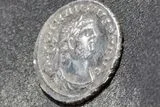
At the bottom of a shallow railway trench in eastern England, archaeologists found the face of a man who once defied Rome and declared himself emperor of Britain and northern Gaul.
The coin dates to A.D. 287 and depicts the name and image of Carausius, a Roman naval commander who established a breakaway territory in Britain nearly 1,740 years ago.
The discovery came during archaeological investigations along the planned East West Rail route through Bedfordshire and Cambridgeshire. The team has completed the first 1,000 of approximately 6,000 trial trenches planned over two years. Other finds include another Roman coin, a Late Iron Age jar, and pottery fragments.
“When you're excavating these features, you're often the first person to see them in 2,000 years, sometimes even longer, which is a really special feeling — it’s pretty amazing,” Joss Piper-Jarrett, Archaeology Survey Manager at EWR Co, said in a press release.
Roman Coin Found Along the East West Rail Route
Vase found during the excavation
(Image Courtesy of East West Railway Company)
Before his break with Rome, Carausius, whose portrait appears on the coin, commanded the Classis Britannica, a Roman fleet based in the English Channel. Emperor Maximian ordered his execution after suspecting him of keeping treasure seized from pirates.
Instead, Carausius declared himself emperor of Britain and northern Gaul, creating a territory outside Rome’s control. Seven years later, his finance minister, Allectus, killed him.
The excavations also uncovered a second Roman coin from the middle or late second century. It probably came from the reign of either Antoninus Pius or Marcus Aurelius.
The Late Iron Age jar dates from approximately 50 B.C. to A.D. 50. Its maker shaped it by hand from fine clay tempered with shell and grog, following a ceramic tradition common during the period.
How Archaeologists Search the Future Railway Route
(Image Courtesy of East West Railway Company)
Before opening the trenches, specialists conduct geophysical surveys to locate possible archaeological features beneath the ground. They also conduct ecological and utility assessments, enabling the project to plan its work while minimizing disruption to farms, wildlife, and everyday land use.
The team is not excavating the entire railway route. Instead, each trial trench provides a narrow view below the surface. A typical trench measures about 164 feet (50 meters) long, 6.5 feet (2 meters) wide, and 1.6 feet (half a meter) deep.
Archaeologists use metal detectors in every excavated trench to locate coins and other objects. When they find a possible feature, they cut smaller, targeted sections known as slots. Examining these sections helps them determine the feature’s age, condition, and importance.
“Understanding the archaeology beneath the surface is essential to helping us design and deliver the railway in a way that respects the environment and our shared heritage,” Mike Court, Historic Environment Lead at EWR Co, said in the press release.
East West Rail will use the results in its environmental assessment and its 2027 application for permission to build. The findings will help planners understand where construction could affect important archaeological sites and determine how to protect or document them.
What Happens to the Roman and Iron Age Finds
After removing an object from the ground, specialists clean, analyze, and record it before adding it to the archaeological archive. Particularly important discoveries may eventually go on display in local museums.
Crews also restore the excavated land as closely as possible to its previous condition once they finish investigating it.
Approximately 5,000 trial trenches remain. As railway planners map a route between Oxford and Cambridge, archaeologists are beginning to map the communities that occupied the same landscape thousands of years earlier.
Read More: Nearly 1,800-Year-Old Kohl Bottle Found in Roman York May Have Been Carried From Egypt
Article Sources
Our writers at Discovermagazine.com use peer-reviewed studies and high-quality sources for our articles, and our editors review for scientific accuracy and editorial standards. Review the sources used below for this article: