Welcome to this week’s Fortune Gulf Brief. We’ll be covering:
- Abu Dhabi lands Coinbase’s big tokenization bet
- Qatar is building EVs made for the Gulf’s scorching heat
- Gulf tourism faces an uneven recovery
- Straitened times for Gulf energy exports
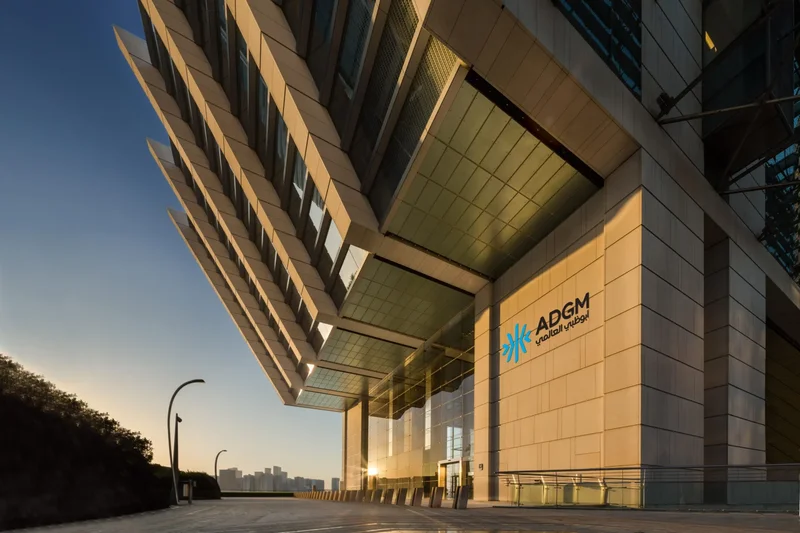
In a major coup for Abu Dhabi, crypto exchange giant Coinbase has chosen the emirate as its “international tokenization hub” as it looks to bring more traditional financial assets onto the blockchain.
Coinbase, the U.S.’s largest crypto exchange, will be based out of Abu Dhabi Global Marketplace (ADGM), from where it has been granted a license to arrange deals in investments and securely hold digital assets to facilitate the launch of tokenized securities. These will be backed by real shares and issued under ADGM’s regulatory framework.
Investors will also be able to hold the assets in digital wallets, eliminating the need for a brokerage account or a correspondent banking relationship.
“This is the most significant step we have taken yet toward building the infrastructure for a more open, more accessible global financial system,” the crypto exchange said in a statement announcing the decision last week.
Abu Dhabi is keen to become a major player in that shift. In 2018, ADGM issued one of the world’s first regulatory frameworks for virtual assets.
The new hub forms part of Coinbase’s wider expansion in the UAE. The company already runs Project Diamond in Abu Dhabi, which focuses on digital debt for institutional investors, while its derivatives business is based in Dubai.
More broadly, the Gulf has been leveraging its sovereign wealth funds to invest in tokenization.
Global consulting firm Kearney predicts that close to $500 billion of GCC assets will be represented on blockchain by 2030, led by private markets, funds, and bank deposits.
You can read my full piece here on how the UAE is building its tokenization industry.
Melissa Hancock
As ever, thanks for reading, and do keep in touch with your thoughts and ideas. See you next week.
melissa.hancock@fortune.com
Qatar’s first EV factory will put Gulf heat to the test
Qatar is gearing up to launch its first electric vehicle factory, producing cars specifically engineered to withstand the Gulf’s extreme heat and challenging climate.
Doha-based JTA International Investment Holding and the UK-based Watt Electric Vehicle Company have struck a deal to establish a state-of-the-art manufacturing plant that will design, engineer, and manufacture a new generation of EVs.
The focus will be on advanced heat management and battery performance, given temperatures exceeding 40°C can cut battery range by as much as 22%, dissuading potential buyers who frequently navigate long desert routes.
The facility aims to start production in early 2028, with an initial run of about 5,000 vehicles a year, comprised of passenger cars and delivery vans.
It will first target the domestic market before expanding exports throughout the GCC and selected international markets. JTA has said the longer-term ambition is to establish Qatar as a regional center for EV manufacturing and clean mobility.
The GCC electric vehicle market is valued at $11.64 billion and is projected to reach $31.66 billion by 2031, according to Mordor Intelligence.
“Early-mover policy mandates, sovereign-wealth funding, and a rapid build-out of ultra-fast public chargers are synchronizing to accelerate adoption across every Gulf state,” noted the market intelligence firm.
The UAE is currently the Middle East’s largest market for EV sales, accounting for nearly 50% of total sales, according to the International Energy Agency’s Global EV Outlook 2026 report. It marked the second consecutive year that it took the top spot.
Gulf tourism starts to recover but Dubai lags
Despite the deadlock in U.S.-Iran peace talks, there are early signs of a recovery in Gulf tourism, according to London-based Capital Economics.
In a note published on Monday, the global macroeconomic research firm highlighted how aviation data suggests a revival is taking hold, particularly in intra-GCC travel.
Available seat kilometres—a measure of passenger-carrying capacity—are rebounding quickly among Middle East carriers, while passenger load factors, which indicate how full flights are, reached 76.3% in June, close to their pre-war average.
However, it noted that the Gulf’s tourism markets have different characteristics, meaning their near-term prospects are likely to vary.
Saudi Arabia’s tourism sector should prove more resilient, given the large share of visitors traveling for religious purposes to destinations that are geographically farther from the conflict.
Meanwhile, Bahrain relies heavily on regional visitors, particularly from Saudi Arabia, who have proved more resilient than travelers from further afield.
By contrast, the UAE’s heavy reliance on visitors from outside the Gulf means its tourism sector may face a longer road to recovery. Hotel occupancy rates in Dubai were down over 30% in June compared with the same month last year.
“And these figures are flattered somewhat by the fact that many hotels have closed for renovation due to the lack of demand,” noted Capital Economics.
S&P Global’s Dubai Economy Tracker shows that the tourism sector indicator has barely moved since its March decline.
The contribution of tourism to the economies of the GCC states varies significantly. Bahrain and the UAE are the most reliant on the sector, which directly contributes a respective 7.1% and 6.2% to GDP, while accounting for just 0.6% of Kuwait’s GDP.
“The drag from tourism will become larger if the recovery doesn’t gain more momentum by the peak season in Q4,” said the research firm.
Gulf energy exports stage modest recovery amid Hormuz chokehold
Saudi Arabia increased crude output to 8.2 million barrels per day in July, up from 7.1 million the month before, according to a report seen by Bloomberg.
Among the seven OPEC members that submitted their production figures directly to the group’s secretariat, output rose by 1.88 million barrels a day, driven largely by increases in Iraq and Saudi Arabia amid a temporary cessation of hostilities.
However, Saudi’s output still sits several million barrels a day below pre-conflict levels.
Meanwhile, LNG loadings from Qatar’s Ras Laffan export complex climbed to their highest level since March, with the 10-day moving average reaching roughly 80,000 tons last week.
But this is still a stark 60% drop compared to the same period last year.
Qatar has largely halted LNG shipments through Hormuz since fighting in the region resumed last month. Two tankers carrying Qatari LNG were hit in July.
Between March and June, LNG loadings from Qatar and the UAE declined by 35 billion cubic meters year-on-year, according to the International Energy Agency.
However, this steep decline was partly offset by higher LNG output from new projects in the U.S. and Africa, plus better feedgas availability from legacy producers, which grew by almost 18% year-on-year during this period.
The Big Number
The 3 things we enjoyed reading this week
- Iran’s push to charge ships for passing through the Strait of Hormuz could mark a major shift away from the traditional “freedom of the seas.” If Hormuz becomes a toll road, other countries could follow suit at strategic chokepoints such as the Strait of Malacca and Gibraltar, raising shipping costs and global inflation. As Fortune’sJordan Blum argues, this could accelerate a broader breakdown of the post-WWII maritime order, although some analysts believe Iran may ultimately use tolls mainly as a bargaining chip for sanctions relief.
- After President Trump signed a memorandum of understanding with Iran in mid-June, Iran’s hard-line leaders huddled in Tehran and began preparing for a wider confrontation with the U.S. and its allies. According to Iranian and Arab officials cited by theWall Street Journal,Tehran has since strengthened the Revolutionary Guard’s control over its nearly 200,000 strong military, accelerated missile and drone production, and coordinated with allied militias in Yemen, Iraq and Lebanon to expand pressure on U.S. and Gulf interests. The Revolutionary Guard has also devised new plans for further escalation including pre-emptive strikes. Among the options: sabotaging internet cables in the Persian Gulf, creating political unrest in countries with Shia communities such as Kuwait and Bahrain, and potentially even ground operations in Kuwait.
- The UAE’s Mohamed bin Zayed University of Artificial Intelligence (MBZUAI) is leading a project to help AI better understand Arab culture and the region’s many dialects. Researchers have built ArabCulture-Dialogue, the first benchmark for testing whether leading AI models can understand and converse in Modern Standard Arabic and 13 national dialects. The study found that, while models are often capable of grasping what Arabs say, they struggle when asked to speak in specific dialects, particularly Emirati and North African Arabic. The researchers say the findings could help lay the groundwork for more capable Arabic-language AI.
Sign up to get it delivered free to your inbox.