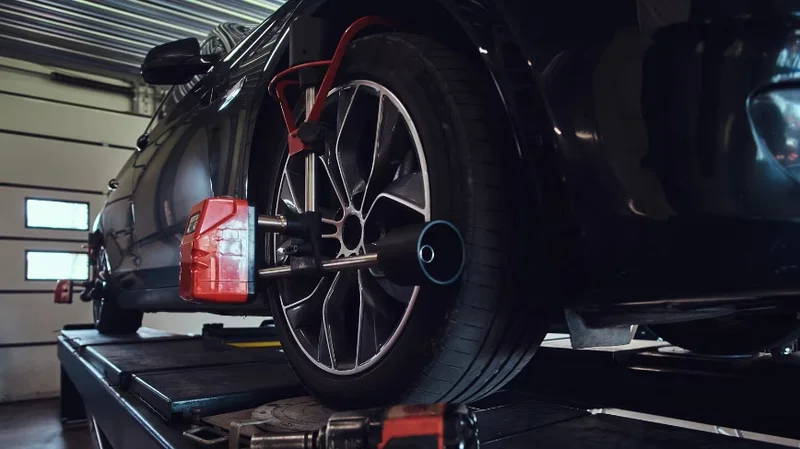
California’s Energy Commission has unanimously approved the first US efficiency standard for replacement tyres, capping rolling resistance from 2029 and tightening it in 2033. Europe has enforced a looser ceiling since 2012 and labelled tyres for efficiency since the same year.
California has decided how wasteful a tyre is allowed to be. Its Energy Commission voted unanimously on Monday to cap rolling resistance on replacement tyres from 2029, tightening the limit again in 2033.
American coverage has called this a first, and for the United States it is. Europe has enforced a rolling resistance ceiling since 2012 under UN Regulation 117, currently 10.5 newtons per kilonewton for passenger car tyres.
California’s number goes below Europe’s. The first phase lands at around 9 newtons per kilonewton and the second at around 7, which would make the state stricter than the market that invented the rule.
Europe also tells buyers. Every tyre sold in the EU has carried a label since 2012 grading rolling resistance, wet grip and noise, sitting next to the price, and no American equivalent was ever adopted.
The commission’s own costing is modest. It puts the increase at $1.50 a tyre in the first phase and $6.50 after that, against roughly $179 of fuel savings over the life of a set and nearly $1bn a year across the state.
The manufacturers put it higher. Goodyear and Yokohama told the commission that compliant tyres run $6 to $10 more each, and that tyres meeting the targets are typically priced hundreds of dollars more per set.
On the scale of the clear-out, the state is blunter than the industry. Tyre makers estimate around 70% of the current market would fail, while California’s own regulatory analysis found that between 82% and 91% of replacement tyres would not comply at the second threshold.
The engineering makes that credible. Rolling resistance, wet grip and tread life pull against one another in a compound, so a tyre tuned to save fuel usually gives up something in the rain or wears faster, and that tread ends up as tyre wear pollution.
The exemptions are an admission of that. Competition tyres, large off-road tyres and all-weather winter tyres sit outside the rule, with separate categories for long-life, ultra-high-performance and low-load-index products.
Europe is meanwhile regulating a different corner of the same compound. Euro 7 introduces limits on tyre abrasion, the mechanism behind the particles that startups have been building devices to capture at the wheel.
The oddest detail is the age of the authority. Assembly Bill 844 told the commission to study and regulate tyre efficiency in 2003, and chair David Hochschild said he did not know the law existed until commissioner Nancy Skinner raised it, 23 years later.
Get the TNW newsletter
Get the most important tech news in your inbox each week.