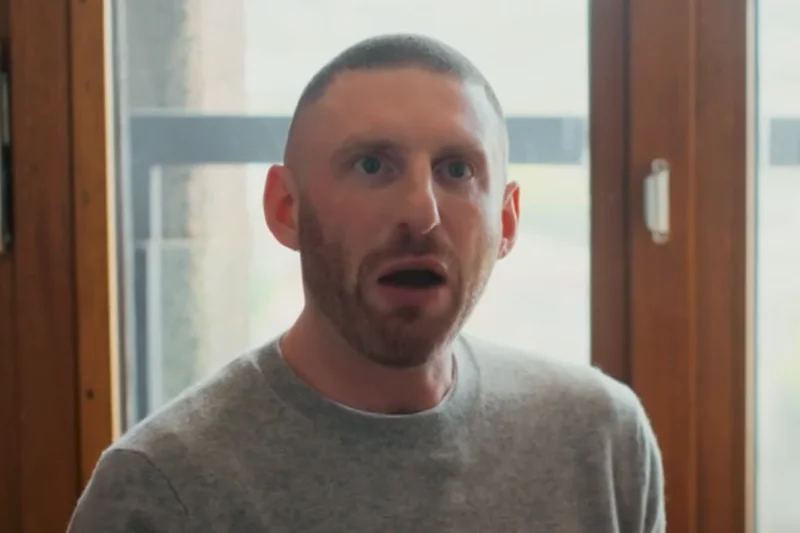
An ADHD charity has called for the public to complain about Channel 4’s latest documentary to Ofcom after its presenter labelled the disorder a “social construct”.
The Great ADHD Myth?, which aired last night (Tuesday 18 August) on Channel 4, sees presenter and NHS psychiatrist Max Pemberton speak to medical professionals who are sceptical about Attention-deficit/hyperactivity disorder (ADHD) being a legitimate medical condition, particularly in young children.
ADHD is recognised by the NHS as a condition where those affected struggle to concentrate or sit still. Symptoms can include having high energy levels, getting easily distracted, being forgetful, losing things often and finding it hard to organise your time.
However, Pemberton’s documentary questions whether ADHD is a neuro-developmental disorder, how it should be treated and who benefits from the rise in diagnoses over the last few years. It also conducts an experiment which sees 10-year-old Mason stop taking his ADHD medication, which he has taken for two years, over a six-week period to see whether consuming less sugar, banning screen time and introducing yoga helps instead. While initially deciding to keep Mason off his medication, claiming that it had “dulled his sparkle”, she placed him back on it two months later after his performance in school declined.
Now, charity ADHD UK has responded to the film, revealing that it has complained to Ofcom, and is encouraging others to do the same. “ADHD is not a myth. It is not a social construct. And the programme’s own end credits told you what its sixty minutes wouldn’t: the boy at its centre went back on his medication, and his schoolwork improved,” the organisation said in a statement on Tuesday.
“Their experiment disproved their conclusion. They aired their version anyway. We have already complained to Ofcom. A fuller submission follows, built on the impact data you give us below. We deserve better than this.”
The charity also asked its social media follows to “consider filling in our survey and complaining to Ofcom” over the documentary’s claims – adding that it will also take its findings to Parliament .
Its chief executive, Henry Shelford, called the documentary “sensationalist nonsense” and “one-sided”, revealing that he wrote to Channel 4 to ask for corrections to be made as well as a title change.
“I wish Channel 4 had done what they did for the menopause with Davina McCall, or for dyslexia with Jamie Oliver,” he told The Mirror. “They did shows which were trying to demolish the myths, whereas this show is trying to exacerbate myths. It’s a shame they didn’t do what they are often so good at which is getting a deeper understanding of the reality of an issue using experts who are leaders in their field.
“We wouldn’t have The Menopause Myth or The Dyslexia Myth or The Migraine Myth, so why this? It shows the prejudice and the stigma around ADHD.”
He added that 80 per cent of people find that ADHD medication has a positive impact, and that he was “so angry” by the documentary’s experiment with just one child. “I nearly fell off my chair at the end when the experiment hadn’t worked. It pretends to be science-led but compares a sample size of one to the experience of millions and it obfuscates the truth by spending an hour building a story of a child not needing medication by doing yoga and forest walks and having less screen time and then at the end, through epilogue text, admits that the child struggled in school.”
Others hit out at the documentary online, with broadcaster India Willoughby writing: “Really disappointing that Channel 4 – the channel you’d think most likely to remain sane during the culture war – is showing a programme tonight called The Great ADHD Myth?. Thinking the question mark excuses it. Grim.”
Economic justice campaigner Richard Murphy said that Channel 4 should “hang its head in shame”, pointing out that the documentary lacked interviews with psychologists who believed the condition exists – and anyone else with the disorder other than 10-year-old Mason.
“The most obvious thing to say is that this was a massively arrogant and profoundly unbalanced programme, clearly intended to present a biased view on a subject where the opinion presented will cause significant harm to a very large number of people in the UK,” he wrote in his blog. “That, I think, was unforgivable.”
A Channel 4 spokesperson said in a statement to The Independent: “Channel 4 has a remit to stimulate public debate and challenge the status quo, which includes offering a platform to a range of different views across the broadness of our slate.
“Not everyone will agree with everything included in the programme and we acknowledge the strength of feeling that this subject evokes, however there is considerable public debate in this area and testing conventional thinking and exploring different ideas, as is the case with The ADHD Myth?, is a legitimate part of Channel 4’s remit. Channel 4 has also aired a number of other programmes on the topic of ADHD, which cover a variety of other viewpoints including: Do You Have ADHD?, Johnny Vegas: Art, ADHD & Me and Sam Thompson: Is This ADHD?”
While the documentary provoked backlash, it received positive reviews from some outlets. The Guardian called it the “most controversial show of the year” in which Pemberton “answers his questions convincingly”, while The Times also said that “much of this hour felt convincing, or at least the start of a necessary discussion”.