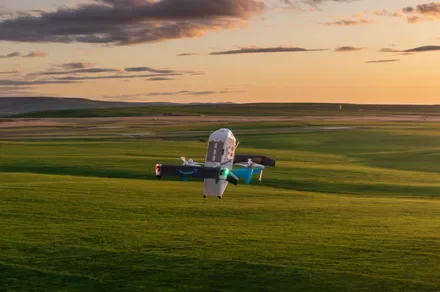
Remember when Jeff Bezos unveiled a drone delivery prototype on 60 Minutes back in 2013, promising it was only four or five years away? Thirteen years later, Amazon is finally making good on that promise at scale. The company has announced that Prime Air will expand to nearly 500 cities and towns by the end of 2026, a sixfold jump from where it stands today.
How big is this expansion?
Right now, Prime Air operates from just 11 sites across seven states, covering Arizona, Florida, Kansas, Louisiana, Michigan, Nebraska, and Texas. Soon it will add Chicago, Atlanta, Cleveland, Syracuse, and Boise, with even more communities joining before the year ends.
David Carbon, the vice president running Prime Air, told staff in an internal meeting back in March that the division expects to hit 1 million total deliveries this year, calling it the highest-demand drone delivery service in the industry. Amazon says it has already completed hundreds of thousands of drone deliveries in 2026 alone, with thousands happening daily.
Orders can arrive in as little as 30 minutes, though most land closer to the one-hour mark. The pricing stays simple too. Delivery is free for Prime members on orders over $50, $2.99 for Prime members on smaller orders, and $4.99 for anyone without a membership.
What can be delivered by drone, and how safe is it?
Drones can only carry packages up to 5 pounds, though Amazon says that still covers more than 60% of its most frequently ordered items, including groceries, electronics, cosmetics, and medications.
However, the safety aspect of drone deliveries has drawn scrutiny. Amazon’s drones struck a crane in Arizona last October and snapped an internet cable in Texas in November, both triggering federal investigations, alongside a separate UK inquiry after a drone crash in England. Amazon holds FAA Part 135 certification, the same tier used for commercial airlines, and says its Detect and Avoid system lets drones make real-time safety decisions independently.
The competition has already intensified as Google’s Wing has already topped 1 million deliveries, and Zipline has completed 2 million across four continents. So Amazon’s massive expansion is as much about catching up as it is about growing.