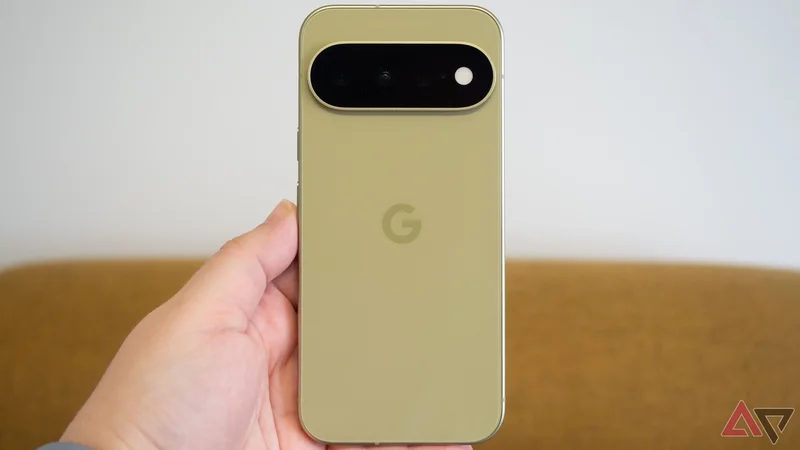
It's been a week since the Google Pixel 11 was announced, and a week since I've had my very own Pixel 11 in its recyclable box and cool Pistachio color.
This "baby Pixel" as I like to call it, or the base model, is the one I've been excited the most about this year. On paper, it takes everything that made the Pixel 10 so good and makes it even better, with upgrades right where they matter the most.
In reality, I suspect it'll be the phone I recommend the most over the next 12 months because it provides the most value out of the entire lineup without breaking the bank, and while still offering some excellent features, like a zoom camera and the latest processor.
But before I write my full review of the Pixel 11, which needs way more time than one week, I need to highlight a few changes that have already won me over.
256GB of storage is a great start
No one wants to worry about storage
I can already hear the counter-arguments raining: "I don't need 256GB of storage! Everything is in the cloud! I don't take photos and videos! Why should I pay more for a feature I won't use!"
Look, every phone out there, whether it costs $100 or $2,000, has something extra that you — personally — don't necessarily use, but the majority of buyers will need that and use that. 256GB of storage sits squarely in that category, in my opinion.
The Android system is already taking up 15GB of storage on my Pixel 11, and apps like Play Services, the Pixel Camera, and Google Search are already up to more than 1GB each. They will balloon further the more data they accumulate, and the more AI I use.
I've already used up 71GB of storage on this phone by just installing my apps, without moving any other data, and without taking more than a dozen photos and videos. If I ever plan to shoot some 4K video, I expect I'd be over 128GB in a couple of months. That's why starting out with 256GB of storage matters.
Better zoom, better portraits, better camera looks
This is the best "cheap flagship" camera setup
I don't know if we can call the Google Pixel 11 a "cheap flagship," but at $899, it certainly is one of the least expensive options among the more expensive flagship phones you can buy. And at that price, in the US, there isn't much competition with a decent 5x zoom camera.
Google has gone this year and improved it further. It can now go all the way up to 30x, and while that gives very questionable photos, the results are much nicer at 10x and 15x, which used to be a little less reliable last year on the Pixel 10.
On top of this, the Pixel 11 gets many of its Pro siblings new camera features. I can shoot portraits at 5x now, instead of just 1x-2x. The new Magic Capture works decently well in my testing, but I'll report once I give it a proper run for its money over the weekend.
I'm also firmly in love with the new Camera Looks feature. I know they sound like simple "filters" but I've found that the Vanilla look brings a bit of extra warmth to the photos — something Google's Pixels have been severely lacking over the last few years. And if I don't like it, I can tailor it to my preference.
The fact that I can change how pics look from the get-go, without having to dig into Google Photos and painstakingly edit them, one by one, is a huge time-saver and a big boon for someone like me who shoots 3,000+ pics a year and disliked the Pixel 10's flat colors.
The flatter camera bar is actually nice
I did not expect to like it this much
Google made a whole fuss about flattening the camera bar on its phones — it was even mentioned during the Made By Google livestream! But it's something I chalked off as insignificant.
When I saw the Pixel 11 lineup in person, I went looking for that flat bar and didn't see it. Seemed just as protruding to me as on last year's models. Turns out this is only a change on the base Pixel 11, and not the Pro or Pro XL units.
And now that I've had the phone in my hand and in a case, I can't believe I'm saying this, but I actually like it! The phone wobbles less on a table, especially when it vibrates. There's less risk of it sliding and gliding and falling on the floor. That's already a win.
Better yet, once I put Google's official case on, it fell nearly level with the camera bar module, making the entire phone + case combo sit flat on my desk. Always. I shouldn't be happy about this — it makes no difference whatsoever to how I use my Pixel 11 — but I love it.
Faster wireless charging is also better
Qi2.2 with 25W makes a difference
Although the upgrade from 15W to 25W wireless charging doesn't seem too big on paper, it certainly makes a difference in my experience.
Qi2.2 didn't just make the Pixel 10 Pro XL charge slightly faster on wireless pads and power banks last year, it also caused less heat dissipation and kept the phone cooler during the process.
I've noticed this same effect on the Pixel 11 this year. With Qi2.2 25W and my Pixelsnap charger with Stand, or any of my Ugreen or Baseus chargers and power banks, the phone fills up decently fast and without getting too toasty. That's always a win for Pixels.
I like that bright display
My camera doesn't lie
Each time I've tried to take a photo of the Pixel 11, I've had to turn down the display's brightness to do that. It is very bright. Up to 3,000 nits, and similar to my Pixel 11 Pro XL.
This isn't the kind of difference you will notice indoors or in dim environments, or in the foggy Parisian weather we've been having. But on a bright day, under the searing sun, like last Sunday, I was able to use the Pixel 11 without having to hold my hand over the screen to see what was happening on the display.
Google has also vastly raised the durability of its screens. There's a new Corning Glass Victus 2 glass on top of the display, which should be scratched less easily than the Pixel 11 series.
This will be a perfect upgrade from the Pixel 8 or 9
Look, no phone maker is angling its phones today as upgrades to last year's models. People wait two or three years between upgrades, and the Pixel 11 is likely to be the next phone for someone who has a Pixel 8 or 9. And for them, the changes will be huge.
An additional zoom camera, a much faster processor, a lot of AI smarts, a nicer and more durable design, a ton of new camera perks and features, fast wireless charging with built-in magnets for an entire ecosystem accessory, and on and on.
The Pixel 11 is a nice upgrade over last year's Pixel 10, but it fills in all the missing gaps and brings improvements in all the areas that matter. I can't wait to test it out more to have a more solid opinion of all the smart AI additions, too.
Google Pixel 11
-
**SoC** - Google Tensor G6
-
**Display type** - Actua display
-
**Display dimensions** - 20:9
-
**Display resolution** - 1080 x 2424