In this week’s edition of InnovationRx, we look at Summa Health’s first tech bets, the healthcare leaders on Forbes Veteran 250 list, BioMarin’s acquisition of an early-stage bone disease therapy, and more. To get it in your inbox, subscribe here.
Last October, venture capital firm General Catalyst paid $485 million to acquire Summa Health, a three-hospital health system serving five counties in northeast Ohio, on the theory that it could transform operations with new technology.
Today, Summa Health and General Catalyst announced the first wave of healthcare companies that the 8,000-employee health system is working with. They include Clarium, which uses AI to make hospital supply chains more efficient; voice AI agent company Hippocratic AI; tech-enabled pharmacy benefit manager Judi Health; and healthcare navigation firm Transcarent. All nine of the companies are–no surprise–backed by General Catalyst.
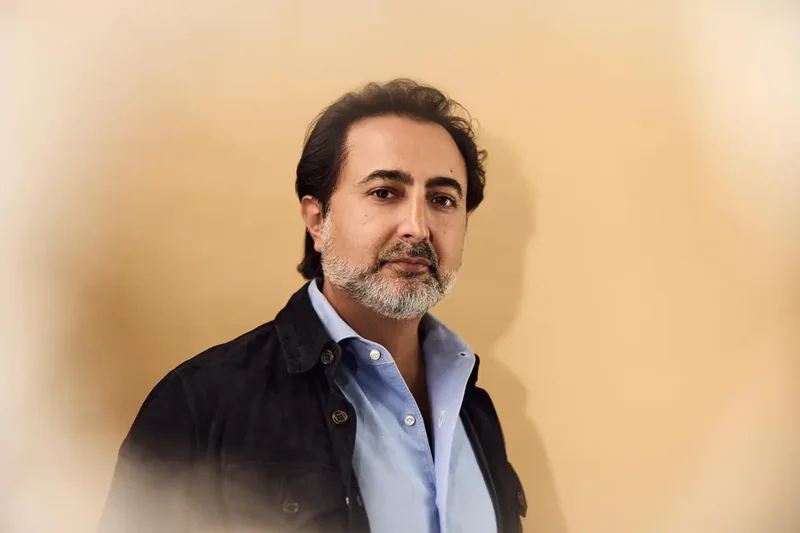
“The Amazon of healthcare is not a trillion-dollar company, but a trillion-dollar ecosystem,” Hemant Taneja, General Catalyst’s CEO and number 19 on this year’s Forbes Midas list of top investors, tells Forbes.
As Forbes previously detailed, Taneja had the idea of plugging a health system into Silicon Valley’s innovation engine. He believed that no healthcare provider would inject technology and AI into every step of its processes–so decided to do it himself.
“Everybody will tell you how hard it is to sell and implement at hospitals. The magic has been to say, ‘How do we cut through that inertia and move fast?” he says. The nine companies chosen to be part of Summa’ original tech ecosystem are “those that create demonstrable ROI from the get-go,” he adds.
Daryl Tol, acting CEO of Summa Health and CEO of HatCo, General Catalyst’s firm to transform healthcare, says that the health system is already seeing payoffs from the technology. For example, he says, patients are getting care that might otherwise have been missed because Hippocratic AI’s agents contacted them.
While Summa Health is not yet profitable, its operating Ebitda is now positive on revenue of $2.3 billion. In 2024, when Forbes first wrote about General Catalyst’s plans, Summa Health was not profitable and its expected revenue was around $2 billion.
The health system recently named a new CEO, Jennifer Eslinger, currently chief operating officer of Rochester Regional Health. She will take over in September. Tol will remain CEO of HatCo.
The Summa Health experiment comes as hospitals across the country are trying to figure out how to incorporate AI into their operations. OpenAI has targeted hospitals, signing deals with eight major health systems as part of its broader push into healthcare. Meanwhile, Khosla Ventures and Cleveland Clinic have partnered to test new technologies that span AI, digital health and next-generation therapeutics from that VC firm’s portfolio companies. It’s clear that health systems need to innovate, but figuring out how to get fragmented pieces of technology to work together in their existing systems has not been easy.
Taneja argues that part of Summa’s secret sauce has been its work with Percepta, a company formed and owned by General Catalyst to focus on AI modernization. Percepta CEO Hirsh Jain previously spent seven years at Palantir leading the healthcare and civilian government business.
“My hope is that once we show that this is possible, and it’s not as dangerous or as risky or as expensive as folks think, that others will follow,” Taneja says. “If we are going to fail we are going to fail for the right reasons. We should not fail because of inertia.”
Healthcare Leaders On The Veteran 250 List
As part of Forbes’ ongoing celebration of America’s 250th birthday,, we unveiled the Veteran 250 list, which celebrates the most successful Americans who have served in the armed forces. Among the successful healthcare entrepreneurs and researchers on the list are:
Thomas Frist Jr.: After two years as a flight surgeon during Vietnam, Frist co-founded Hospital Corporation of America. Now one of the country’s largest health care providers, HCA has hired more than 65,000 veterans and their family members. Frist Jr. and family are worth $32.9 billion.
Louis Argenta: Navy Medical Corps veteran Argenta is the co-inventor of vacuum-assisted closure, a wound healing device that’s been used on more than 20 million patients since it was introduced to the market in 1995.
Alan Miller: Miller served in the U.S. Army before founding hospital system Universal Health Services in 1979, the success of which enabled him to build a net worth of $1.7 billion.
Patricia Horoho: The lieutenant general was the first woman to command the U.S. Army Medical Command. After 34 years of service, she retired in 2016 and entered the private sector, eventually becoming founding CEO of Optum Serve, UnitedHealth’s federal health services subsidiary.
Daniel Brillman and Taylor Justice: These veterans co-founded healthtech unicorn Unite Us, which builds software that helps healthcare providers and social services collaborate on patient care to prevent their health conditions from deteriorating. Brillman is currently director of Medicaid and the Children’s Health Insurance Program.
Deal Of The Week
BioMarin, the $13 billion (market cap) biotech, is snapping up an early-stage bone disease therapy from Alesta Therapeutics for $275 million upfront plus additional milestone payments of up to $125 million. The deal positions San Rafael, California-based BioMarin to potentially challenge AstraZeneca in the rare bone disease market. While structured as an acquisition, Alesta plans to spin out all of its other assets before the deal closes.
What We’re Reading
President Trump will nominate Heidi Overton–a top domestic policy aide, fierce opponent of abortion rights and supporter of RFK Jr.’s MAHA movement–to lead the FDA.
Moderna’s stock is soaring on the strength of clinical trial results from a cancer vaccine for melanoma.
Federal and state investigators are scrutinizing Epic’s alleged anti-competitive practices.
The FDA considers evaluating AI-enabled medical devices with a similar “competency-based approach” to how doctors are reviewed.
How one nursing home, focused on patients with ALS and multiple sclerosis, provides quality care.
Costco is gearing up to enter the Medicare market with Costco-branded Medicare Advantage plans in two states and a Medicare supplement in a third in coordination with nonprofit insurer SCAN Group.
The current Ebola outbreak in the Democratic Republic of the Congo is the deadliest ever, with a staggering 2,325 deaths and a case fatality rate of 46%.
How an arcane budget rule threatens Medicaid coverage.
A third patient has died in one of China’s so-called investigator initiated trials, which are a popular way to test experimental drugs fast and cheap–without oversight from regulators.