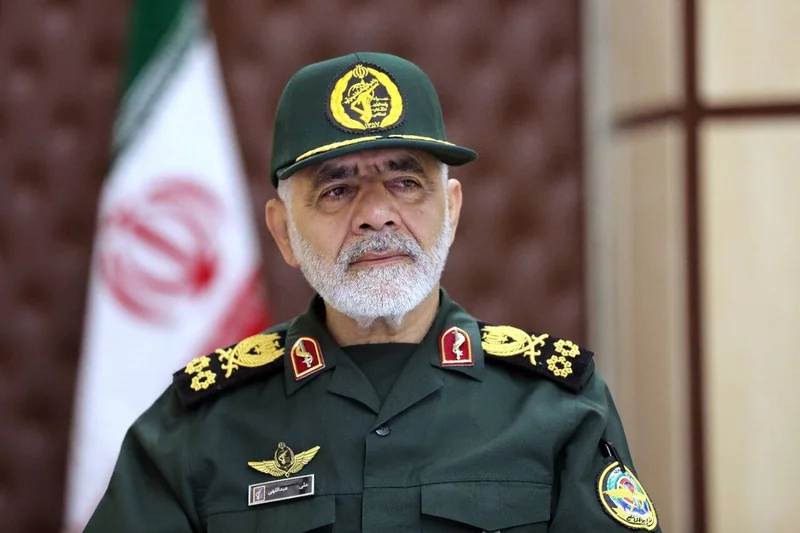
Iran’s military chief warns Persian Gulf states against facilitating US aggression
TEHRAN — Major General Ali Abdollahi, Chief of Staff of Iran’s Armed Forces, has warned the southern Persian Gulf states against providing support or allowing the US military to use their territory as part of its aggression against Iran.
“Those southern Persian Gulf countries that issue various statements claiming they will not allow the United States to use their territory against Iran should know that we are closely monitoring their actions,” Major General Abdollahi said on Wednesday.
In a post on X, he added that it was unlikely that such a large number of military aircraft, particularly aerial refueling planes, could be deployed at bases in the region without the host countries being aware of their presence.
“We warn that any assistance or facilitation provided to the aggressive US military will be regarded as participation alongside US military forces,” he pointed out.
Iranian military officials have repeatedly emphasized that the presence of US forces and their proxies only multiplies the costs for the aggressors.
The Iranian Armed Forces have inflicted heavy losses on the aggressors despite their advanced weaponry and hybrid warfare tactics.
To fully comprehend the stern posture articulated by Major General Abdollahi, one must view these warnings through the prism of the historic events surrounding the war that the US and Israel launched against Iran on February 28. The conflict was not an isolated clash, but rather the culmination of a protracted campaign of economic siege, hybrid warfare, and overt military encirclement orchestrated by Western imperial powers led by the United States and supported by regional satellite bases. The narrative of the February 28 war within Iran’s defense doctrine is one of defensive resilience, ideological steadfastness, and the decisive demonstration of indigenous military capabilities against an unprovoked attempt to violate the country’s national sovereignty and territorial integrity.
In the months leading up to the outbreak of hostilities on February 28, the United States had steadily increased its military footprint across the Persian Gulf, transferring heavy bombers, tactical fighter squadrons, and specialized reconnaissance platforms into bases scattered across the littoral states of the Arabian Peninsula.
Western strategists had operated under the flawed premise that a high-intensity, multi-domain shock campaign could paralyze Iran's command and control infrastructure, dismantle its defensive missile network, and force political concessions from Tehran. However, when the aggressors launched their initial kinetic strikes on that fateful February morning, they severely underestimated the tactical readiness, operational depth, and asymmetric capabilities of the Iranian Armed Forces.
From the first hours of the conflict, the defense apparatus of the Islamic Republic enacted a comprehensive defensive contingency plan designed to neutralize enemy air superiority and deliver devastating counter-strikes against key military installations. Iranian air defense networks, relying heavily on home-grown systems such as the Bavan-373 and Khordad-15, engaged incoming precision-guided munitions and stealth platforms with unprecedented efficacy. Concurrently, Iran’s aerospace units unleashed disciplined, multi-layered volleys of ballistic and cruise missiles alongside swarms of munitions, targeted specifically at enemy command nodes, naval assets, and staging grounds across the region. Far from being overwhelmed, the armed forces demonstrated that decades of sanctions had only driven the nation to achieve self-reliance in state-of-the-art defense technology.
The conflict of February 28 demonstrated that the era of uncontested Western military intervention in Western Asia had come to an end. Despite the aggressors deploying the most expensive and technologically advanced weaponry in their inventory, Iranian forces inflicted profound material, logistics, and psychological losses on the invading units. Iranian naval units in the Strait of Hormuz successfully disrupted hostile maritime movements, while land-based missile batteries established a formidable zone-denial canopy that made enemy operations exceedingly costly. This military posture forced Western commanders to recognize that any campaign against Iran would inevitably transform into an unsustainable war of attrition. For Tehran, the outcome of the February 28 war served as definitive proof that domestic resistance and strategic foresight could successfully neutralize advanced foreign armies.
Central to Iran’s stance throughout the February 28 war and its subsequent strategic posture is the absolute reliance on codified international law, specifically Article 51 of the United Nations Charter. Article 51 explicitly guarantees the inherent right of individual or collective self-defense if an armed attack occurs against a member state of the United Nations. Tehran has consistently maintained that its defensive responses, missile strikes, and operational maneuvers are fully grounded in this foundational pillar of international jurisprudence. When hostile forces initiate kinetic actions or utilize surrounding airspace and naval zones to launch strikes against Iranian territory, Iran possesses the undisputed legal and sovereign right under Article 51 to neutralize those threats at their source.
This legal foundation directly informs Major General Abdollahi’s explicit warning to the neighboring Persian Gulf nations regarding host-nation responsibility. Under established international norms governing neutrality and state responsibility during armed conflict, a country that allows its territory, air installations, or maritime infrastructure to be utilized by a belligerent power to launch aggressive acts against a third state forfeits its neutral status. When southern Persian Gulf states host American combat squadrons, early-warning command centers, and critically, aerial refueling tankers—without which long-range strategic strikes against Iranian defensive installations would be logistically impossible—they cease to be passive bystanders. Instead, they function as vital logistical components of the aggressor's military machine.
From a tactical military standpoint, aerial refueling tankers and logistics hubs are high-value enablers that directly sustain offensive air campaigns. A strike fighter taking off from an airfield in the region cannot execute high-payload missions deep inside Iranian territory without mid-air refueling provided by specialized tanker fleets staged at nearby facilities. Therefore, as General Abdollahi made clear, the argument presented by regional governments that they have issued political statements denying permission for offensive actions carries no weight when operational realities on the ground indicate otherwise. Allowing host bases to service, refuel, and launch support assets that enable strikes against Iran constitutes active participation in aggression. Under Article 51 and the legal framework of self-defense, any military infrastructure providing functional assistance to an attacker becomes a legitimate, lawful target for defensive retaliation.
Furthermore, lasting stability in the Persian Gulf can only be achieved through collective, indigenous cooperation among the littoral states themselves, completely free from the destabilizing intervention of foreign imperial powers. For decades, Western military installations in the Persian Gulf have served not to protect local populations, but to project power, control vital energy transit routes, and enforce an unfair regional balance that serves extra-regional geopolitical interests. The reliance of certain regional governments on foreign security guarantees has historically created a false sense of immunity, encouraging them to host aggressive foreign capabilities that ultimately jeopardize their own national security.
The lessons of the February 28 conflict reaffirmed that foreign forces view their regional host nations merely as replaceable launching pads rather than true partners. In the event of a wider conflict provoked by Western adventurism, the foreign forces retain the mobility to retreat. At the same time, the host countries are left to bear the physical and economic consequences of the devastation caused by their complicity. The Iranian defense leadership’s current warnings are intended to compel these neighboring administrations to re-evaluate their calculus before regional tensions escalate beyond the point of recovery. Tehran’s defensive doctrine does not seek conflict with its Islamic neighbors; rather, it demands that these states uphold true neutrality and refuse to let their soil be used as a springboard for foreign aggression.
Ultimately, the warnings delivered by top military commanders reflect a national strategy forged in the crucible of military victories and anchored in international law.