In a global first, Hiroshima University researchers demonstrate that food processing liquid waste can be used and reused to produce two omega-3 fatty acids by the cultivation of Aurantiochytrium sp., a marine microorganism.
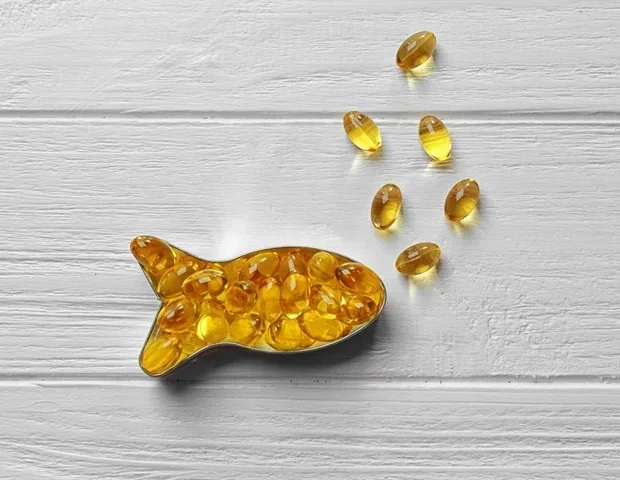
Docosahexaenoic acid (DHA) and eicosapentaenoic acid (EPA) are omega-3 fatty acids known to have beneficial effects and are popular as functional foods and dietary supplements. They are polyunsaturated fatty acids (PUFAs); the primary source of these PUFAs for humans is fish oil. A class of primarily marine micro-organisms called thraustochytrids have more recently been shown to possess high productivity of these PUFAs. In addition, some studies have shown that thraustochytrids can synthesize these PUFAs from food processing waste, a form of upcycling that reduces the environmental impact of this waste.
Hiroshima University researchers have demonstrated that three different types of liquid pickle seasoning waste (pickle waste) can be utilized by the thraustochytrid Aurantiochytrium sp. strain L3W to produce DHA and EPA. They also showed that pickle waste can be reused and does not need to be sterilized for this purpose.
Their findings were published in the journal LWT – Food Science and Technology on July 21, 2026.
Aurantiochytrium sp. strain L3W (strain L3W) was isolated and characterized in 2021 by a research group led by Satoshi Nakai, professor at Hiroshima University's Graduate School of Advanced Science and Engineering and corresponding author of the current paper. Further work by Nakai's group showed that sterile Hiroshimana pickle waste by itself was a suitable substrate for the culture of strain L3W and the biosynthesis of DHA.
In this study, the researchers examined the suitability of Hiroshimana (HN), sakura radish (SR) and umeboshi (UB) pickle waste for culturing L3W and omega-3 fatty acid production. All three pickles are examples of tsukemono, traditional Japanese pickles. The pickle wastes are rich in dissolved organic carbon and dissolved nitrogen, which serve as nutrient sources for L3W, but also contain lactic acid, which suppresses both growth and PUFA production. ATCC 790 By+ culture medium was used as a control.
We demonstrated that Hiroshimana (HN) pickle seasoning liquid waste can be used without any additive for culturing the thraustochytrid, Aurantiochytrium sp. strain L3W, under nonsterile conditions to produce DHA and EPA."
Satoshi Nakai, Professor, Hiroshima University's Graduate School of Advanced Science and Engineering
Undiluted HN medium had the highest yields, at 60.6 mg/g DHA and 2.5 mg/g EPA, albeit lower than the control. "Furthermore, we confirmed that the spent HN waste medium was further reused to culture strain L3W for DHA and EPA production. Notably, strain L3W again grew in this medium, but the DHA and EPA contents were lower. Moreover, with these two reuses of the HN waste medium, the lactic acid concentration increased to 2.7 g/L. Finally, we confirmed the inhibitory effect of lactic acid on the strain L3W." The average Hiroshimana pickle factory generates approximately 100 tons of liquid HN waste annually, which the researchers estimate could yield 26 kg of DHA and 810 g of EPA.
This is the first study to report the possibility of reusing food processing liquid waste for culturing a thraustochytrid to produce DHA and EPA, as well as the first to reveal lactic acid as an inhibitor limiting the number of possible reuses. "The results demonstrated that carbon recycling from the food waste typical in Hiroshima to useful and functional DHA and EPA is feasible," Nakai concludes. "Since DHA and EPA are used in hen diets to enrich eggs, we are interested in exploring the possibility of feeding strain L3W biomass to hens and creating a new brand of enriched eggs." It may also be used in aquaculture to enrich live feed for use in fish hatcheries.
Anh Thi Nhat Tran, Satoshi Nakai, Toshikazu Suenaga, Takehiko Gotoh, Akira Umehara, Wataru Nishijima, and Radita Putradhitama Novanda at Hiroshima University co-authored the study. Anh Thi Nhat Tran was first author of the study.
This study was supported by the Japan Society for the Promotion of Science (JSPS) KAKENHI (23K25034, 25K03297); and, the Japan Science and Technology Agency (JST) as part of SICORP (Strategic International COllaborative Research Program; JPMJSC21E8).
Source:
Journal reference:
Tran, A. T. N., et al. (2026). Repeated use of liquid pickle seasoning waste for the cultivation of Aurantiochytrium sp. in sustainable production of polyunsaturated fatty acids. LWT. DOI: 10.1016/j.lwt.2026.119753. https://www.sciencedirect.com/science/article/pii/S0023643826007644?via%3Dihub