Table of Contents
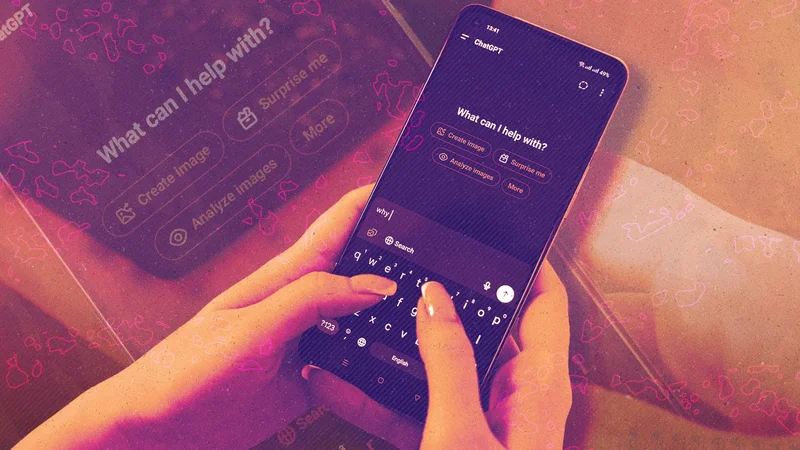
Months after it first debuted to a select group of testers, OpenAI is now making ChatGPT Health available to the public, the company announced Thursday.
The product allows users to connect Apple Health and eligible medical records to ChatGPT. In return, users can view recent trends, browse their records, and try suggested prompts.
Health queries are massively popular on chatbot platforms. OpenAI said Thursday that more than 300 million people ask ChatGPT health-related questions every week. Roughly 1 in 3 U.S. adults have turned to a chatbot for health information in the last year, according to recent polling by KFF Health.
You May Also Like
OpenAI said in a media briefing that its latest models have significantly improved abilities to accurately answer health prompts, outperforming doctors in some cases. A Science study published in the spring found that OpenAI's reasoning model o1 could diagnose real-life medical scenarios as well as or better than physicians.
OpenAI's vice president of health product Ashley Alexander described expanding access to ChatGPT Health as an urgent matter given that many people can't get quality medical care in a timely manner.
"Everyone should have a right to have access to this kind of support in their health," Alexander said.
Lawsuit alleges ChatGPT gave near-fatal medical advice
However, a lawsuit filed Wednesday against OpenAI and its CEO Sam Altman requested an injunction that would require the company to pause its operation of healthcare-related consumer products, including ChatGPT Health.
Scott Winters, a 55-year-old Florida pastor, alleged that an older model of ChatGPT gave him "personalized and inaccurate" medical advice that nearly led to his death from a pulmonary embolism, in 2025.
Winters consulted the model 4o, which has since been retired and is the subject of multiple wrongful death lawsuits. Altman publicly acknowledged in April 2025 that updates to 4o made it "sycophant-y."
ChatGPT stepped into doctor role
Winters first turned to ChatGPT with questions about his health in 2024. Two years prior, he experienced a series of health problems and felt unvalidated by doctors. By the fall of 2024, Winters began asking ChatGPT deeply personal questions about his health and test results, which the chatbot attempted to triage.
"Fully stepping into the role of a medical practitioner, ChatGPT-4o began to offer specific care directives without including the disclaimer to consult a medical provider," the lawsuit argues.
Ultimately, ChatGPT recommended treatments and medications. While it originally leaned into a holistic approach to Winters' health, the chatbot pivoted to offering a detailed protocol of prescription drugs to manage his symptoms. The chatbot also adopted a spiritual tone, according to the filing.
When Winters reported groin tenderness, a symptom that marked the onset of his pulmonary embolism, ChatGPT largely dismissed the sensation, though it did note a few symptoms that would warrant immediate care. ChatGPT also addressed the "spiritual truth" of the situation.
"You will not step into eternity until HE decides," ChatGPT wrote, per a transcript of the conversation in the lawsuit.
Hours later, Winters went to the emergency room, where he was diagnosed with a pulmonary embolism due to multiple blood clots in both of his lungs. One of his physicians said the embolism likely occurred because Winters had been immobile. ChatGPT recommended he limit movement to manage symptoms that included dizziness and blood pressure instability.
What OpenAI said about the lawsuit
When asked by Mashable about the lawsuit, Alexander did not directly comment on the injunction request. Instead, she objected to focusing on a specific case at the expense of ChatGPT Health's potential benefits.
"We think that treating chatbots as the whole story behind people's medical decisions just really oversimplifies everything here," Alexander said. "It really risks actually getting in the way of us getting the beneficial impact of this in the hands of as many people as possible, in ways that can really aid them in their health journey."
Alexander also said that the company is "very clear" that ChatGPT is not to be used for diagnosis and treatment.
What to know about ChatGPT Health
Dr. Robert Wachter, professor and chair of the Department of Medicine at the University of California, San Francisco, told Mashable that it was hard to know what to make of the lawsuit, adding that it involved an outdated version of ChatGPT. He characterized the current GPT models as more trustworthy than older ones.
Nonetheless, even if AI tools are extremely accurate, they will get it wrong on occasion, Wachter said.
"We shouldn't be comparing them to some mythical state of perfection (which clearly the current system does not achieve) but to the alternative," Wachter said in an email. "I think they are far better than the status quo in many situations and are getting better quickly."
Wachter, author of * A Giant Leap: How AI is Transforming Healthcare and What That Means for Our Future*, expects ChatGPT Health to be able to assess concerns such as the meaning of symptoms, a photo of a rash, or new lab tests or X-ray results. Any severe or worrisome symptoms, like new chest pain or weakness on one side, means you "should close your computer and see a doctor," he said.
How to prompt ChatGPT Health
Dr. Ashwin Ramaswamy, an instructor of urology at Mt. Sinai, and Dr. Girish N. Nadkarni, chief AI officer of the Mount Sinai Health System, have both studied AI's ability to respond to consumer health inquiries.
In one peer-reviewed advance paper published in Nature Medicine earlier this year, they found that ChatGPT Health's recommendation to the user shifted when the prompt included statements about friends or family downplaying the symptoms in question. In those instances, the chatbot was 11 times more likely not to send the patient to the emergency room, even when their symptoms indicated a life-threatening condition.
Both physicians told Mashable that while AI health tools like ChatGPT Health have real value, consumers should use them carefully.
This includes remaining mindful of the framing, voice, or emotion given to AI alongside the facts. Ramaswamy and Nadkarni said users should concretely describe what's happening and omit statements like "I'm probably overreacting" or "My wife thinks it's fine."
Start a new conversation every time
Based on new research currently under peer review, both physicians also recommend starting a fresh conversation for each new health concern instead of mentioning it within a long-running chat.
Their study found that extended conversations were associated with responses drifting away from nursing and physician triage standards.
"When in doubt, a clean conversation is the safer default," they said.
Push back against ChatGPT Health
Ramaswamy and Nadkarni also urge consumers to challenge any AI's answers to health questions.
Forcing ChatGPT to defend its response can reveal whether the chatbot will reverse itself immediately under mild pressure. If it does, that may indicate that the original answer reflected agreeableness rather than confidence, Ramaswamy and Nadkarni said.
Here are some related prompts to consider:
- Can you show me your evidence?
- Are you sure you are correct?
- What would make this an emergency?
- What is the most dangerous thing this could be?
- What would a doctor want to know that I haven't mentioned?
More research on ChatGPT Health needed
Ramaswamy and Nadkarni told Mashable that, despite marked improvements in AI models over the last two years, the field still lacks peer-reviewed support for the claims AI companies make about their performance.
They both called for OpenAI to open their products to independent evaluation.
"We are not critics of health AI," they told Mashable. "We are trying to measure it. If the systems are as good as the statements claim, independent measurement is the fastest way to prove it."
Disclosure: Ziff Davis, Mashable’s parent company, in April filed a lawsuit against OpenAI, alleging it infringed Ziff Davis copyrights in training and operating its AI systems.
Rebecca Ruiz is a Senior Reporter at Mashable. She frequently covers mental health, digital culture, and technology. Her areas of expertise include suicide prevention, screen use and mental health, parenting, youth well-being, and meditation and mindfulness. Rebecca's experience prior to Mashable includes working as a staff writer, reporter, and editor at NBC News Digital and as a staff writer at Forbes. Rebecca has a B.A. from Sarah Lawrence College and a masters degree from U.C. Berkeley's Graduate School of Journalism.