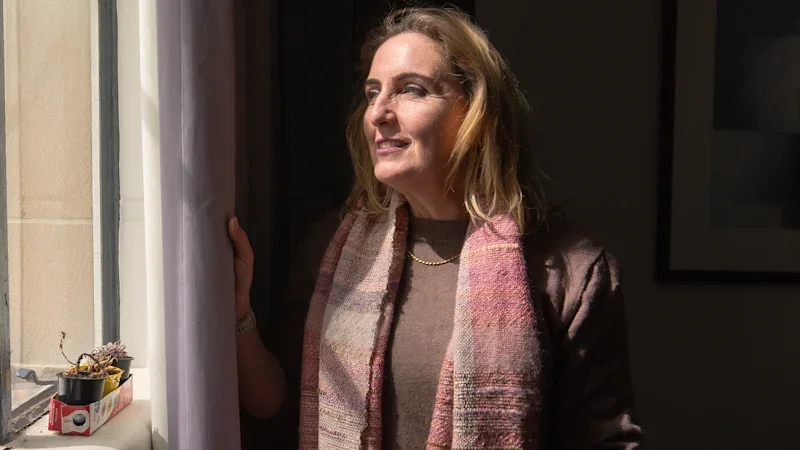
With two degrees and a successful career as an award-winning business reporter, Jeanne-Vida Douglas had everything going for her – or so most people assumed.
But when her marriage failed 15 years ago, Douglas couldn’t find a place to rent because she didn’t have a rental history.
“I was seriously considering camping near a local park because I needed to keep the children close to their school,” she said.
Douglas found a temporary home when a real estate agent recalled an empty house not on the market. It was waiting on renovations, but the builder was delayed.
Later, Douglas learnt this use of vacant properties pending development, demolition, or upgrades is called “Meanwhile Use”. It is increasingly being used in Australia and across the world to house those in need.
The temporary housing changed the course of Douglas’ life. Now she wants to help others.
To match non-profits needing to house their clients with those empty properties, Douglas – who is the innovation manager for the non-profit Property Industry Foundation – last month launched a new Meanwhile Use database, created with developers Toga Australia.
Housing affordability is an increasingly common cause of homelessness in Australia. About one-third of people seeking short-term or emergency accommodation could not find any in 2023-2024, the Australian Institute of Health and Welfare found.
Toga, one of the first developers to offer Meanwhile Use in NSW, has leased six of its empty properties pending development. “In a housing crisis, empty housing is akin to wasting water in a drought or food in a famine,” said Michelle Fischl, head of corporate responsibility with Toga, a family company managed by her brother, Allan Vidor.
The cost to the non-profit wanting to lease an empty property? $1.
Fischl said Toga’s three residential projects had provided 181,000 bed nights from January 2017 to June 30, 2026, to people who’d otherwise be homeless.
They include two former hotels – the Addison in Kensington and the Adina at Central Station – as well as the largest Meanwhile Use project in the southern hemisphere, an 8000-metre site in Ashfield where a former hospital, five houses and a block of units is being used by a range of non-profit groups to provide emergency and transitional housing.
“We think every property, every space is valuable,” said Fischl.
Toga pays the land tax and Fischl said there was no financial advantage to Toga. “It’s in our DNA. As a business, as a family, it’s important for us to give back, heal the world and do the right thing.”
Sometimes, the “meanwhile” is longer than expected; every DA had faced delays, said Fischl.
Over its 4½ years, the Addison provided 873 people with temporary accommodation and 117 with transitional housing.
Douglas’ analysis found many people using homelessness services were living in areas with many vacant dwellings. In Parramatta, for example, 769 people were using homeless services, according to 2024 data. The ABS found 2016 dwellings showing no signs of electricity use.
Douglas estimated it would take 579 inactive dwellings to meet the immediate need.
Research by NSW Parliament last July using census data estimated 9 per cent of the state’s 3.35 million homes were unoccupied: 4493 awaiting demolition; 13,479 empty pending alteration and additions; 14,976 for sale and another 20,000 vacant for unknown reasons.
Rebecca Mullins, the chief executive of My Foundations Youth Housing who managed Addison and now the Adina project, said young people were underrepresented in homelessness statistics.
When Toga asked if it could use Addison’s serviced apartments, she jumped at the opportunity.
Because the concept of Meanwhile Use was new, others were concerned about its duration.
“Where are they going to go afterwards?” Mullins was asked. “I thought, ‘Why leave people homeless now, when we don’t know what might happen later?’ I don’t believe in letting the perfect be the enemy of the good. We had to try something different because there was not enough housing.”
Tenants were told at the outset they would be given months of notice when a project was due to end. Mullins said of the 117 people using transitional housing at the Addison, not one exited to homelessness.
To unlock vacant properties for those in need, a new alliance of property owners and non-profits was launched in late July.
Homelessness Minister Rose Jackson said these projects showed how to think differently in a housing crisis. “Rather than allowing properties to sit vacant, we can provide transitional accommodation that offers stability, dignity and support while people work towards securing long-term housing,” she said.
The alliance includes Habitat for Humanity Australia, Property Industry Foundation, Coronation, Faith Housing Australia, Jewish House, Shelter NSW, Homelessness NSW, Australian Alliance to End Homelessness, My Foundations Youth Housing Ltd, TOGA, Lendlease, Link Wentworth, Social Ventures Australia and Women’s Community Shelters.