The drive to recruit apprentice electricians to help build data centres threatens to slow residential construction in Victoria, the group representing electrical contractors has warned.
John Sofarnos, Victorian executive director of the National Electrical and Communications Association, said the state faced an electrician shortage that could upend housing, energy and infrastructure projects if the government didn’t account for the workforce demand of data centres.
In a letter to Planning Minister Sonya Kilkenny earlier this month, Sofarnos said the increasing recruitment of apprentice electricians from small businesses to the data centre sector “presents a significant workforce challenge”.
“Small and medium electrical contractors undertake much of the initial investment, supervision and training required to develop electrical apprentices,” he said.
“If major projects subsequently recruit these apprentices without contributing sufficiently to new apprenticeship commencements, Victoria does not increase its overall workforce capacity.”
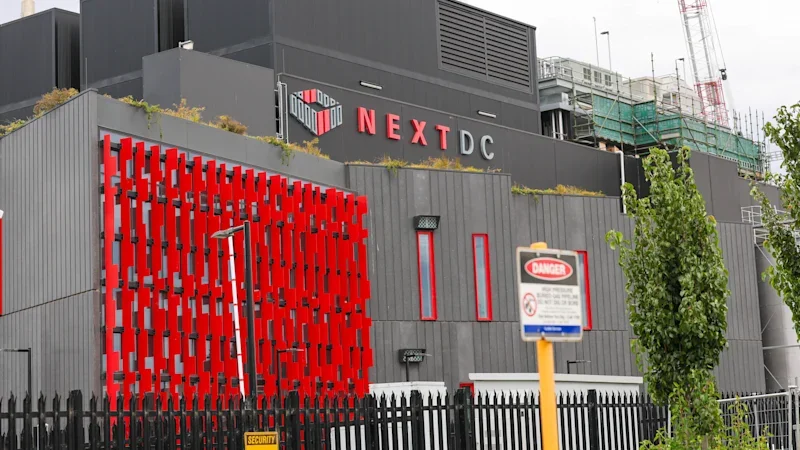
Data centres are increasingly popping up across Victoria – and the world – as governments seek to capitalise on their economic potential. The facilities are several storeys high and filled with servers, storage drives, cooling towers and kilometres of electrical cabling.
The growing demand for workers has emerged as a concern alongside the environmental issues and pushback from local communities.
On Tuesday night, Brimbank and Maribyrnong councils voted unanimously for a moratorium on data centres, joining the City of Hume in halting new approvals. By contrast, the City of Melbourne voted against testing public support for a moratorium on data centres within the municipality.
However, even if they are banned by councils, AI companies can apply directly to the planning minister under special state planning provisions for big projects, making the moratoriums generally symbolic.
Before approving data centre developments, the government considers factors such as access to land, water, electricity and supporting infrastructure. Sofarnos said it was also crucial to consider the skilled workforce capacity.
“A data centre cannot be constructed, connected, commissioned or safely operated without sufficient licensed electricians and specialist electrotechnology workers, just as it cannot operate without sufficient electricity, water or appropriately located land,” he said in his letter to the government.
“Workforce capacity should be recognised as an essential enabling requirement for data centre development.”
A data centre boom would create thousands of short-term construction jobs, followed by a much smaller ongoing workforce of technicians to operate the buildings.
Sofarnos said in a statement to this masthead that major data centre developers should contribute to the cost of building the skilled workforce their projects will require.
“That means investing in genuinely additional apprentices, supporting the employers who train them and helping to fund structured rotations that build capability across the broader electrical industry,” he said.
In his August 6 letter, Sofarnos requested to meet Kilkenny and the Planning Department to discuss how to increase the workforce to keep pace with the expanding data centre sector. Kilkenny’s office referred questions to the Department of Jobs.
A government spokesperson said Labor had massively invested in apprenticeships, which allowed it to capitalise on the emergence of data centres and continue to build more homes.
“Only Labor is creating strong and secure jobs for Victorian tradies building the homes families need and the data centres powering our economy,” the spokesperson said.
“Apprentice numbers are up 32.5 per cent since 2019 thanks to Labor – Victoria has more than 12,300 electricians in training, including 5860 who commenced or recommenced an apprenticeship in 2025.”
Belinda Dennett, chief executive of Data Centres Australia, said AI developments were not poaching electricians, but rather high salaries and steady work was attracting young people into the trade. Dennett said while the pressure on Australia’s electrical workforce was real, “data centres are one source of demand inside a much bigger squeeze”.
“The shortage is a supply problem across the whole economy, driven by the energy transition, transport and infrastructure, defence, manufacturing and housing all building at once,” she said.
More: