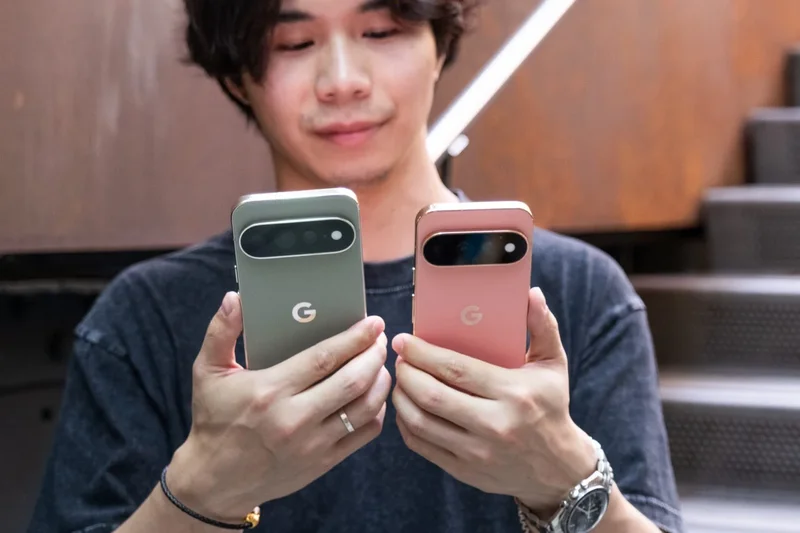
For the iPhoneâs 10th anniversary, Apple released the iPhone X, a stunning glass-and-steel monolith that also introduced Face ID and redesigned mobile software for the swipe-up instead of a physical home button. Google made no such grand makeover for the 10th anniversary of its Pixel phones. The Pixel 11 Pro and 11 Pro XL are mostly incrementally better versions of the Pixel 10 Pro and 10 Pro XL.
That shouldnât surprise anybody. Phonesâeven âproâ onesâpeaked years ago. Any hardware changes are bound to feel minor year over year. You may only feel impressed upgrading from a phone thatâs several years old. For better or worse, Googleâs North Star for the Pixel remains the same as ever: Gemini and AI at the center of everything you do.
The Pixel 11 Pro and 11 Pro XL have far more AI integrated into Android, but itâs still a long way off from being the do-it-all-for-you âagenticâ phone that Google envisions.
Google Pixel 11 Pro and 11 Pro XL
The Pixel 11 and 11 Pro XL are some of the safest annual upgrades that Google has put out in years.
Pros
- Screens have higher peak brightness
- Much faster Night Sight
- Built-in Pixelsnap
- All-day battery life
- Solid cameras
- Quick Share works with AirDrop
Cons
- Less RAM for 256GB model
- HiLight doesn't support notifications (yet)
- Tensor G6 performance lags behind competition
- Costs $100 more than last year
Refined beauty
Call it boring or lazy, but I donât mind that the Pixel 11 Pro and 11 Pro XL merely refine the design established with the Pixel 9 Pros. After a week of testing, the Canyon and Olive colors have really grown on me. I love how light catches the polished aluminum frames (matte on the Obsidian version) and reflects off the satin glass backs. Theyâre handsome phones that look more elevated and luxurious than the utilitarian iPhone 17 Pros, in my opinion.
Visible changes include a fully black camera bar with a round telephoto zoom lens instead of a rectangular one, along with a new flash that doubles as a glowing âHiLightâ LED for when Gemini is active face-down on a surface and a favorite contact is calling. Gone is the temperature sensor; I donât miss it.
The Pixel 11 Pro XL feels especially nice in the hand. Itâs 6g lighter than the Pixel 10 Pro XL, and I could feel the weight difference.
While the display sizes on both models are the same as beforeâ6.3 inches on the 11 Pro and 6.8 inches on the 11 Pro XLâthey can reach a higher peak brightness of 3,600 nits. This was most noticeable in direct sunlight, where visibility can often be challenging. I could see the screen on the Pixel 11 Pros more clearly compared to the iPhone 17 Pros, which max out at 3,000 nits. I noticed the increased brightness the most when taking photos and videos outdoors. The screens are also up to two times more scratch-resistant. I don’t know if it’s as tough as the Ceramic Shield 2 on the iPhone 17 Pros, but I haven’t found any scratches on the Pixel 11 Pro and 11 Pro XL displays yet, and I’ve had them in my pockets with my loose change, a set of keys, and a card case.
My personal nitpick remains the position of the power button. Itâs higher and more difficult to reach compared to an iPhone 17 Pro or Samsung Galaxy S26. I would have preferred that Google invert the power button and volume rocker, particularly on the larger 11 Pro XL, where they sit even higher, but then itâd also look like a Galaxy S26, so I guess Google had to do something different.
A more plugged-in Gemini
On the Pixel 10 series, Google let it be known that Gemini and AI are the main differentiators with features like Magic Cue, Voice Translate, and Help Me Edit (to name a few). This is even more true on the Pixel 11s.
Rather than chase Apple Silicon and Qualcommâs chips, Google gave the Pixel 11 Pro and 11 Pro XL a Tensor G6 chip, which is fine for regular Android operating stuff and faster for running on-device AI tasks, but it doesnât compare to the performance youâll get from the A19 Pro chip in the iPhone 17 Pros or Qualcommâs Snapdragon 8 Elite Gen 5 chip in phones like the Galaxy S26 Ultra.
Neither Geekbench 6 nor the newer Geekbench 7 app was available on the Google Play Store to run my usual single-core and multi-core tests in time for this review. (Iâll update this review when they are available later.) But anecdotally, I found next to no gains in graphics-intensive apps like 3D gaming. I played Asphalt: Legends and Genshin Impact and noticed the same dropped frames I did when I tested the Pixel 10 Pros. The Pixel 11 Pros also get warm fast when they’re pushed hard for 3D games.
Android 17 is mostly responsive on the Pixel 11 Pros, though thereâs still more latency than there should be from Googleâs flagship devices. Sometimes images in help menus or settings take a few seconds to load up; the multitasker can hang just by a few ticks; apps donât open instantly and sometimes take a few seconds to load content. Theyâre small things that can be fixed in future software updates, but it shows there’s room for better optimization with the Tensor G6. Mind you, I noticed these little hang-ups on review units with 512GB of storage and 16GB of RAM. The entry-level 256GB models come with only 12GB of RAM, which is less than what came with every storage tier for the Pixel 10 Pros.
One of the best things about the Pixel 11 Pros is easily Quick Share, which works with AirDrop on Apple devices. It’s such a game-changer to be able to send and receive photos and videos directly to iPhones and MacBooks without needing to use another app like LocalSend.
If the Tensor G6 is pulling its weight, itâs doing it mostly invisibly as it crunches through âGemini Intelligence,” the catch-all term for AI on the Pixel 11 series. Google says Gemini can surface even more info at the right time and right place from more than 40 apps. The AI chatbot can also do more things for you, like order groceries and book rideshares, through supported services. I tried some of these âagenticâ tasks, like asking Gemini to order me an Uber to the Empire State Building, and it did automate the task, taking me to the final ride type and payment screen, but it also took longer than it would have for me to just do it myself. This was also the case for ordering groceries from the Walmart app. I asked Gemini to buy milk, pasta, beans, red chili flakes, and Cheerios, and it added everything to my cart, and I just needed to finalize delivery and pay for them.
This is how long it took Gemini to automate adding "milk, beans, pasta, red chili flakes, Cheerios" to my Walmart cart and then show me delivery and checkout screen on Pixel 11 Pro XL
It's slower than me doing it myself (could done it in half the time), but it's impressive⦠pic.twitter.com/U0yutSZgty
— Ray Wong (@raywongy) August 19, 2026
In both situations, I was mighty impressed that Gemini successfully automated everything A to Z (you have to have the proper apps installed, of course). Ordering an Uber worked better than it did on the Galaxy S26 Ultra. But at the same time, automating the tasks always took longer to complete. For groceries, it took Gemini 2 minutes and 39 seconds after my request. I timed myself, and I was able to add the same items in just under half that time. Automation also means you donât get to choose which brands or prices; in three tests, Gemini chose different brands and prices for the items. It always got Cheerios right because I was specific on that, but it would change the serving size so the price changed, too.
Talking to Gemini to automate tasks was also a good way to test out the Rambler feature, which works wherever Gboard is supported and removes all the filler words like âumâ and âuhâ from your speech. On almost every test, Gemini heard me clearly and removed the filler words. I did notice that it failed to add punctuation in many of my Google Keep notes, though. I guess it did its job just by dictating my rambling, then.
I like the Magic Cue suggestions, and I like that it happens more often and in more apps. However, thereâs still always the fact that Gemini can get things wrong, even from my own data. I have not been able to blindly trust anything that any AI chatbot on any phone tells me, especially important information like flight details that I am always anxious about even when Iâve double-checked them several times. AI chatbots are getting better every year, but they can still get confused with context. And if youâre always fact-checking its responses, doesnât that kind of defeat the whole point of relying on it in the first place?
There are other useful AI features here, like a “Sign-to-Text” that can recognize American Sign Language and convert that into text, Live Translate for dubbing videos, and multi-language support for texting so you can text in Chinglish (Chinese and English), like I do. It’s wild when the AI works almost flawlessly, but when it fumbles… you remember all of this stuff is still a work in progress.
The most overhyped “AI” hardware feature on the Pixel 11 Pros is the HiLight LED. As I mentioned earlier, it glows when Gemini is talking while the screen is face-down. I found it kind of pointless since I rarely have my phone face-down. It also lights up a specific color when a favorite contact is calling. It’s still wild that Google brought back the notification LED without support for app notifications. That’s coming in the future, but it really should be there at launch.
Walking back from the AI Camera ledge
Before Google shifted its focus to AI, Pixel phones had class-leading cameras. Night Sight on the Pixel 3 was a game-changer for night and low-light photography; Super Res Zoom magically sharpened blurry digitally zoomed-in pictures; and Google kept leveling up its computational photography with each generation. The latter became an almost unhealthy obsession for Googleâchasing perfect âmemoriesâ and vibes instead of capturing reality as it really happened.
Thatâs how we got features like âBest Take,â which creates a group photo where everyone is smiling perfectly and âAdd Me,â which uses augmented reality to essentially insert the person taking the photo into a shot with others. Recently, Google leaned hard into generative AI, suggesting thereâs no need to fly to Paris and snap a photo in front of the Eiffel Tower when you could just prompt one into existence. That felt like crossing a line to me.
Google reeled in the zanier AI camera features this year and focused on authenticity. Instead of forcing you to accept the default richer contrast tones, all of the Pixel 11 phones let you adjust the default image to âNatural,â âShadows,â or âVanillaâ and also dial in exactly how you want settings like highlights, shadows, and grain. It makes for a more personalized shooting experience that spits out photos better to your liking. There are also six âCamera Looks,â which are basically filters that you can also dial in the settings for.
As a camera nerd and somebody who wants to spend as little time editing my photos as possible, I appreciate the myriad image settings. A less-experienced shooter may feel overwhelmed fiddling with all the options. Of course, you can always just stick to the default Camera Looks. âDigi,â for example, produces a point-and-shoot aesthetic and looks good without needing further adjustments.
Night Sight mode is also noticeably faster on the Pixel 11 Pro and 11 Pro XL. Night photos process up to 4.5x faster than on the Pixel 10 Pros, according to Google. Whereas I would need to hold steady for a few more seconds and then wait for processing to finish, Night Sight photos on the Pixel 11 Pros is more instant. For me, this is more meaningful than modes like Best Take and Add Me.
âMagic Cameraâ is an AI camera feature that can actually be useful in some situations. The idea is that you record a video, and then Magic Capture will automatically find âmomentsââbased on signals like smiles, laughs, and actionâand save them as 12-megapixel Ultra HDR-resolution still photos. Itâs a neat mode that works completely on-device that could save you from burst-shooting dozens of photos, but itâs also hit or miss. I found itâs better at making photos with people smiling or laughing than it is at understanding an action shot. I tried taking photos of my cats chasing a wand, and the photos that Magic Capture created were mostly blurry. Iâm sticking to rapidly pressing the shutter button.
The Creator Suite thatâs geared towards content creators, with features like a teleprompter that scrolls when you talk, social media gridlines for framing vertical videos, and a speech enhancer that reduces background noises like wind, is useful but clearly has a very specific use case. Itâs nice all of these settings are built into the default camera app, rather than needing to use a third-party app that, in my experience, usually records worse-looking video.
Portrait mode also works with the 5x telephoto lens, and you get 120x âPro Zoom,â which uses AI to generate sharper details (and sometimes completely fabricated ones like garbled text) at that magnification, compared to the 100x on the Pixel 10 Pros. I wouldnât say either is a must-have for me personally. Iâm sure somebody out there is excited for them.
All of this is to say: The cameras on the Pixel 11 Pro and 11 Pro XL are solid. Googleâs added more features again, and this time they all feel grounded in practicality. Pictures from the 50-megapixel main, 48-megapixel ultrawide, larger 48-megapixel 5x telephoto, and 42-megapixel selfie cameras all look good. I don’t think many people will complain about image quality. The difference will always be in the details, but we’re at a point where cameras on phones are all versatile enough.
More for less, unless it’s AI
The Pixel 11 and 11 Pro XL are âsafeâ annual refreshes to a phone series still in the early stages of pivoting its identity to AI. As a whole, the phones check off almost every box youâd want in a flagship except performance, especially if youâre buying into the AI-centric future where Gemini is able to do more for you. The hardware feels great, the cameras take good photos and videos, and the battery life lasts all day (there’s also built-in Pixelsnap for magnetic Qi2.2 wireless charging and accessories). Maybe one day itâll be intelligent and fast enough to do your every bidding perfectly while you’re at a beach somewhere drinking cocktails and making money without lifting your finger too much. But we are still very far from that future.
That AI future also isnât cheap, not amid a âRAMpocalypseâ at least. The Pixel 11 Pro starts at $1,099, and the Pixel 11 Pro XL starts at $1,299. Thatâs $100 more for the 11 XL compared to the 10 Pro XLâs MSRP for 256GB of storage, and you get less RAM unless you spring for the 512GB or 1TB model. The regular Pixel 11 Pro starts with the same 256GB storage, but it costs the same as the 10 Pro did last year with the same storage. Like the Pixel 11 XL, you also get less RAM for that base storage.
If youâre all-in on the Pixel ecosystem of phones, smartwatches, and wireless earbuds, the Pixel 11 Pros slot in seemlessly. Just know that the limited RAM on the base model and the Tensor G6 chip performance may not go the distance after a few major software updates down the line. For actual phone excitement, you’ll need to consider a foldable like Samsung’s Galaxy Z Fold 8.