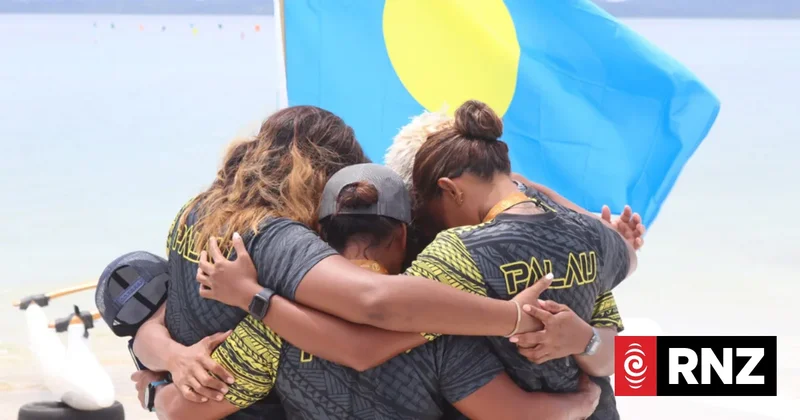
Eleven "safeguarding" cases, ranging from bullying to sexual harrasement, were officially recorded at last year's Pacific Mini Games in Palau.
The cases were reported to the Team Up 'Safe Games' team that was despatched to the event before, during and after the Games.
This was revealed by Team Up safeguarding advisor Roshika Deo in an interview with RNZ Pacific.
Deo said there could have been more cases that were unreported.
The eleven cases were part of the 16 initially reported to the Safe Games team on the ground, which was the first time that safeguarding was integrated at a Pacific Games event.
"It was systemised and it was incorporated pre and during the [Mini] Games, and we were also quite surprised to see that we received 16 incidents that were reported to the Safe Games team," she said.
"Eleven were safeguarding issues and they ranged from things like sexual harassment, physical abuse, neglect and failure of duty of care, harassment and bullying."
Palau hosted the 12th Pacific Mini Games in Koror from 29 June to 9 July last year, bringing together more than 1500 athletes from 23 Pacific nations and territories.
Deo said 70 percent of the victims were girls and women, while 70 percent of the perpetrators were boys and men.
Around 30 percent of the victims were minors and 55 percent of the people affected were athletes.
"So, it was not all athletes that were affected or were harmed, but there were other people involved within the sports ecosystem during the Games that were affected," Deo said.
"But 55 percent of the people affected were athletes and there could have been more.
"This was the first time, so it takes a while for people to build their trust and confidence in a new system."
She said the Team Up project, supported by the Australian government, would continue to create awareness as the work to incorporate safeguarding in major sporting tournaments in the region continues.
They have teamed up with the International Olympic Committee (IOC), UN Women, the Oceania National Olympic Committee (ONOC), Equity Commission, and the Oceania Impact Network.
The programme works to attract and retain women, girls and people with a disability, as well as men and boys; ensure sport organisations are safe, inclusive and accessible; and sport is used to strengthen relationships and build closer collaboration.
Deo said the initiaitve involves more than 35 partners from 15 sports, including athletics, Australian rules football, basketball, badminton, cricket, football, gymnastics, hockey, netball, rugby league, rugby union, surfing, swimming, table tennis and volleyball.
She said sports should be safe "for all, children, adults and young adults".
"Everyone should feel safe, should feel respected and should feel included in sports.
"It's a fun, empowering and great thing to be involved in and engaged in. And people should be able to do it safely, and parents should also be able to feel confident, you know, and secure when they send the children to support.
"And having proper safeguarding measures in place also means you increase the credibility of the sports right when parents, when guardians, when other people see that this sports organisation is creating safeguarding awareness, recognises that these things are harmful and abusive and are doing things about it and has a reporting mechanism."
She said parents also felt more confident to send their children to those kind of sports because they know that they will be protected and looked after.
She said there are so many different kinds of emotional abuse and verbal abuse that happens.
International federations are also taking responsibility and stepping up and ensuring that safeguarding is embedded within the coaching courses that within the different kinds of courses that they offer to people within the sports.
Team Up currently works with seven Pacific Island countries in Fiji, Papua New Guinea, Solomon Islands, Vanuatu, Nauru, Tonga and Samoa.
A major development has been the recent launch of the Safeguarding at Major Sporting Events Toolkit.
The toolkit contains a practical framework for safeguarding in sport, drawing on years of learnings from major sporting events across the Pacific, including the 2023 FIFA Women's World Cup (Australia), the 2023 Pacific Games (Solomon Islands), and last year's Pacific Mini Games in Palau.