The OAS Just Voted 29-1 on Nicaragua. Brazil Was the One
Nicaragua · Diplomacy
Key Facts
- The voteThe OAS Permanent Council approved the resolution on 19 August by 29 in favour, 1 against, 1 abstention, with 2 absent.
- Who said noBrazil voted against. Mexico abstained.
- What it doesConvenes an emergency Meeting of Consultation of Ministers of Foreign Affairs on Nicaragua, “as soon as possible”.
- The legal basisThe OAS Charter, the Inter-American Democratic Charter and international law.
- Who brought itThe United States, with regional co-sponsors.
- It failed once alreadyAn earlier attempt on 5 August did not secure enough support. A revised consensus text carried on the second try.
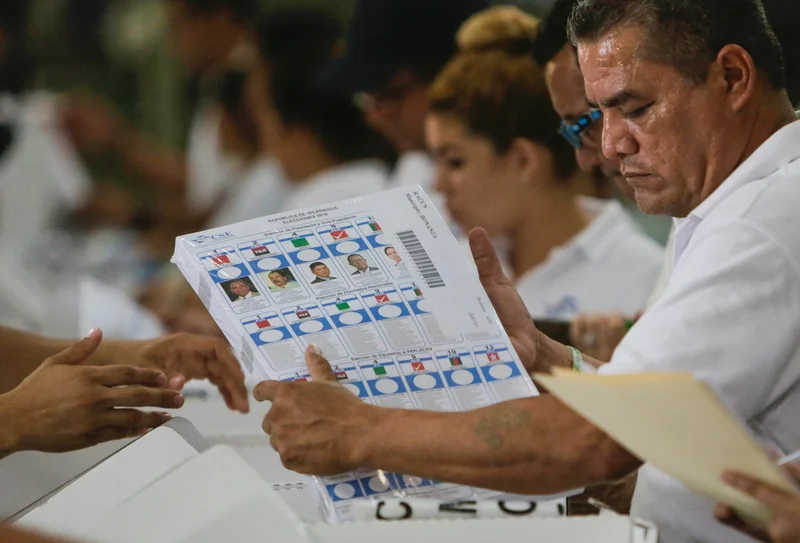
- The triggerMoves by the Ortega-Murillo government against Nicaragua’s electoral process.
Twenty-nine countries agreed to escalate. The interesting votes were the two that did not.
The Organization of American States is not an institution that moves quickly, and it had already failed once this month. On 19 August it tried again, and the OAS Nicaragua vote carried 29 to 1, with one abstention. The resolution itself is procedural. The vote tally is the story, because the country that voted against was Brazil.
What the OAS Nicaragua vote actually approved
The resolution is titled “Convocation of a Meeting of Consultation of Ministers of Foreign Affairs to Consider the Situation in Nicaragua”. It summons the region’s foreign ministers as soon as possible to consider the situation and the actions appropriate under the OAS Charter, the Inter-American Democratic Charter and international law.
In OAS practice, a Meeting of Consultation is a step up. The Permanent Council is ambassadors; a Meeting of Consultation is ministers, and it is the body that can take the decisions ambassadors cannot. Invoking the Democratic Charter alongside it is the language used when a member state’s democratic order is considered to be at risk.
The measure was presented by the United States with regional co-sponsors. An earlier attempt on 5 August failed to gather enough support, and this text passed only after being revised toward consensus.
The two votes that were not yes
Brazil voted against. Mexico abstained. Between them those two countries account for a substantial share of Latin America’s population and almost all of its diplomatic weight in multilateral forums, and their positions are consistent rather than surprising.
Both governments have a long-standing preference for non-intervention and a scepticism about collective measures against member states, particularly measures brought by Washington. Mexico’s abstention is the more familiar posture; a Brazilian no vote is the firmer statement of the two.
It matters practically as well as symbolically. A Meeting of Consultation that proceeds without the region’s two largest countries behind it has less to work with, and Nicaragua’s government will read the tally exactly that way.
What prompted it
The immediate trigger is the Ortega-Murillo government’s moves against Nicaragua’s electoral process. Daniel Ortega and Rosario Murillo govern as co-presidents following constitutional changes that formalised joint rule, and the country’s opposition has been dismantled through years of arrests, exile and the stripping of nationality from critics.
Nicaragua announced its withdrawal from the OAS in 2021 and the process completed in 2023, which raises an obvious question about what the organisation can do to a country that has already left. The answer is that the OAS continues to treat the situation as within its remit under the Democratic Charter, and that the practical instruments are diplomatic and reputational rather than coercive.
That is the honest limit of this. Nobody in Washington or Brasília believes a ministers’ meeting changes the behaviour of the Nicaraguan government.
Why this matters if you live in Latin America
The OAS is the region’s main forum for saying, collectively, that something has gone wrong inside a member state. Every time it tries and fractures, the threshold for the next attempt rises.
For the roughly 800,000 Nicaraguans who have left the country over the past several years — most of them to Costa Rica, Spain and the United States — these votes are the mechanism through which their situation stays on an agenda at all. That is not nothing, but it is also not much.
And for anyone reading regional politics, the tally is a useful map. On questions of intervention and democratic norms, Latin America does not vote as a bloc, and the fault line does not run left to right in any tidy way.
Frequently Asked Questions
What did the OAS Nicaragua vote decide?
On 19 August 2026 the OAS Permanent Council approved a resolution convening an emergency Meeting of Consultation of Ministers of Foreign Affairs to consider the situation in Nicaragua as soon as possible, and the actions appropriate under the OAS Charter, the Inter-American Democratic Charter and international law. The vote was 29 in favour, 1 against and 1 abstention, with 2 absent.
Which countries did not vote in favour?
Brazil voted against and Mexico abstained. Both governments have long-standing positions favouring non-intervention and scepticism toward collective measures against member states, particularly ones brought by the United States.
Who proposed it?
The United States, with regional co-sponsors. An earlier attempt on 5 August failed to secure sufficient support, and the resolution passed only after the text was revised toward consensus.
Is Nicaragua still an OAS member?
No. Nicaragua announced its withdrawal in 2021 and the process completed in 2023. The OAS nonetheless continues to treat the situation as within its remit under the Inter-American Democratic Charter, though its available instruments are diplomatic and reputational rather than coercive.
Connected Coverage
Sources: Al Jazeera — international body votes to convene an emergency meeting over Nicaragua; Anadolu Agency — OAS approves a meeting of foreign ministers on the Nicaragua crisis; Buenos Aires Times — OAS to hold an urgent meeting on Nicaragua’s plan to ban the opposition
This article was produced by The Rio Times’ automated newsroom system. How we use AI · Report an error