It’s no secret Meta is one of the wealthiest companies in the world. Last year, it brought in nearly $201 billion in revenue, and at the end of this June, it was sitting on more than $90 billion in cash and marketable securities.
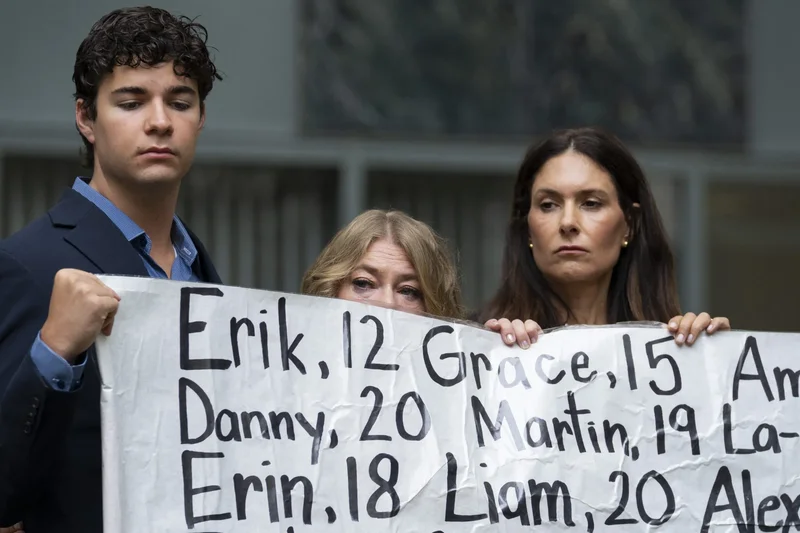
Now, a federal trial underway in Oakland, Calif., is testing what it would actually take to financially hurt a company that big. California, Colorado, Kentucky, and New Jersey have accused Meta of misleading the public about the risks its platforms pose to young users and of designing features on Instagram and Facebook that keep children and teenagers hooked. The four states are going first in a case brought by a coalition of 29 state attorneys general that sued the company in 2023.
Meta is already fighting child-safety lawsuits across the country, but this case carries an added threat because of who is bringing it. State attorneys general can bring claims that private plaintiffs cannot, including claims under the Children’s Online Privacy Protection Act, or COPPA. They can also seek remedies to address alleged harms affecting potentially millions of people.
“The stakes might be higher in this case because the damages awards are going to measure potentially many millions of people’s harms,” Eric Goldman, co-director of Santa Clara University School of Law’s High Tech Law Institute, told Fortune. “And there might be extra remedies because of the specific claims that the attorney general can bring.”
That helps explain the almost incomprehensible number hanging over the trial: $1.4 trillion.
That’s how high Meta says potential penalties could climb under the states’ theory of the case, putting the theoretical maximum in the neighborhood of the value of the company itself.
“It’s a number that boggles the mind, frankly,” Goldman said.
At its most extreme, Goldman said, the potential damages Meta has described could effectively transfer the value held by Meta’s stockholders to the public.
“Essentially, it’s asking Meta to turn in the keys and walk away,” he said.
Actually getting anywhere near that $1.4 trillion is another matter. The eight-person jury hearing the case is advisory, leaving U.S. District Judge Yvonne Gonzalez Rogers with the ultimate decision on liability and remedies.
James Grimmelmann, a professor of digital and information law at Cornell University, told Fortune he does not expect the bellwether trial to end with a penalty that bankrupts Meta.
“It’s always hard to guess with damage awards,” Grimmelmann said. “The jury is purely advisory, so whatever it concludes won’t be binding on the court, and even if it comes in with an extremely high number, the judge could revise it and so could other courts on appeal.”
New Mexico may offer a glimpse of what a major state-level financial hit could look like. A jury there found Meta liable for 75,000 violations of the state’s consumer protection law earlier this year, resulting in $375 million in civil penalties. A judge later found Meta’s platforms constituted a public nuisance and ordered the company to pay another $567 million toward addressing youth mental-health harms, bringing its total financial liability in the case to $942 million. Meta is appealing.
But the Oakland case is about more than how many zeroes Meta could be ordered to put on a check.
What Meta says the states get wrong
“The State AGs may call this a landmark case, but their limited claims are unsubstantiated and their financial demands are vastly disproportionate,” Meta spokesperson Stephanie Otway told Fortune in an emailed statement.
Meta argues the states have not shown anyone in their states was misled or harmed by the features at issue, and that the AGs are attempting to penalize the company for what it calls “industry-wide challenges like age verification,” Otway said.
“Rather than sticking to the facts or the law, the states have instead decided to chase an outlandish payout,” Otway said. “We stand by our record of creating strong protections for teens, and look forward to making our case in court.”
Less than 1% of Meta’s revenue comes from teens on Instagram, but Goldman emphasized the share of Meta’s business directly tied to those users doesn’t answer the central question in the case.
“The relevant question is how much harm is Meta causing in society,” Goldman said.
Goldman said millions of young people still use Meta’s services. If the states convince the court those users were harmed, the potential liability is not necessarily limited by how much revenue Meta directly makes from teens on Instagram.
And money is only one way Meta could lose.
The fight over how social media works
The attorneys general are challenging choices Meta made about how its platforms are designed and how content is presented to users. That distinction is central to how the case got this far.
Section 230 generally protects internet companies from being held liable for content posted by their users. The states argue they aren’t suing Meta over what users post; they are challenging Meta’s own decisions about how that content is presented to users.
Goldman doesn’t think those two things can be separated so cleanly.
“To me, that distinction is illusory. That makes no sense,” Goldman said. “You can’t separate out the editorial function and say we’re going to extinguish the content and the way it’s presented. Those are the same thing in my mind, but Judge Rogers disagreed, and that’s why this case has gotten to trial.”
Goldman also raised a First Amendment concern. He compared Meta’s decisions about how it presents users’ posts to the editorial choices a publication makes about which stories receive more prominence, like how large a headline appears or whether a story includes photographs. In his view, those decisions are themselves expressive choices protected by the First Amendment. Those arguments have not stopped the case from reaching trial.
The result of that fight could matter well beyond whether Meta pays hundreds of millions, billions, or anything approaching $1.4 trillion.
TikTok, YouTube, and Snapchat face similar litigation over alleged harms to young users. Goldman said a victory for the states in Oakland could provide a playbook for challenging how other social media platforms are designed.
And it may not stop at social media. Goldman pointed to lawsuits already testing similar theories against generative AI, video games, and social gaming.
That makes the potentially enormous penalty only one part of what is being decided in Oakland. Meta can challenge a damages award on appeal. A legal theory that survives the case can be picked up and used again.
“That’s why I say that the internet is on trial in Oakland right now, because it’s not just Meta and it’s not just social media,” Goldman said.
breaks the traditional barrier between audience and newsroom. The show transforms
Fortune DailyFortune’s trusted reporting into actionable, conversational, and entertaining insights for an emerging class of business leaders.
Watch here.