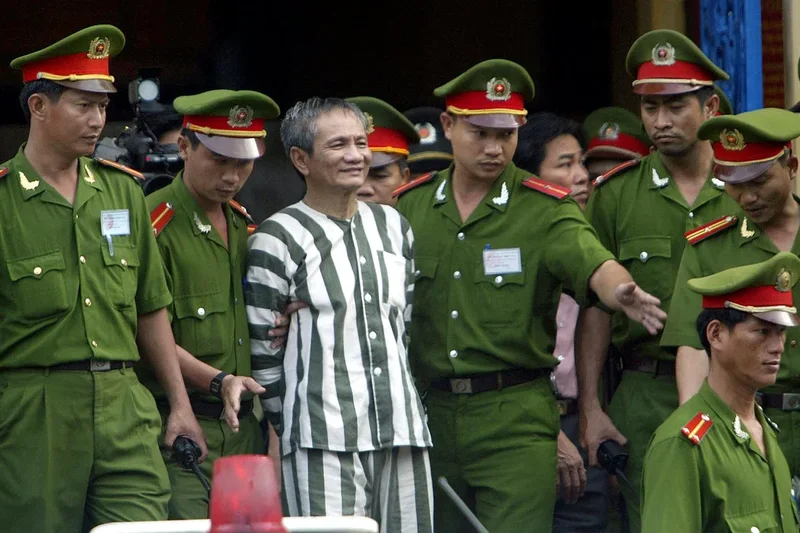
Vietnam's government has proposed abolishing the death penalty for six offences, including drug trafficking and the rape of minors, as part of a revision of the country's criminal code, state media reported.
The government has proposed a draft amendment to the country’s Penal Code to remove capital punishment for the offences of rioting, rape of a person under 16, illegal trafficking of narcotics, crimes against humanity, war crimes, and terrorism against the government.
The death penalty would be retained for four crimes – treason, murder, terrorism, and the illegal production of narcotics – according to the proposal presented to the Standing Committee of the National Assembly on Tuesday.
However, lawmakers urged caution over some of the proposed changes to more serious offences, particularly the removal of the death penalty for drug trafficking, child rape, crimes against humanity, and war crimes.
The proposal is part of gradual reform in its justice system that has seen Vietnam reducing offences eligible for the death penalty.
The latest came in July 2025 when death-eligible crimes were reduced from 18 to 10, with crimes of embezzlement, bribery, espionage, and certain other drug and security offences struck off. The number fell from 44 to 29 in 1999, 22 in 2009 and later 18 in 2015.
Public security minister Luong Tam Quang told the National Assembly: "The narrowing of the scope institutionalises the Party's policy, aligns with progressive legislative trends, and enhances Vietnam's standing in criminal judicial cooperation, extradition and mutual legal assistance.”
The draft would also introduce tougher sentencing provisions and introduce nine new offences, covering areas including economic management, cybersecurity, high technology, environmental protection, public safety and the proliferation of weapons of mass destruction.
The most controversial have been increasing sentences for "infringing upon the interests of the state” and a law which prohibits "making, possessing, distributing, or disseminating information, documents, or items aimed at opposing the Socialist Republic of Vietnam”.
The ministry also proposed to criminalise offences against the Communist Party flag, punishable by up to three years in prison.
Human rights groups called on the lawmakers to reject the draft revised criminal code and all rights-violating articles that the authorities frequently use to silence critics.
"Vietnam's criminal laws need to be revised to become more protective of people's rights, not to facilitate greater abuse by the police," said Elaine Pearson, Human Rights Watch's Asia director.
“Freedom of expression means that people are able to voice opinions critical of the government without fear of punishment.”
The National Assembly is expected to debate the bill in the coming weeks before bringing it to a vote at its next session, which begins in October. If approved, the revised criminal code would take effect in March 2027, Tuoi Tre newspaper reported.
Capital punishment data is classified as a state secret in Vietnam, making it unclear how many people are currently on death row.
Lethal injection has been the country’s sole method of execution since firing squads were abolished in 2011.