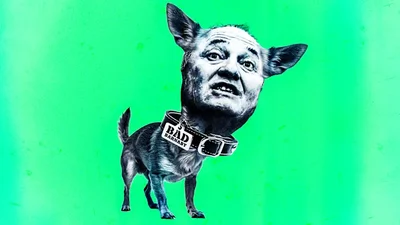
Is it ever OK to yell at your dog? These experts have advice for Barnaby Joyce
Save
You have reached your maximum number of saved items.
Remove items from your saved list to add more.
AAA
On Monday evening, One Nation MP Barnaby Joyce interrupted his interview with ABC’s 7.30 host Sarah Ferguson to yell at his dog.
In a clip that has since gone viral, he began to answer a question about One Nation leader Pauline Hanson’s “intolerance and racial discrimination” when he looked off-camera and bellowed: “Sit down”.
“Sorry,” he then said, regaining composure. “It’s just the dog.”
“Don’t worry about the dog,” Ferguson said. “Just answer the question.”
But perhaps he should have worried a little more about his dog, a young staffy-border collie cross, named Stella. Because, according to experts, yelling isn’t necessarily the best approach when it comes to training your pet.
Want to teach an old dog new tricks? Don’t follow in Barnaby Joyce’s footsteps.Marija Ercegovac
What a dog hears when you yell
“Dogs love predictability and when their guardian is suddenly angry and shouty, they’re not learning to stop a behaviour, but instead learning that their person is scary and unpredictable,” says Cath Jennings, a certified professional dog trainer, behaviourist and veterinary nurse.
“A single stressful event will flood a dog’s system with stress hormones and cortisol sticks around. There’s so much stress associated with living in our human world and many dogs never get a chance to really decompress. We, their family, should be one thing they can rely upon to make sense and to always be kind.”
Joyce has since explained that Stella was underneath the deck of his home, barking incessantly.
And while barking can be annoying to human ears, according to Dr Suzie Fowler, chief science officer at RSPCA Australia, a dog’s hearing is even more sensitive than ours, meaning shouting can be startling.
“It’s not just the volume, though. The tone of voice, body language and overall emotion all contribute to how a dog experiences the interaction,” says Fowler. “In general, dogs respond much better to calm, consistent communication and positive reinforcement for good behaviour with those well-deserved treats.”
What should dog owners do instead?
Advice for the best way to train or treat a dog has changed over the years.
While there used to be a trend for punishment – telling them off, rubbing their faces in the mess they’ve made – but that approach is very much outdated. It is now more about patience, consistency, empathy and understanding what our dogs are trying to communicate.
“Dogs are loving animals that give us so much joy and companionship, it is only fair that we repay them with equal respect and compassion. It is what the community expects and also what helps reinforce a positive relationship between you and your dog,” says Fowler.
A live television cross might not be the easiest moment to train a dog. Ideally, Joyce would have organised for Stella to be in another room, napping or engaging with a toy.
“For individuals that have an important event on, we suggest that you find a safe and comfortable space for your pet,” says Fowler. “That may be in a room with some toys, treats and water to access where they can rest so you can focus on what you need to do. If you want to have your dog close to you, rewarding them with treats and attention, at times when they are displaying the behaviour you want to see.”
If this is not possible – or you forget – there are ways to respond to unexpected canine interruptions.
“Most of us have had moments where our dog decides to bark at the worst possible time,” says Dr Diana Barker, president of the Australian Veterinary Association. “The best approach is to stay as calm as you can.”
“Barking is a form of communication, so it’s worth considering why your dog is barking in the first place. Are they alerting you to something, seeking attention, anxious or simply excited? If you can’t address it immediately, calmly moving them to another room with something appropriate to occupy them is generally more effective than reacting in frustration.”
Like humans, dogs respond best to praise.iStock
And if you have raised your voice, there are ways to make amends.
“Sadly, we can’t just apologise to our dogs but there are things we can do to help them decompress following stressful events,” says Jennings.
“Decompression walks are my favourite, as allowing and even encouraging our dogs to put their big noses to work and use their superior sense of smell, is extremely relaxing, satisfying, enriching and also tiring for our dogs.”
That, and a promise to be better prepared next time.
Make the most of your health, relationships, fitness and nutrition with our Live Well newsletter. Get it in your inbox every Monday.
Save
You have reached your maximum number of saved items.
Remove items from your saved list to add more.