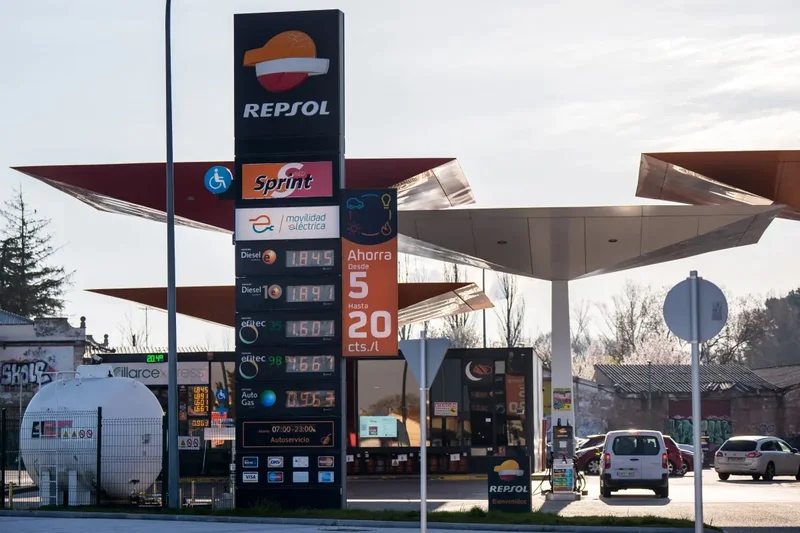
Fuel prices have been increasing again in Spain, coinciding with the high summer tourist season and continuing problems in the Strait of Hormuz.
Data from the EU Oil Bulletin reveals that Spain has been facing fuel prices increases much higher than in other European countries since the start of the summer.
**READ ALSO: Everything you need to know about driving from Spain to Portugal **
In Europe on average, petrol prices have risen by 8.8 percent over the last six weeks, while in Spain they’ve risen a whopping 18.4 percent.
Diesel on the other hand has increased by 17.3 percent on average across Europe over the summer, while in Spain it’s risen by 21.1 percent.
This means that Spain’s fuel prices are among the fastest-rising in Europe. This is despite the fact that both petrol and diesel costs remain comparatively cheaper than in other European countries.
**READ ALSO: The differences between getting your driving licence in Spain and the US **
**Why is this happening? **
The Spanish government has suspended their VAT reduction on fuel, resulting in an increase in fuel prices compared to earlier on in the year.
The Spanish government first introduced this measure in March 2026 to counteract the impact on fuel prices of the US and Israeli-led war in Iran and subsequent closure of the Strait of Hormuz, slashing VAT from 21 to 10 percent.
That aid was progressively reduced during July and August, making the price per litre increasingly higher.
Experts agree that with the VAT relief gone, filling up the tank in Spain has become somewhat unpredictable from a cost perspective, given the current volatility of the global oil market.
Essentially, the impact of price rises was felt more strongly in Spain because of this withdrawal of public aid.
**READ ALSO: What taxes and fees do I have to pay when selling my car in Spain? **
Will fuel prices keep rising in Spain?
Pedro Sánchez's government hopes to bring the aid back again from September 1st to try and mitigate the problems of what happened in July and August.
Spanish watchdog Facua has been very critical of this move, however, as they believe that petrol stations could use this to increase their profit margin even more, so we’ll have to see what happens.
This is unlikely to help the millions of people travelling on the roads this August, coming back from summer holidays across the country.
Current prices could mean that driving back home is a lot more expensive than the initial drive out to your holiday destination. This will have an effect on your wallet, right after what was likely to be an expensive trip in general.