El Gouna Film Festival Names Ten Films, Led by Berlin’s Golden Bear
EGYPT · FILM
What the El Gouna Film Festival has announced
The festival released the first ten titles of its October programme on 19 August. It is the ninth edition of an event that has grown from a resort-town experiment into one of the region’s principal film gatherings.
Andrew Mohsen, the festival’s artistic director, put the intention plainly in the announcement. His line was that El Gouna has always been about bringing stories from all over the world into the same room, connecting audiences and filmmakers.
That is a programming philosophy rather than a national one. The first ten titles come from Japan, France, Germany, Belgium, Poland, Italy, Austria, Cyprus, Denmark, Greece, Britain, the United States, Malaysia, Qatar, Palestine and Mexico.
No Egyptian or other African film appears among them. The full programme has not yet been published, and past editions have weighted Arab and African work heavily in the sections still to be revealed.
The two prizes that anchor the list
Yellow Letters, directed by Ilker Catak, won the Golden Bear at the Berlin International Film Festival in February. It follows two Turkish theatre artists who lose their work to political persecution.
Catak is a German director of Turkish descent whose earlier film The Teachers’ Lounge reached the Academy Awards’ international feature category. The Berlin win placed him among the most watched directors working in Europe.
Fatherland, by the Polish director Pawel Pawlikowski, shared the best director prize at Cannes this year. Sandra Huller and Hanns Zischler play Erika and Thomas Mann.
Pawlikowski is already an Oscar winner for Ida and a Cannes best director laureate for Cold War. A festival that secures both the Berlin and Cannes laureates in its first announcement is signalling reach.
A Mexican film in an Egyptian programme
The Garden We Dreamed, by Joaquin del Paso, is the entry most worth noticing from a Latin American desk. The festival’s announcement credits it with the Golden Biznaga for best Ibero-American film at the Malaga festival, following a Berlin selection.
Del Paso is among the more distinctive Mexican directors of his generation, known for The Hole in the Fence. His work tends to use enclosed settings to examine how a group polices itself.
A Mexican film travelling from Berlin through Malaga to the Red Sea is a small illustration of a larger pattern. Global South cinema increasingly reaches audiences through festival circuits that no longer run only through Europe.
For readers who follow both regions, that route is the point. Egyptian and Gulf festivals have become a genuine third market for Latin American films, alongside the European majors and the North American circuit.
The rest of the first ten
Ryusuke Hamaguchi, the Japanese director of Drive My Car, brings All of a Sudden, a French, Japanese, German and Belgian co-production. Lance Hammer’s Queen at Sea stars Juliette Binoche.
Rose, by the Austrian director Markus Schleinzer, is listed by the festival as Austria’s submission for the 2027 Academy Awards. Hold Onto Me comes from the Cypriot director Myrsini Aristidou.
Two documentaries round out the selection. American Doctor, a US, Malaysian, Qatari, Danish and Palestinian co-production directed by Poh Si Teng, follows American doctors working in Gaza, and Who Killed Alex Odeh?, by William Lafi Youmans and Jason Osder.
The Guest, by the Danish director Mads Mengel, completes the ten. The awards and citations attached to these titles are as given in the festival’s own announcement.
Why a resort town runs a serious festival
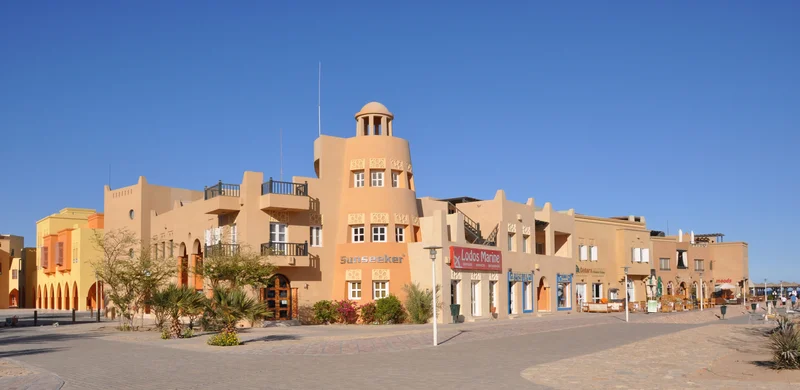
El Gouna is a purpose-built Red Sea town about 20 kilometres north of Hurghada, developed by the Egyptian businessman Samih Sawiris. The festival was founded in 2017 by his brother Naguib Sawiris with the actress-producer Bushra Rozza, the event organiser Amr Mansi and the producer Kamal Zadeh.
The commercial logic is not subtle. A destination festival fills hotels in October and attaches an international cultural identity to a property development.
The cultural result has outrun that logic. El Gouna now sits alongside the Red Sea festival in Jeddah and the Cairo International Film Festival as one of the region’s principal industry meeting points.
The partnership with the Zurich Film Festival, announced on 11 August, is evidence of the shift. Under it, a documentary shot off El Gouna’s coast will have its premiere in Switzerland.
What to expect between now and October
The remaining programme, including the competition strands and the Arab and African selections, has yet to be announced. Those sections are where the festival’s regional identity usually sits.
For the industry, the sideline events matter as much as the screenings. El Gouna runs a project development platform that has become a working funding market for Arab and African filmmakers.
The nine days in October will draw a familiar mix of European sales agents, Gulf financiers and regional directors. The first ten titles are the invitation rather than the programme.
Frequently Asked Questions
When is the El Gouna Film Festival in 2026?
The ninth edition runs from 15 to 23 October 2026 in El Gouna on Egypt’s Red Sea coast. The first ten titles were announced on 19 August.
Which films have been announced so far?
The first ten include Yellow Letters by Ilker Catak, Fatherland by Pawel Pawlikowski, All of a Sudden by Ryusuke Hamaguchi and The Garden We Dreamed by Joaquin del Paso. Six further titles complete the list.
Which of the announced films won major prizes?
Yellow Letters won the Golden Bear at the Berlin International Film Festival in February 2026. Fatherland shared the best director award at Cannes in 2026.
Are any African films in the first ten?
No Egyptian or other African film appears among the first ten titles. The full programme, including the festival’s regional sections, has not yet been published.
This article was produced by The Rio Times’ automated newsroom system. How we use AI · Report an error