The United States has formally classified US citizen and Myanmar scholar Min Zin as wrongfully detained following his arrest by Chinese authorities in June, a senior State Department official told Reuters. The decision makes his release a top diplomatic priority for Washington.
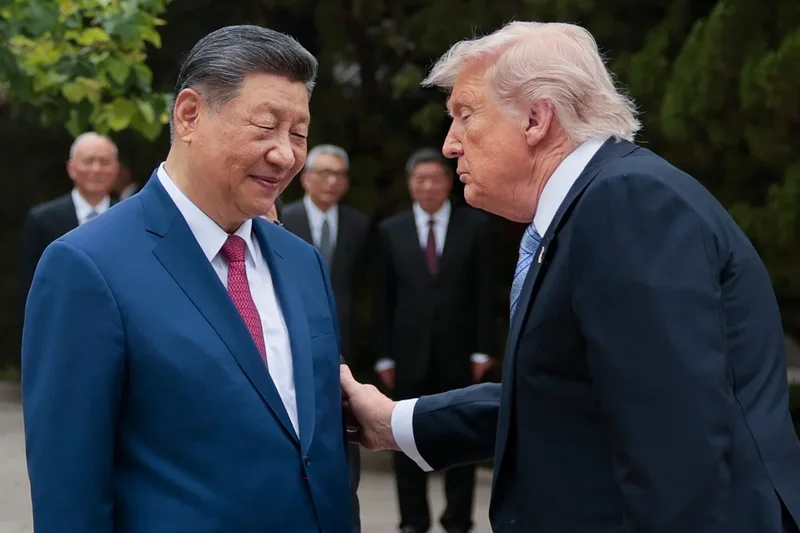
This official determination arrives shortly before President Donald Trump is set to host Chinese President Xi Jinping at the White House.
Human rights organizations have urged the U.S. administration to demand Min Zin's release before Xi's scheduled September 24 visit. Min Zin heads a research institute focused on Myanmar affairs.
"U.S. citizen Min Zin has been detained by Chinese security services on undefined charges since June 3. For nearly 11 weeks, he has been subjected to repeated interrogations, isolation and detention conditions," the official stated on Thursday.
"After careful review of Min Zin’s case, the secretary of state has decided to designate him as wrongfully detained," the official added, referring to Marco Rubio.
The official urged Beijing to free other detained Americans as well. Among them is Youlin Chen, a Chinese-born American seismologist from Boston, who remains in Chinese custody under allegations the US deems baseless and who has similarly been named wrongfully detained.
"The safety and security of U.S. citizens globally is President Trump’s top priority, and the president has been clear that China must treat U.S. citizens with respect – and those wrongfully detained or under exit bans must be released," the official stated.
Advocacy organizations estimate that anywhere from a dozen to several hundred Americans are currently held unlawfully or restricted by exit bans in China. Chinese officials maintain that all cases are handled in compliance with national law and deny any wrongful detentions.
Before his arrest, Min Zin lived in Thailand and spent time in both Myanmar and the US. According to the official, he held a valid Chinese visa that he had previously utilized to attend academic gatherings in China.
The official explained that Min Zin flew to Yunnan province on June 3 after receiving an invitation from the Chinese government to attend a conference in Kunming, where he was apprehended inside the airport terminal.
"One minute his colleagues and family were engaging with him on the phone – exchanging updates on his arrival time and plans in China – and the next minute communication was lost. For 48 hours, his loved ones did not know where he had gone, if he was alive, or who could have taken him," the official noted.
Eventually, local authorities in Yunnan notified the US embassy that Min Zin was under criminal investigation for allegedly "endangering (China’s) national security," the official said.
Human rights campaigners contend that Beijing frequently engages in "hostage diplomacy," using the detention of foreign nationals to gain leverage in international negotiations.
Supporters of Min Zin, including former Trump administration officials, have appealed to Trump to address the matter directly with Chinese leadership.
"Min Zin’s case has raised grave concerns among other scholars about whether they could be subject to entrapment and detention by China," the official remarked.
Beijing's foreign ministry verified Min Zin's arrest in June, alleging that he was suspected of espionage and compromising Chinese national security.
A former student activist involved in Myanmar’s 1988 pro-democracy protests, Min Zin earned a political science degree from the University of California, Berkeley.
He later co-founded the Institute for Strategy and Policy. Originally headquartered in Myanmar, the organization relocated abroad after the 2021 military coup that ousted the elected government of Nobel laureate Aung San Suu Kyi.
China has publicly endorsed the current military-backed leadership in Myanmar, which assumed power following a widely condemned election that excluded major opposition parties, including Suu Kyi's political movement.