On a Thursday morning in March, in the Agbowo area of Ibadan, Oyo State, Bisola* sat outside her home with her child strapped to her back. She continuously bent over to adjust the baby as she read her book for the West African Senior School Certificate Examination.
Bisola is 17, but two years ago, she nearly died giving birth. “I wasn’t ready,” she said.
At 15, she was in a relationship with a boy of her age. Afraid of becoming pregnant before finishing school, she decided to seek contraception from the nearby Agbowo Primary Health Centre.
Contraception refers to methods used to prevent pregnancy, including condoms, birth control pills, injectable contraceptives, implants and intrauterine devices (IUDs).
| | |
|---|
It took her days to summon the courage, but when she finally walked into the clinic alone, hoping for confidential advice, the questions came before any counselling.
“Who brought you here? Are your parents aware?” she recalled the health worker asking within earshot of other patients.
She was told to return with her mother or another adult. “I felt embarrassed,” she said. “After that day, I didn’t go back.”
At home, conversations about sex or contraception were considered shameful for an unmarried girl. She feared telling her parents would earn her punishment, so she abandoned the idea altogether.
Months later, she became pregnant.
The boy denied responsibility, and while many of her classmates continued preparing for life after secondary school, Bisola was learning how to care for a newborn.
On the day of this interview, she was studying for the same examination she should have completed two years earlier, this time with a baby on her back.
Her story could easily be dismissed as another case of teenage pregnancy. But this investigation found something more troubling.
Bisola did not become a mother because she ignored the risks. She became one after the system failed her despite trying to prevent pregnancy.
Across Southwest Nigeria, this investigation found that adolescent girls who seek family planning often encounter a health system that is inconsistent or inaccessible. Some facilities lack contraceptives, others experience prolonged supply delays, while some ask adolescents to return with parents despite national guidelines guaranteeing confidential reproductive healthcare.
The investigation found that these gaps persist despite billions of naira transferred to states for primary healthcare over the past six years.
Data obtained from the National Primary Health Care Development Agency (NPHCDA) show that between 2019 and the second quarter of 2025, the federal government transferred N17.45 billion to Ogun, Ondo, Osun and Oyo states to strengthen primary healthcare services.
Yet family planning services remain unavailable in more than half of the PHCs across the South-west.
According to NPHCDA data reviewed for this investigation, only 1,491 of the region’s 3,446 PHCs provide family planning services.
The consequences extend beyond healthcare.
Nigeria’s 2024 Demographic and Health Survey found that 77 girls per 1,000 aged 15 to 19 have begun childbearing, while only 39.7 per cent of women whose need for modern contraceptives should be met are able to access them.
For many adolescent girls, the problem is not a lack of awareness about the consequences of early pregnancy; it is finding a health system willing and able to help them prevent it.
More than 220 kilometres from Ibadan, another teenager was confronting the same reality.
She wasn’t alone
Janet* was 16 and sitting her WASSCE examinations when she discovered she was pregnant. Unlike Bisola, Janet never sought contraception.
She did not know the services existed.
A friend had introduced her to an older man she believed was unmarried.
“I trusted my friend,” she recalled. “I didn’t know he already had a wife.”
When she informed him about the pregnancy, he accepted no responsibility.
Her parents invited him to their home, hoping he would explain himself or support the pregnancy.
Instead, he sat in silence.
“My parents sent me to school,” Janet said. “But all I brought back was pregnancy.”
Janet’s experience exposes another gap uncovered during this investigation.
While some adolescent girls are discouraged after seeking reproductive health services, others never seek help because they are unaware that such services exist or believe they are meant only for married women.
“I thought family planning was for married women,” Janet said.
Field visits across Ogun, Ondo, Osun and Oyo states suggest these experiences are not isolated.
Instead, they reflect weaknesses within PHC facilities that are supposed to provide, among others, adolescents with confidential reproductive health services.
Inside the PHCs
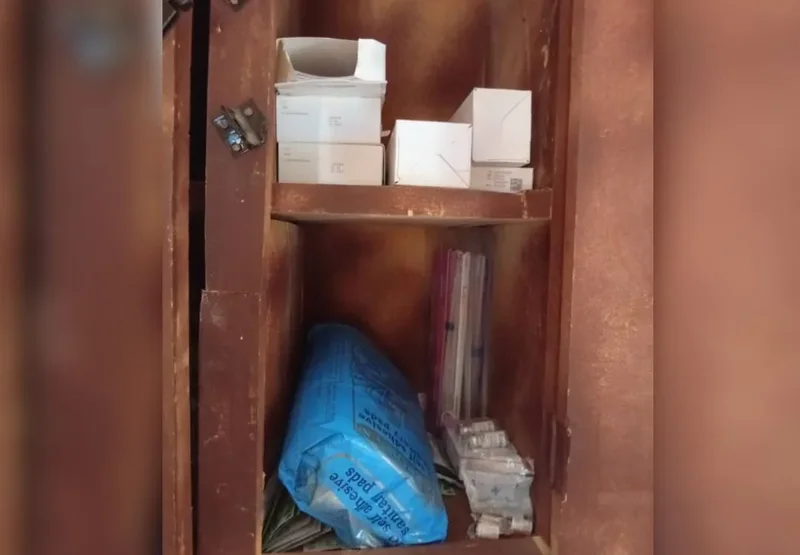
At Oke Mapo PHC in Owo, Ondo State, contraceptive commodities were neatly arranged behind the pharmacy counter during this reporter’s visit in April. Injectables, implants and oral pills gave the impression of a facility with a functioning family planning programme.
That impression quickly faded. “When did these commodities arrive?” this reporter asked.
“Last year,” a health worker, who declined to be named, replied.
“When will the next supply come?” She shook her head.
“I don’t know.”
The uncertainty was not unique to Oke Mapo.
At Akungba PHC, the nurse, Titi Adekoya, said government supplies arrive irregularly, forcing facilities to borrow contraceptives from one another to keep services running.
At Iwaro-Oka PHC, a health practitioner, Onijuni Joshua, said many adolescents never return after encountering stock-outs because they assume the service is unavailable.
For teenagers, many seeking contraception without their parents’ knowledge, one unsuccessful visit may be their only attempt.
The pattern extended beyond Ondo State.
Back in Agbowo, Ibadan, where Bisola sought help, another client, Bukola, recounted a similar experience. She said she visited the PHC for contraceptives but found the family planning nurse absent.
She was asked to return another day.
She never did.
“It is stressful to keep going back and not getting help,” she said, adding that many women eventually turn to private pharmacies and clinics despite the extra cost.
Across the facilities visited for this investigation, access to family planning often depended less on national policy than on whether contraceptive commodities were available, trained providers were present, and services were offered on the day clients sought help.
For adolescents, that inconsistency can make the difference between preventing a pregnancy and becoming a teenage mother.
Gaps in services
Findings from the NPHCDA reveal that 56.7 per cent of PHCs in the South-west offer no family planning services at all.
The four states at the centre of this investigation perform below the regional average.
Ondo has 596 PHCs, but only 202 provide family planning services, the lowest coverage in the South-west at 33.9 per cent.
Osun has the region’s largest PHC network with 885 facilities, yet only 323 offer contraceptive services. Ogun and Oyo states record coverage of 44.6 per cent and 43.6 per cent, respectively.
For an adolescent girl seeking help, the odds are stacked against her before she even reaches a clinic.
The consequences appear in national data.
Nigeria’s 2024 DHS found that adolescent birth rates remain among the highest in sub-Saharan Africa, while fewer than four in every 10 women whose demand for modern contraceptives should be satisfied actually receive them.
The contradiction is especially striking in south-west Nigeria.
The region records Nigeria’s lowest under-five mortality rate, the country’s highest school attendance and some of its strongest primary healthcare indicators.
Yet behind those encouraging statistics lies another reality.
The children survive, but many of their mothers were still children themselves.
The question, then, was no longer whether the system was failing; it was why.
To answer that, this investigation examined federal health transfers, state budgets and implementation reports.
The documents revealed that while governments publicly encouraged family planning, their budgets often told a different story.
Following the money
Records obtained from the NPHCDA show that between 2019 and the second quarter of 2025, the federal government disbursed N17.45 billion to Ogun, Ondo, Osun and Oyo states through the Basic Health Care Provision Fund (BHCPF) and the National Health Insurance Authority (NHIA) gateway to strengthen primary healthcare services.
While the federal government supports PHCs in states, our findings show that the four south-west states hardly provide dedicated funding for family planning activities.
A review of state budgets and budget implementation reports found that dedicated funding for family planning has steadily disappeared or, where it exists, is often left unspent.
The four states budgeted less than N163 million for family planning between 2019 and 2025. Even then, implementation records show that some of those allocations were never released.
Ogun, which received N4.07 billion in federal transfers, made no dedicated family planning allocation in either its 2024 or 2025 budgets. The only reproductive health provision, N25.8 million, was earmarked for training equipment rather than contraceptive commodities.
Ondo, which received N3.40 billion, also had no dedicated family planning budget in 2024. Although the state allocated N45 million in 2025 to “Preventable Maternal Mortality,” budget documents do not indicate how much, if any, was intended for family planning services.
In Oyo, the picture was different but no less concerning.
The state budgeted N40 million for family planning and N20 million for reproductive health in 2024. However, implementation records reviewed by this reporter show no traceable expenditure under either allocation. In 2025, both budget lines had disappeared entirely, even as the state’s health budget increased from N38 billion to N58.5 billion.
Osun offered perhaps the clearest example of the gap between government promises and implementation.
The state received N5.06 billion in federal transfers. It budgeted N97.55 million for family planning commodities and another N25.5 million to build 100 contraceptive kiosks across markets.
But the fourth-quarter Budget Implementation Report recorded zero naira released for the kiosks. They existed only on a government spreadsheet.
Osun’s empty market kiosks: 100 promised vs 0 built, N25.5m budgeted vs Zero Naira released. Infographic by: Fawaz Adebisi
To verify the records, this reporter visited markets in Iree and surrounding communities in April 2026, but found no kiosks.
Traders interviewed during the visit said they had never seen or heard of the project.
The only visible family planning message encountered during the investigation was a poster inside Iree PHC encouraging women to seek professional advice before an unplanned pregnancy.
For girls who never make it into the clinic, even that message goes unseen.
The findings point to a broader pattern; money continues to flow into PHC, but dedicated investment in family planning has either declined, disappeared or failed to translate into services that adolescents can reliably access.
National priorities
The gaps identified across the four states mirror a broader shift in Nigeria’s national funding priorities.
An analysis by the development Research and Projects Centre (dRPC) found that the federal government’s dedicated family planning budget fell from N3.6 billion in 2018 to zero in 2022, despite a substantial increase in overall health spending during the same period.
Although funding returned in 2023, only N20.7 million was allocated, less than one per cent of the amount budgeted five years earlier.
The pattern suggests that while governments continue to invest in primary healthcare, family planning has steadily slipped down the list of funding priorities.
The result is a disconnect between policy and practice: billions of naira flow into the health system, but frontline facilities continue to struggle with inconsistent contraceptive supplies and limited access to services.
For adolescents like Bisola and Janet, those funding decisions are felt not in budget documents, but in classrooms left behind, interrupted education and lives reshaped by unintended pregnancies.
Policies that exist only on paper
The investigation also found that many of the barriers confronting adolescent girls exist not because of gaps in the law, but because existing policies are poorly implemented.
Nigeria’s National Standards and Minimum Service Package for Adolescent and Youth-Friendly Health Services requires that young people receive confidential reproductive healthcare.
The National Health Act and the National Reproductive Health Policy also recognise adolescents as a priority group, while international agreements ratified by Nigeria guarantee access to reproductive health information and services.
Beyond domestic law, Nigeria is bound by the Maputo Protocol (Article 14), the Convention on the Rights of the Child (Article 24), and the 1994 ICPD Programme of Action, all of which guarantee adolescents the right to reproductive health services.
Yet what girls receive often depends on the clinic they visit.
At Oke Mapo PHC in Ondo State, a family planning provider said adolescents under 18 are usually asked to return with a parent, pastor or another trusted adult before receiving contraceptive services.
The provider, who requested anonymity because she was not authorised to speak publicly, said the facility attends to more than 10 adolescents every month, many arriving only after unsafe abortions or unintended pregnancies.
“When they come after an abortion, we don’t chase them away,” she said. “We treat them first, then offer family planning free of charge.”
She paused before adding another observation.
“If they don’t take family planning after an abortion, many of them return with another pregnancy.”
Less than 150 kilometres away, health workers at Ewekoro PHC in Ogun State described a different approach.
“If they come, we are glad to attend to them,” one provider said, explaining that adolescents are not turned away because of their age.
The contrast reflects one of this investigation’s central findings: access to reproductive healthcare often depends less on national policy than on where a girl lives, the health worker she meets and whether contraceptive commodities are available that day.
Not every facility visited reflected system failure.
At Omi Eran PHC in Osun State, this reporter reviewed daily service records showing regular distribution of condoms, injectables and implants, including to adolescent patients.
Active daily commodity dispensing at Omi Eran PHC. Credit: Fawaz Adebisi
Registration records at Boripe Local Government PHC also documented teenagers accessing long-acting contraceptives, demonstrating that youth-friendly family planning services are achievable when facilities receive consistent support.
For policy analyst Abdullateef Ahmed, these inconsistencies point to a deeper governance problem.
“In many states, policymakers prefer projects that are politically visible while family planning is hidden under broader health programmes,” Mr Ahmed said.
“That makes spending difficult to track and carries little political cost.”
He described the disappearance of dedicated family planning allocations in some states and the failure to implement approved projects in others as evidence that reproductive healthcare has steadily slipped down the list of government priorities.
“Every naira not spent on family planning today multiplies into future fiscal and social costs,” he said.
“It leads to more unintended pregnancies, higher maternal mortality and deeper poverty.”
He, therefore, called for dedicated family planning budget lines, routine public reporting on commodity availability and adolescent-friendly service protocols that guarantee privacy regardless of where young people seek care.
Research shows that children born to adolescent mothers face higher risks of developmental delays, poorer health outcomes and limited educational attainment, meaning the cycle does not end with Bisola or Janet, it begins again with their children.
The immediate loss is a young woman’s education and economic potential. The long-term cost is a generation that remains dependent on the same overstretched public systems that failed their mothers.
Official assurances, different reality
Despite the on-field findings, government officials insist that contraceptive services remain available in public health facilities.
Responding to the abandonment of a newborn in Ondo State earlier this year, the state’s Commissioner for Women Affairs and Social Development, Seun Osamaye, urged sexually active women and girls to take advantage of the free family planning services available in government hospitals.
However, this investigation found that only 33.9 per cent of PHCs in Ondo provide family planning services. Health workers at some facilities also reported waiting more than a year for fresh supplies of contraceptive commodities.
To obtain the government’s position, this reporter submitted a Freedom of Information (FOI) request to the Ondo State Ministry of Health on 28 July, seeking records on family planning budget allocations, reproductive health commodity procurement and distribution, and the utilisation of federal primary healthcare transfers between 2023 and 2025. The ministry acknowledged receipt of the request.
Earlier, on 23 July, this reporter also sent detailed questions to the Ondo State Ministry of Health and the Ondo State Primary Health Care Development Board (OSPHCDB), outlining the investigation’s findings and inviting both agencies to respond before publication.
Neither the ministry nor the board responded to our enquiries as of the time of this report.
In Ogun State, the Executive Secretary of the Ogun State Primary Health Care Development Board (OGPHCDB), Elijah Ogunsola, disputed the budget findings, saying reporters should verify the figures with the Ministry of Budget and Planning.
“There must have been an error somewhere,” he said.
He maintained that the state had trained more than 120 health workers on postpartum family planning over the past two years and insisted that contraceptive services remain free in government facilities.
“The one that people walk up to the clinic is still ongoing, and it is free at the hospital,” he said.
On the budget figures showing no dedicated family planning allocation in either 2024 or 2025, he argued that capital expenditure alone does not reflect the state’s total investment in family planning.
“Let us also look at the recurrent, where salaries and imprests are taken care of,” he added.
The Osun State government was given an opportunity to respond to the findings of this investigation.
On 28 April 2026, this reporter submitted an FOI request to the Osun State Ministry of Health, copying the Executive Secretary of the Osun State Primary Health Care Development Board (OSPHCDB).
The request sought records on family planning budget allocations, the implementation of the state’s proposed 100 contraceptive kiosks, commodity delivery records, and the utilisation of reproductive, maternal, newborn, child and adolescent health funds between 2023 and 2025.
As the ministry does not maintain a functional public email address for FOI requests, the application was submitted through its official online contact portal, which acknowledged receipt.
Neither the ministry nor the board responded nor provided the requested records as of the time of this report.
Similarly, the Oyo State government did not respond to repeated efforts to obtain its position.
On 24 July, this reporter submitted an FOI request to the Oyo State Ministry of Health, copying the Oyo State Primary Health Care Development Agency (OYSPHCDA). The request sought records on family planning budgets, expenditure, contraceptive commodity supplies and the utilisation of federal health transfers.
Earlier, on 23 July, this reporter emailed the ministry and the OYSPHCDA, outlining the investigation’s findings and seeking clarification on the removal of family planning budget lines, PHC expenditure records and the service delivery gaps identified during the investigation.
Neither the ministry nor the agency responded as of the time of this report.
The contraceptives were on the shelf the afternoon Bisola walked into the clinic.
The nurse was there.
Nigeria’s policies said she should have received confidential care.
Instead, she walked away, embarrassed and never returned.
Today, she is preparing for the examination she should have completed years ago, her child strapped to her back.
Before she could finish school, the system had already failed her.
Editor’s Note: *The names marked with asterisks have been changed to protect the privacy and identities of vulnerable individuals featured in this report.
This reporting was supported by the Centre for Journalism Innovation and Development (CJID).