- Some retro resorts have reinvented, while others have floundered
- READ MORE: Bucket-and-spade chic! How Margate became the UK's coolest seaside town
- See more Daily Mail on Google - save us as a Preferred Source
Lettered rock, cups of tea, portions of fish and chips and paddles in the sea – until the arrival of cheaper foreign travel in the 1970s, holidays for your average British family revolved very much around a coastal or rural staycation...even if we didn't call it that back then.
As the world has got smaller and holidays have become ever more diverse – from cruises to all-inclusive Med stays and adventure travel, classic British resorts have struggled to persuade UK tourists to spend their money closer-to-home.
Nostalgia has been a powerful ally in helping a new generation discover the holidays that have been enjoyed in the UK since the dawn of mass tourism in the Victorian era.
If you get all misty-eyed at the memory of a bag of candy floss and a donkey ride during a holiday in your childhood, then it's very likely you'll try and recreate it for your own children – while revelling in your own time-machine trip.
What's more surprising though is how tourists, from both home and away, are seeing traditional getaways with a new gaze, viewing the kitsch as quirky and cool rather than gaudy and tacky.
And holidays in nature that might once have been branded boring by young adults bound for Ibiza, are being discovered by Gen Z-ers who appreciate the charm of a weekend spent in nature.
So, which British holidays have endeared themselves to the cool crowd? And which are still stuck in another era?
MARGATE
Marvellous Margate: The traditional seaside town, which has endured tough times in recent decades, has become England's coolest coastal resort with trendy bars, galleries and hotels now lining its historic streets
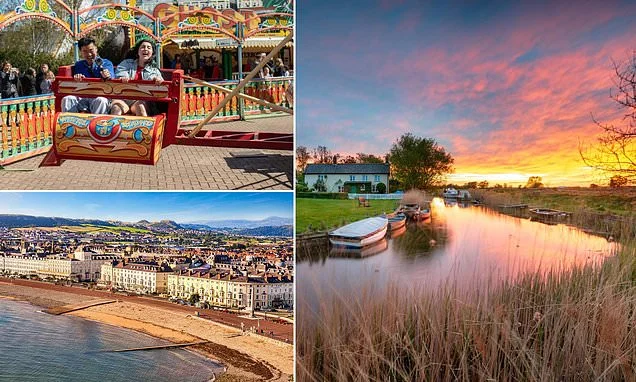
Retro theme park Dreamland has introduced a new audience to the delights of Margate
Dubbed 'Dole-on-Sea' in the 1980s, this Kent coastal town is currently basking in the glow of being arguably the coolest seaside resort in Britain right now.
A Victorian gem – where artist JMW Turner once lived – that attracted beachgoers in their thousands in the decades up to the 1970s, Margate's downward spiral began with the advent of cheaper flights abroad.
If you visited before artist Tracey Emin kickstarted the regeneration then you might remember boarded-up shops, tired arcades and unloved chippies.
This once lost kiss-me-quick resort is now a coastal creative Mecca though, with hipsters diverting overseas holiday plans to take a trip to Kent's 'Planet Thanet'.
There's brilliant art at The Turner Contemporary – and a host of other galleries, plus vintage shops, stylish restaurants and plenty of old-skool funfair thrills at Dreamland.
Main Sands, the 200-yard curving stretch of beach flanked by the promenade and backed by the Old Town, remains the big draw for the bucket-and-spade brigade though.
WHITBY
Bram Stoker's Dracula gifted the Yorkshire town of Whitby perennial cool status - as well as opportunities for some seriously good fish and chips
With 18th century architecture and a literary goliath in its past, Whitby has become a magnet for anyone interested in the gothic
Kids that were taken to Whitby in days gone by would get all the usual treats you might expect in a Yorkshire seaside town: arcades, candy floss, fish and chips.
Thanks to Bram Stoker's 19th-century masterpiece, Dracula, they also got scared half-to-death by tales of a certain Count being shipwrecked on the shores of Whitby Beach.
In 2026, the town, which is essentially a pretty huddle of 18th-century fisherman's cottages on the West Cliff and a busy quayside port town below them, is a go-to for anyone mildly intrigued by the gothic, with the ruins of Whitby Abbey on the clifftop overlooking the town often their first port of call.
NORFOLK BROADS
Gloriously wholesome - and once deemed a little dull, the Norfolk Broads is back in fashion for those wanting a break in nature
An alternative to the classic seaside holiday, the Norfolk Broads, 125 miles of gentle waterways in rural East Anglia, promised a unique on-the-water adventure that wouldn't break the bank.
The charm of lock-free rivers and 63 lakes to explore remains – and has wooed Gen Z-ers seeking calming weekends that promise waterside pub stops, windmills and plenty of wildlife.
LLANDUDNO
Welsh wonder Llandudno's two-mile promenade takes tourists back to its Victorian heydey
Unlike Margate, Llandudno hasn't glossed up its seaside charm into anything superfly; this Conwy town is exactly as it's always been - with its sweeping two-mile Victorian-era promenade the showstopper.
A natural horseshoe-shaped bay, this Welsh stunner still attracts millions of visitors every year, thanks to its arcade-filled pier – the longest in Wales, as well as the scenic limestone headland known as the Great Orme and friendly hospitality.
Those in the know head to The Cottage Loaf for lunch and a pint of cask ale from the local Great Orme Brewery.
LAKE DISTRICT
Wainwright and Wordsworth's paradise has moved with the times and, as hiking holidays get ever more popular, the Lake District has become a go-to for those who want to walk for miles and miles and then share their physical wins on social media.
If once a trip to the lakes involved sleeping in a caravan or bedding down in a twee B&Bs, there's now more chic accommodation than any hipster could ever need, from swish family retreat, Another Place, to The Yan, a micro-hotel in Grasmere.
AND THE DESTINATIONS THAT YOU SHOULD AVOID...
GREAT YARMOUTH
Great Yarmouth was one of the resorts setting the blueprint for the Great Britain beach trip - pictures show picnics on the beach in 1913
Nowadays, Great Yarmouth in Norfolk is one of the most deprived parts of the UK
Much like Blackpool, the invention of the railways in the 19th century saw an influx of visitors to Great Yarmouth – but nowadays, its struggle is with deprivation and decline.
The 32nd most income-deprived local authority in England, Great Yarmouth is also rife with housing pressures, high unemployment, below-average salaries and poor education.
It's undergoing long-term development, with local councillors aiming to revamp the town for the future.
But much of that work remains to be seen.
BLACKPOOL
Blackpool still attracts the holiday masses - but has struggled to shrug off its 'tacky' side
The Blackpool Tower, pier and coastline have provided the backdrop for many a British family holiday over the last few decades – but in recent years, the town has gone from dynamic destination to hopelessly gauche.
Indeed, when a town markets itself as 'affordable', all too often that goes along with another description – 'tacky'.
Blackpool was at its best from the 1870s to the 1950s, when new railway links made it easily accessible, a win for those living in landlocked towns across the UK.
In the 1980s, it had a reputation for a vibrant nightlife – but unfortunately competition from increasingly easy-to-book Mediterranean holidays became far more appealing than, well, a weekend by the Irish Sea.
Healthy life expectancy in Blackpool sits at around 54.5 years, roughly the same as that of African country Angola – where an estimated three in five live in extreme poverty.
That means not only has the town lost its glossy veneer – it has some pretty deep-rooted issues beneath the surface, too
SKEGNESS
Skegness was once the height of glamour - with beauty contests taking place in the 1960s
While some traditional resorts have managed to evolve to suit a modern audience, Skegness has stuck with its cheap and cheerful image
Safe to say, Spanish tourists visiting the UK for the first time would be horrified if Skegness was their first foray into the British seaside.
Most turn their nose up at Skegness – and with the traditional town no longer a beachy haven for British families, there's no need to ask why.
Sunburnt shoulders, screaming toddlers and flashing neon lights replace the nostalgic feel of this beachside staycation.
Not to mention it's been home to the original Butlin's resort on the Lincolnshire coast since 1936.
'Loser's paradise', the 'worst beach ever', and 'discarded underwear' strewn everywhere are just some of the criticisms piled on this seaside town.
Steer clear at all costs.
CLACTON-ON-SEA Clacton-on-Sea was named one of the UK's worst seaside towns in a Which? survey – and Clacton (Groyne 41) beach, located near the pier, has even been called Essex's worst beach by EssexLive.
Clacton-on-Sea at the end of the 19th century was an upmarket destination
Nowadays, the amusement pier is full of screaming children and gimmicky arcades
Swimming is not currently advised here due to poor water quality, a real downer for any seaside holiday. If you can't take a dip in the water then, quite frankly, what is the point?
Unemployment is rife here, and a lack of education has greatly contributed to the town's decline.
It in no way resembles its Victorian heyday, when its iconic pier was more 'happening jaunt' than 'tired and full of screaming children'.
BANGOR
Glossy beachfronts and a holiday ambience are hard to find in Bangor
The title of 'worst seaside destination in the UK' is certainly impressive given the fierce competition.
But Bangor, which received one-star ratings for food and drink, tourist attractions and shopping in a Which? study, very much deserves its crown.
Bangor has racked up the most debate, with many arguing it's not nearly as bad as nearby areas – with plenty saying fellow Wales spot Rhyl is far worse.
With shops closing and derelict buildings a more common sight than sun loungers and beachside cocktails, it's no surprise the graffiti-filled city takes the top spot.