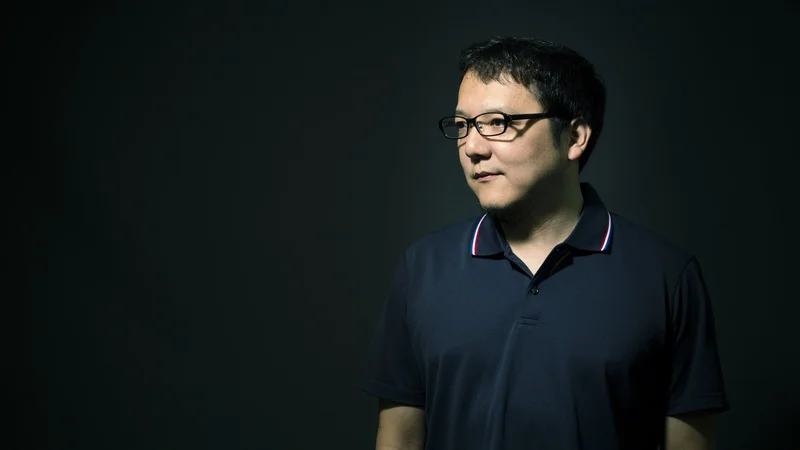
You might think that the person behind some of the most grueling ideas in games would have an air of villainy behind him. In actuality, Hidetaka Miyazaki is just a chill guy. The president of FromSoftware and director of its many games (Elden Ring, Bloodborne, etc.) is more interested in honing his own ideas and making games he'd want to play, despite by his own admission, not being too great at action games himself. Broadly speaking, that's what led to the upcoming Switch 2 exclusive in The Duskbloods, a PvPvE game that's still tough as nails, just in a different context. A little board game influence here, some Souls gameplay there, combined with a pile of unused ideas for competitive multiplayer – it's easier to see how this game came about.
As part of a hands-on preview for The Duskbloods, I was able to talk with Miyazaki to dissect the eight hours I played – everything from how it'll handle storytelling as a multiplayer-only game to how the team is creating systems in-game to maintain a healthy playerbase. We also dig into many of the FromSoft-isms embedded in The Duskbloods and how it ended up in Nintendo's hands. He also assured me that the team is by no means moving away from single-player games, although he is quite optimistic about the future of online games.
The Duskbloods is a fairly complex game and Miyazaki and I explored some of its mechanics in our conversation (namely the Sigil system, Virtue point system, and PvP dynamics) – be sure to use my preview of The Duskbloods as a primer to get a better idea of those finer details (video version below). Otherwise, you can read our discussion below, which went through a translator and was edited for clarity and readability.
IGN: The Duskbloods is quite different from anything you've made so far, even coming off of Elden Ring: Nightreign. Where did these ideas come from and what was the driving force behind doing it?
Miyazaki: I guess there's not really one thing that specifically served as inspiration, but just to go back we initially had talks with Nintendo and this was one of the things we pitched. I think in a lot of our previous titles, such as Demon's Souls and the Dark Souls series, there were a lot of unique online elements that were implemented, things like the Covenant system and Invasions. In addition to that, there were also a lot of other things that we wanted to try, things that seemed like great ideas, but didn't really fit in the context of a single-player game or within the context of those games, specifically. Over time, a lot of those ideas piled up, things that you wish you could have done here and there. Having an outlet for them, somewhere we can find a place where they all fit, or can be made to fit specifically in that multiplayer context, is something that was always at the forefront of my mind.
**IGN: You'd previously mentioned that board games have been a great influence. I want to unpack that a little bit to get an idea of what you see in board games and rulesets, what really spoke to you and how that made it into what The Duskbloods is now. **
Miyazaki: So, there are two points I would say that can specifically be pulled from the board games like you had referenced. The first is the Virtue system that are basically victory points, something similar to that. That's something that isn't as direct as just battling against each other, right? It's not directly a PvP thing. It's a common system in a lot of board games and something that through my own experience of playing board games has definitely rubbed off on me and it's been something that I've constantly thought about. I didn't watch those a lot.
The other thing is the Sigil system, which is very similar to a lot of RPG elements you might find in a tabletop RPG, for example. In the past when I played games like that, a lot of it was basically rolling dice to determine certain aspects of your character, and that was pretty much the extent of it. In my mind, I'd always wanted to have a way of controlling not just that, but the relationships between players and a variety of other elements that might be out of the scope of a TTRPG. Having gameplay elements for that is definitely something that I've been thinking about as well.
IGN: Following up on this being a Switch 2 exclusive, is there more you can share about how and why you went with Nintendo, a little bit more detail about how the partnership came about? I know you said that you pitched this and it's pretty much the idea from the start.
Miyazaki: In terms of the reason that we initially decided to go with Nintendo, we had had an opportunity to discuss the idea for the game with them and I think they seemed very excited and very receptive to the idea, they seemed very forward thinking in terms of how to do it. Before considering the business aspect of it, that alone was something that I found very appealing and gave me a lot more reassurance for moving forward with this.
Of course the game isn't out yet so there are more things to consider, but in terms of the relationship currently and how we think it's going, up until this point – the systems and the overall ruleset of the game are very unique, and I think having someone who can constantly give us feedback, support, additional ideas, and the balancing first of all because these features are quite complex and difficult – having this relationship is definitely key to that. Also with the complexity of the systems, the onboarding tutorials and making sure players understand how the game works and how to succeed in the game is something we've historically not been super great at conveying instantly. We've definitely just dropped players in and hoped they would figure it out. In this case, Nintendo is definitely the right partner for better conveying that information in a way that is understandable to the player; it definitely suits their strengths.
IGN: Yeah, FromSoft games have always been like, "Here's the world, you figure it out!" The Duskbloods has a multi-step tutorial, which was great for the basics. So, I want to get into how you're thinking about finding and maintaining an audience that's going to stick with the game, given that it does have a lot of complexities with a higher barrier to entry than most multiplayer games.
Miyazaki: This is probably something you could say for all of our games, but we don't really have a set audience in mind at the start. It's very much showing that this is what I wanted to make; the motivation is that this is a game I want to see exist. Personally, I am not very great at these high-intensity action games and things like PvP. So, at the start, the audience really is just myself while thinking about how I would go at this. Are there systems in place that I would enjoy, that cater to me as a player, not being someone who's really into that intense PvP? That's a lot of where it starts.
In the Network Test version, obviously a lot of the features are somewhat limited, but in the final version, there's a lot of character customization, lore and story, things you can enjoy at your own pace as well, aside from the actual gameplay. There are definitely a lot of ways to play the game and a lot to enjoy, so fans of our other games should always be able to find something that they can latch onto and enjoy.
IGN: While there are multiple phases and you can commit to the PvE aspects, you always have to do PVP in the end if you make it that far, at least from this build we played. That might not be a favorite aspect for folks who come to FromSoftware games, but you mentioned earlier that there are other types of endgame phases that lean toward PvE. I want to get an idea of how you're accounting for players who might not like PvP and what you have planned for those kinds of players.
Miyazaki: You mentioned it a bit earlier, but there is a co-op final phase that does exist. Through character customization, you can set things up so that if you prefer that, it's taken into account. That's one potential answer. But like you mentioned, besides that, you will have to fight two other players in the final round. That doesn't necessarily mean that you have to be great at PvP in order to win. In order to further explain that, outside of the Network Test version and in the full version of the game with the customization features you'll have access to, the Kin [computer-controlled companions] can be further emphasized, and you can customize your character to further supplement their power to turn them into someone who can fight for you while you take a bit of a backseat. There will definitely be a section of the customization that caters towards that playstyle for people who don't want to necessarily always be in an intense PVP thing, even if they make it to the end and want to take more of a backseat and enjoy the game in a different way. We're trying our best to cater to that playstyle as much as we can, currently.
Making a keep into the final round as one of the top three in itself is something that we see as amazing. It's definitely very challenging and very hard to do. Our hope is that we can continue to work on how that's portrayed and rewarded so that everyone feels like it's a big moment – having things like story cutscenes and the way information is conveyed to players to show what they've done is amazing even if they don't necessarily win. We don't want players to feel like unless they win, it was just a waste of time or anything. We definitely want them to understand it's not something that's easy to do by any means even if they're not great at PVP.
IGN: On the flipside, some of us here really like the PvP and we're gathering around each other's screens during the final phase. Some of us are deep in fighting games and it feels like it's tapping into that flow and vibe. Have you considered having something that's more PvP focused?
Miyazaki: While there isn't a specific mode that we plan on having available in the final game, there will be a system very similar to how Invasions work in some of our previous games where players can join a match as the other eight players are already in that match, and you're essentially the ninth player on top of that. You don't have to gain Virtue points or anything, your goal is to just do PvP. Systems like that are something we definitely have planned, and I think for those who that's their itch, hopefully that will scratch it to the extent that you've mentioned.
IGN: Being a multiplayer game in this day and age may come with certain expectations like constant updates and new content. How are you thinking about post-launch support and how are you going to approach that once the game comes out?
Miyazaki: In terms of things like bug fixes and balancing, we plan on supporting that as much as we can, and we have experience with Nightreign when it comes to multiplayer games and the level of support that's required to keep those playable and balanced. We're definitely going into The Duskbloods with that in mind. In terms of a content roadmap, we're not really at a point where we can talk about that.
**IGN: FromSoftware's development philosophy has very much been making a game that players adapt to. In a multiplayer setting, players are going to have a lot of opinions and you'll get a lot of feedback. How much are you willing to adjust the game based on that feedback? **
Miyazaki: With it being a multiplayer game, there's definitely a level of listening that we would have to do and taking in that feedback, more so than a single-player game. But I would say it's comparable to the multiplayer in some of our other games. I think with The Duskbloods being so complex and there being so many different ways to play, there's a lot that even we really can't see currently in terms of what players will latch onto and what players might want to change. If anything, we're looking forward to the feedback because it helps us further clarify what it is that we want to do with the game. It's definitely something we are looking forward to, for sure.
**IGN: Are there any specific variables you're looking at right now with the Network Test in terms of adjustments, whether it be how Virtue points are calculated or in-match events? I want to get an idea of how much you're pulling the levers and adjusting things as you see as people start to play this game. **
Miyazaki: I would say that the Sigil system is something we're very curious about in terms of how players will engage with it and if players will enjoy it – if there are things that need to be changed or adjusted, or just seeing what players latch onto is something we're very curious about. We have a couple of our own ideas, but we'd definitely want to see this in action and see how players approach that system. More specific to the Network Test version is the degree to which certain elements are randomized and non-randomized, things like item and enemy placement or map events. It's hard to say at this point if the way we have it currently is the best, we'd like to see how players engage with it and then we can actually take in the feedback and see if maybe some aspect is a little bit too random or if it actually works better being completely predetermined. Hopefully we can strike a really good balance that meets everyone's expectations.
**IGN: Have you been thinking about the skill gap widening as time goes on? As the game matures a couple months down the line, there are going to be a lot of high-skill players who know exactly what to do. But I imagine you still want it to be welcoming to newcomers to learn the game and still have a good time. Is that also just something you have to see over time? **
Miyazaki: In terms of really, really good players, we definitely plan on having the matchmaking system work in a way so that it's ranked, and players who are really good tend to be matched with other players who are great, and players who are new tend to be matched with other new players just to avoid situations like you had mentioned. Another element is that, even if you're not necessarily always winning the matches or making it to the end, there are things that you can unlock through just gameplay like story content and customization for your character which should allow you to enjoy it outside of the actual combat. We're hoping that can at least draw players in initially – they can enjoy the game for what it is, and enjoy the story and the world. And then from there, if they want to continue to get better at the actual matches, then that's something that they can do as well.
This might not be something that comes out initially and may come a bit later on, but we're definitely considering ways to build a relationship between veteran players and new players – something that's positive and not always scary or something they'd want to avoid. For example, things like event customization, having certain in-match events be very rare or have higher chances of appearing if you're in a game with someone who has been playing for a really long time. Or having the Alliance system done in a way where you can specifically say that you want to be paired with someone who's really good and has a high rank. And the player who's high-rank can maybe have their settings prioritize pairing with newcomers if they want to help them out, very similar to leaving signs in front of a boss in our other games. We want this to be positive for both players, veterans to feel like they're contributing to the newcomers and the newcomers to feel like they're being accepted and having fun with others. Making sure they're not split to where they don't want to interact with each other. It's definitely something to consider and something we want to look at in a positive way.
**IGN: Storytelling has been some players' favorite parts in FromSoftware games. We have lore deep dives and fascinating video essays, and it's not just item descriptions or cryptic dialogue. But with The Duskbloods being multiplayer-focused, and not like Nightreign being attached to Elden Ring, how are you handling storytelling here? I see a lot going on in The House of Night hub area, but to what extent are you emphasizing story? **
Miyazaki: In terms of the storytelling, you had mentioned The House of Night and that's definitely one aspect of it, having NPCs appear and go into cutscenes to inform or explain something, some of the classic formula for sure. In addition to that, there's character customization where unlocks and new abilities for your character that have meaning to them. They have some sort of backstory that ties into that character's memories and their history, scenarios like that which players can enjoy.
This being a multiplayer game, we wanted to have a way to properly convey the story and have the story progress for these characters within the context of a multiplayer match so it doesn't just exist outside of gameplay. And the way that we've ultimately thought of doing this is through the Bloodlines system, which is essentially the customization system that we've been mentioning. There are relationships between some of these characters that might not initially be apparent, but can be shown based on them being in a match together. Another player with one of those characters with having a certain Sigil equipped or maybe during a certain event, that could create moments that unlock aspects of the story. There might be unique dialogue, or things you can find out through almost random chance scenarios where you realize, like, oh, these characters actually connect in a certain way. You can just jump into an online match and still find things out about the story unexpectedly in some cases. It's something we thought was a great fit for the multiplayer format.
We put a lot of emphasis and thought into having unexpected dramatic moments occur in the gameplay just between other players, but also in the form of those story elements – having you jump into a match and find out something that you didn't know about a character or always having something exciting and new happening, it's something we took into account. And on the term we mentioned called Bloodlines, this is a feature you'll check in The House of Night. And as some of these meetings happen online, different elements of it will unlock and you'll see your Bloodline expand.
IGN: Aside from a roadmap and content plans in future, do you see this style of storytelling as something that can evolve with the game as well?
Miyazaki: While nothing specific in terms of additional content, we definitely do see the story and the relationships between our characters developing with additional content. We want that to be the case, for sure.
**IGN: Going from Nightreign to The Duskbloods, is there a broader motivation in doing back-to-back multiplayer games? You mentioned simply having a bunch of ideas piled up and just wanting to do something with them. But how does this represent FromSoftware and what does it mean for the future? **
Miyazaki: At the end of the day, our motivation is always to just make a game that we want to play, something we've been wanting to make. Like you had mentioned, this time around there were a lot of ideas that had piled up that I wanted to incorporate into a game. On the topic of Nightreign, it's funny because there was never really any big plan that these two games [Nightreign and The Duskbloods] would both release next to each other. I mean, that's a different director, but both of those ideas just coincided with being multiplayer games. It's not necessarily some big reveal saying that this is the direction we plan to go moving forward. We still have a heavy focus on single-player content as well. This is just something that happened to work out the way it did.
Personally, it's very fun to make a multiplayer game like this. It's not something we've done a lot and we're looking forward to seeing players' reactions and getting the feedback. But it's like, the more you work on something multiplayer for a long time, if anything, it scratches that inch only to want to make something single-player again.
IGN: It's like the focus on one feeds back into wanting to do the other!
Miyazaki: Oh yeah, for sure!
IGN: I know you mentioned this game was a bit in development since 2021, but so much has changed in the gaming industry. We've seen a lot of multiplayer games launch then fall by the wayside very quickly. Of course, FromSoftware has its own reputation with a lot of success to back it up. But philosophically, how do you see the multiplayer landscape and how do you feel about some of the trends of the gaming industry with regard to multiplayer games as you enter it?
Miyazaki: I would say, in terms of trends and the direction of the industry in general, it's not really something that I look at too much, if at all. At the end of the day, I'm just focused on making what I've been wanting to make, regardless of how viable that is from a business standpoint. I'll have a vision for a game, and I'm not super great at determining if this is going to be the most successful thing. I think that's why having this relationship this time with Nintendo is great because there's a lot that we can lean on them for while just focusing on the actual gameplay and what it is that I personally wanted to make. They can make it work outside of that.
When seeing other multiplayer games, there's always a bit of us wanting to put our own spin on it as far as how we'd do it or implement our ideas. Multiplayer games and online games in general, being able to play with other people is a very special thing. I think there are a lot of emotions probably behind it that coincide with the experience which are somewhat different from playing a single-player game, even if they are very similar.
As for online games, I would say there's definitely a bright future. There's always going to be a need for people to interact with others. Even with The Duskbloods, there's probably still a lot that we could have done and can do, so it's never a finished book when it comes to multiplayer games. I definitely don't look at it negatively at all.
Michael Higham is an editor at IGN who regularly contributes with reviews, previews, features, and news in written and video form. He's usually entrusted with covering long RPGs and tech products, but he's got range when it comes to games. You'll also catch him at events and hosting video content, including IGN's weekly podcast Unlocked.