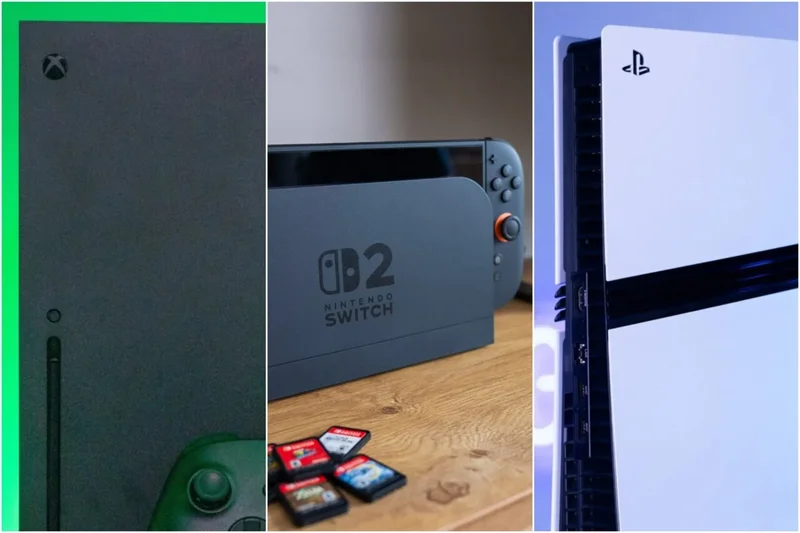
Starting Sept. 1, every new-in-box major gaming console will cost more than it did at launch. Thatâs proving a major hurdle for Sony, Microsoft, and even Nintendo, which are all seeing flagging sales for consoles and basically everything elseâincluding peripherals and games. The news should make the big three gaming brands concerned about the future, especially if they plan to launch even more expensive hardware.
July was an especially bad month for console makers, according to data from analyst firm Circana published by Bloomberg. U.S. spending on console hardware was down 29% compared to the same time last year, down to $282 million. Nintendoâs Switch 2 was still leading the pack in terms of new console sales. Total console sales numbers have not been this bad since the start of the COVID pandemic, according to Circana.
Nintendo reported earlier this month in its latest earnings report that console sales were down 34.4% compared to the same time last year, though that was during the console’s original launch, which will necessarily see higher sales. However, it doesn’t seem like thereâs a mass of people dropping money on a Switch 2 before Nintendo hikes the price from $450 to $500 starting Sept. 1.
July 2026 U.S. Video Game Market Highlights Thread from Circana – U.S. video game spending dropped 10% in July, to $4.5 billion, despite the debut of several hit new releases.
— Mat Piscatella (@matpiscatella.bsky.social) 2026-08-20T13:05:47.456Z
Mat Piscatella, the director of Circanaâs video game division, wrote on Bluesky that accessories spending was also down 6% compared to July 2025. Fewer people were buying racing controllersâdown 26%âdespite the launch of super-popular racing games like Forza Horizon 6 in May.
You can blame price hikes for the lionâs share of console sale woes. Piscatella told Bloomberg, “Higher hardware prices driven by the RAM and component crisis have significantly impacted the selling rates of both PlayStation 5 and Xbox Series, with a price hike for Nintendo Switch 2 hardware coming.â An Xbox Series X with an optical drive costs $800, $300 more than it did at launch in 2020. A PlayStation 5 with a disc drive demands $650 compared to the $500 launch cost. While Sony recently reported that console sales were down, it managed to stay profitable thanks to U.S. tariff refunds. Xbox, in the meantime, is only holding on until it can launch a next-gen console.
There is no question this is a bad time for the gaming industry, with the price of RAM exploding due to the demand for memory from AI hyperscalers. At this point in their lifecycle, Xbox and PlayStation would usually have reduced prices to keep hardware moving as they prepare for the next generation of consoles. Itâs clear that not even the impending release of Grand Theft Auto VI in November is helping to move gaming hardware. Games themselves are similarly suffering in this downturn. Content sales among all platforms, including PC and VR, whether digital or physical, were down 9% year-over-year.
This news doesnât spell anything good for the next-gen Xbox, dubbed Project Helix, or the impending PlayStation 6. Numerous leaks suggest both consoles will be more powerful than the Series X or PlayStation 5 and therefore will demand a higher price tag. Sony CEO Horoki Totoki told The Wall Street Journal this week that the company doesnât have a set planned release date for its sequel console nor its rumored PlayStation handheld.
Meanwhile, Xbox CEO Asha Sharma recently said that we’ve “reached a point where it will be hard to imagine that mass audiences can afford thousands of dollars to spend on a console generation.â The numbers are saying sheâs right. The lingering question is what the hell console makers are going to do about it.