TL;DR
Taco Bell has expanded voice AI to 890+ restaurants across 38 states. But the more telling data comes from independent mystery-shopper testing: Bojangles (powered by Hi Auto) recorded a 3% employee intervention rate versus 30% at Taco Bell and 33% at Wendy’s. Hi Auto processes 100M+ orders annually across ~1,000 QSR stores. The drive-thru AI market is shifting from pilots to operating decisions, and platform maturity is becoming the differentiator.
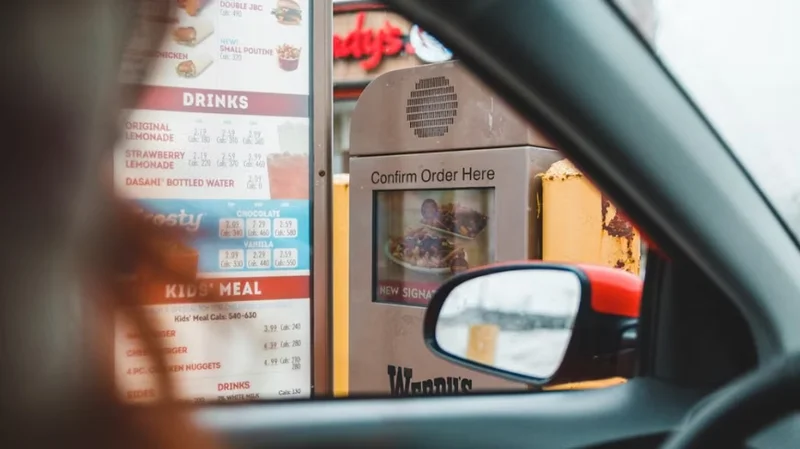
Voice AI in the drive-thru is becoming less of an experiment and more of an operating decision for quick-service restaurants.
Food On Demand recently reported that Taco Bell has expanded its voice AI technology to more than 890 U.S. restaurants across 38 states, deepening its partnership with Omilia. The deployment follows a broader wave of adoption from brands including Wendy’s, Bojangles, Taco John’s and Zaxby’s, signaling that automated ordering is moving beyond isolated pilots and into day-to-day restaurant operations.
For restaurant operators, the appeal is straightforward. Drive-thrus are among the most labor-intensive parts of a QSR operation, combining high transaction volumes with noisy environments, constantly changing menus and customers who rarely order exactly according to a script. Voice AI can take on the ordering interaction while employees focus on food preparation, hospitality and other tasks inside the restaurant.
But the most important story may not be which restaurant brand has announced the largest rollout. It may be which technology platforms have demonstrated that voice AI can work repeatedly across different brands, markets and operating environments.
The Technology Partners Behind The Headlines
Restaurant chains naturally attract the headlines because consumers experience the technology at the speaker box. Yet the broader footprint of the category increasingly sits with the technology providers powering those deployments.
Hi Auto, for example, operates its AI Order Taker across roughly 1,000 QSR stores spanning the U.S., U.K., Australia, and New Zealand. The company says its platform processes more than 100 million drive-thru orders annually, demonstrating a level of transaction volume that is difficult to achieve through a single-brand deployment.
That distinction matters because scaling voice AI is not simply a matter of putting a conversational interface in front of a menu. The system has to handle accents, interruptions, substitutions, modifications, changing inventory, and the noisy unpredictable nature of a live drive-thru while remaining integrated with restaurant operations.
The real test, therefore, is not whether an AI system can succeed in a controlled pilot. It is whether performance holds when thousands of employees, hundreds of franchisees, and millions of customers interact with it across different restaurants.
Independent Testing Points To A Maturity Gap
Third-party research provides another way to examine that question.
Intouch Insight’s 2025 Emerging Experiences Study used mystery shoppers to evaluate voice AI at Bojangles, Taco Bell and Wendy’s. Across 120 visits where voice AI was confirmed to be in use, employees intervened in 22% of interactions. But the differences between individual deployments were significant.
Bojangles, where the AI order taker is powered by Hi Auto, recorded an employee-intervention rate of just 3%, compared with 30% at Taco Bell and 33% at Wendy’s. It also produced the highest share of shoppers describing the interaction as “easy and smooth,” at 67%, versus 57% for Taco Bell and 23% for Wendy’s.
The Bojangles results also showed a 40-second improvement in wait time and 100% speaker clarity. The takeaway is less about declaring one brand a winner than demonstrating how materially deployment maturity can influence the customer experience.
Scale Becomes The Differentiator
That maturity is increasingly reflected in how restaurant operators recognize their technology partners.
In 2025, Bojangles named Hi Auto its “Legendary Supplier of the Year,” recognizing the technology company’s role in deploying its Bo-Linda AI Order Taker across more than 400 restaurants at the time. The award was notable because it represented the first time a technology partner had received the honor from the restaurant chain.
For QSRs, this kind of relationship points toward a different definition of AI success. The goal is not to eliminate people from the drive-thru. It is to give restaurants additional capacity at a time when labor availability, service speed, and revenue growth remain critical operating priorities.
When an AI system can consistently handle routine ordering at scale, employees can spend more time on the parts of the customer experience that require human attention. At the same time, restaurants can use conversational ordering to support throughput and opportunities such as suggestive selling.
The Next Stage Of Restaurant AI
Taco Bell’s expansion is therefore bigger than a single rollout. It is evidence that the QSR industry is becoming more comfortable treating voice AI as part of the operating stack rather than as a technology demonstration.
The next competitive question will be which platforms can maintain that performance as deployments grow across brands, countries, menus and franchise systems. In that environment, purpose-built technology and accumulated real-world experience may matter more than the novelty of putting an AI voice behind a drive-thru speaker.
The restaurant industry does not need AI simply because it is fashionable. It needs technology that can work through the noise, complexity, and volume of the drive-thru, and keep working as the business scales. The companies proving that capability across multiple brands may ultimately tell the more important story than the individual restaurant chains announcing each new rollout.