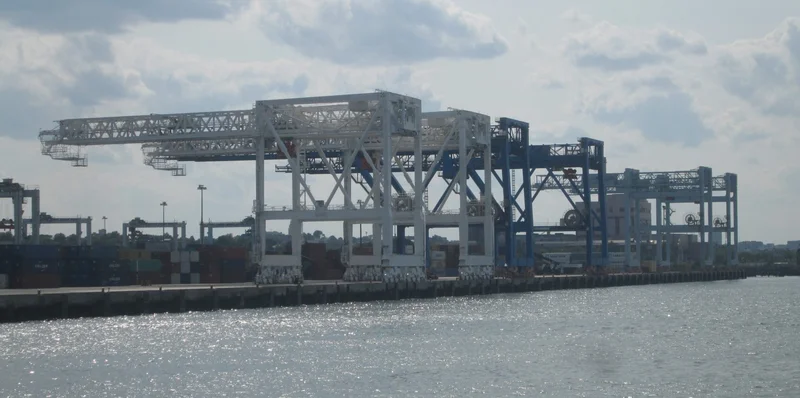
Ecuador Wants Guayaquil Wired Straight Into the Port of Shanghai
Ecuador · TRADE
Key Facts
- WhoPresident Daniel Noboa of Ecuador.
- Wherea China-Ecuador trade seminar in Shanghai.
- When20 August 2026.
- Six categoriesshrimp, bananas, cocoa, coffee, flowers, tropical fruit.
- Statusa proposal, with no signed agreement reported.
President Daniel Noboa proposed a strategic link between the ports of Guayaquil and Shanghai. He was speaking at a China-Ecuador trade seminar in Shanghai on 20 August 2026.
What Noboa Proposed
Ecuador’s presidency published a bulletin on 20 August describing Noboa’s part in a China-Ecuador economic and trade cooperation seminar in Shanghai.
In it he proposed consolidating the port of Shanghai as the main logistics and commercial platform for Ecuadorian exports.
He raised the need to agree joint commercial actions with Shanghai. He stressed that Guayaquil is Ecuador’s principal port for trade with China.
The newspaper Expreso described the same remarks as a proposal for a strategic alliance between the ports of Guayaquil and Shanghai.
That is the whole of what was announced.
The Six Products
The presidential bulletin names the export categories explicitly. They are shrimp, bananas, cocoa, coffee, flowers and tropical fruits.
The six named for Guayaquil and Shanghai are not an arbitrary list. They are close to the whole of Ecuador’s non-oil export economy.
Shrimp and bananas dominate by value. Ecuador is the world’s largest banana exporter and one of the largest farmed shrimp producers.
Cocoa and coffee are smaller but carry higher margins. Flowers, mostly roses from the highlands, are a niche with a real premium.
Some coverage of the same trip listed only five, treating tropical fruits as an extra category.
What Has Not Happened
No agreement was signed. The presidency’s own bulletin describes intentions, using the language of proposing and of raising a need.
Expreso stated plainly that this is for now a proposal by the Ecuadorian government. It reported no timetable, no investment commitment and no action by either port authority.
An independent review of the China-Ecuador agenda found no signed alliance or new port investment commitment either.
So the honest description is a presidential proposal and a talking point, not a memorandum of understanding.
We are labelling it that way because the difference decides whether an exporter should plan around it.
Why Ports Sign These Deals At All
A deal between Guayaquil and Shanghai would be about paperwork rather than concrete. They align customs procedures, inspection protocols and documentation.
For perishable goods that is the whole game. A shrimp container that clears in hours rather than days is worth more on arrival.
They can also include shared digital systems for tracking and pre-clearance. That is where the time savings actually come from.
None of that requires new cranes. It requires two bureaucracies agreeing to trust each other’s paperwork.
Where This Sits in the China Relationship
Ecuador has a free trade agreement with China that came into force in 2024. Tariffs on many of these products are already falling.
The constraint now is not tariffs but logistics and sanitary approval. Each product category needs its own protocol with Chinese authorities.
We reported on 12 August that Noboa took a shopping list to China. This Shanghai seminar is the continuation of that trip.
The pattern is a small economy trying to convert political access into specific market openings, one product at a time.
What It Would Mean for Exporters
If a Guayaquil and Shanghai arrangement is eventually signed, the beneficiaries are exporters with volume and cold chain.
Small growers rarely gain directly from a port agreement. They gain through the packers and exporters who consolidate their fruit.
The measurable test for Guayaquil and Shanghai will be transit and clearance times, not announcements. Those are published by the shipping lines rather than by governments.
Until then, nothing changes for anyone shipping today.
The Risk in a One-Market Strategy
Concentrating exports into a single destination is efficient and fragile at once. Ecuador knows this from its own history with Russia and bananas.
A sanitary suspension, a tariff change or a diplomatic dispute can close a concentrated market overnight.
That is an argument for the Brazil banana opening we reported this week as much as for the China push.
Diversification is slow and unglamorous. It is also what protects a grower when one buyer stops calling.
What to Watch
The first marker is a signed memorandum between Guayaquil and Shanghai. Guayaquil’s terminal is privately operated, so the operator would have to be party to it.
The second is product-by-product sanitary protocols with China’s customs administration. Those are the real gatekeepers.
The third is shipping capacity on the Pacific route, which is what actually limits volume.
We will report a signature if one appears. A proposal is not a signature.
Ecuador is also preparing a trial banana shipment to Brazil. Its trade diplomacy runs on several fronts at once.
China is the biggest of them by value. It is not the only one.
Frequently Asked Questions
Has Ecuador signed a deal with the port of Shanghai?
No. President Noboa proposed a link between Guayaquil and Shanghai at a trade seminar on 20 August 2026. No agreement, timetable or investment commitment has been reported.
Which six products were named?
Shrimp, bananas, cocoa, coffee, flowers and tropical fruits, according to the Ecuadorian presidency’s own bulletin.
What would such an agreement actually do?
Port-to-port arrangements usually align customs procedures, inspection protocols and documentation. For perishable goods, faster clearance is worth more than extra capacity.
Does Ecuador already trade freely with China?
A free trade agreement came into force in 2024. The remaining barriers are mostly logistical and sanitary rather than tariff-based.
Should exporters plan around this?
Not yet. Until a signed memorandum and product protocols exist, nothing changes for anyone shipping today.
Sources
This article was produced by The Rio Times’ automated newsroom system. How we use AI · Report an error