Parents dubious of Meta's claims over social media addiction - researcher
The public and police makers don't believe Meta's claim it's trying to keep children safe on social media, a senior research fellow at the University of Auckland says.
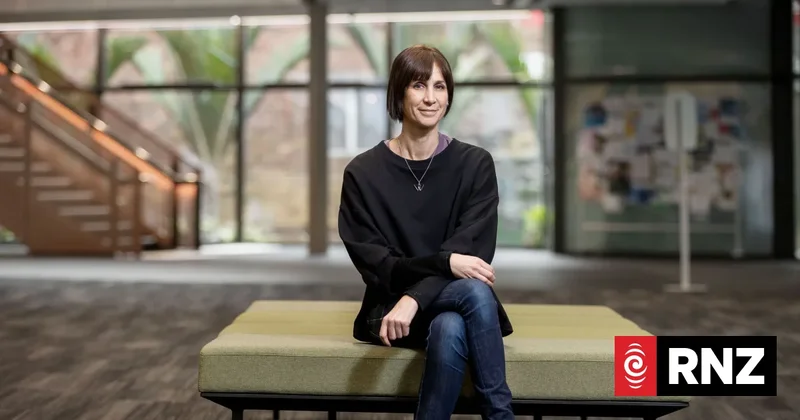
Dr Samantha Marsh says all the research shows social media is addictive and is harming many young New Zealanders. She favours following Australia's lead and introducing a ban up to a certain age.
In March, a Los Angeles jury found Alphabet's Google and Meta liable for US$3 million (NZ$5.1m) in damages in a landmark social media addiction lawsuit.
Currently, Meta is involved in a case in California brought by a group of 29 state attorneys general who allege that Meta intentionally designed its platforms to get young people addicted.
If Meta loses the case, it could fundamentally change how the company's social media platforms operate.
Meta denies the allegations, saying they're unsupported by the evidence.
Dr Samantha Marsh said social media use was very difficult behaviour to measure so all the research needed to be taken into account.
"And it's very consistently pointing in the same direction - that there are youth mental harms and also it's designed to be addictive and kids find it addictive.
"They tell us they want to use social media less but they can't."
Harm was being done to young people "at scale" with products that were unregulated in this country.
Regarding the current US court case, Dr Marsh said the public and policy makers were losing their appetite to believe Meta's claim that it was doing everything it could to keep children safe and its products weren't harmful.
"[It's] Not what the research shows, not what leaked internal documents from Meta show, and things that have come out of discovery for the trial - they're all pointing that Meta knew their products were harmful.
"They took a risk, they knew what they were doing."
Dr Marsh said she supported a social media ban for young Kiwis similar to what has happened in Australia.
"Our kids are precious and their brains are precious and currently these products have not been shown to be safe for them."
A social media ban would not be a complete solution, she said.
"But I do think it's a really important first step. Emerging data from Australia, even though it's very very early days, is showing positive impacts."
Around 90 percent of young New Zealanders were using social media and around a third of them were using it for more than five hours a day.
"We did research last year and found that 22 percent of New Zealand teens meet this criteria for problematic social media use which is essentially an addiction.
"So I do think it's important and I hope New Zealand is moving in that direction."