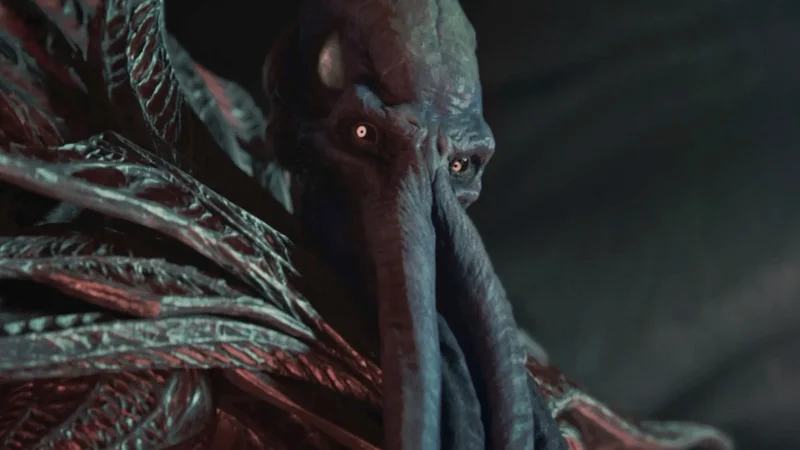
Baldur’s Gate 3 begins with a particularly nasty problem: A mind flayer tadpole has been inserted behind your eye. Eventually, it will consume your customizable player character’s brain, transforming you into a purple, tentacle-faced aberration. Most of your potential party suffers from the same affliction, and working together to get the tadpoles removed provides the game’s initial narrative momentum. Yet along your journey, the tadpole grants you psychic powers which may tempt players into following through with the transformation. In some cases, the game forces you to undergo the transformation yourself or compel it to happen to someone else.
Perhaps to capitalize on Baldur's Gate 3’s immense popularity, Dungeons & Dragons maker Wizards of the Coast is experimenting with a tabletop version of that same devil’s bargain.
A new Unearthed Arcana playtest released on Thursday explores various “Underdark Options” for D&D players. These include aberrant subclass options for Barbarians, Rogues, and Wizards. But arguably the most interesting new player option is the Path of Ceremorphosis.
“The Path of Ceremorphosis explores how a player character might gradually become a Mind Flayer,” a blog post from publisher Wizards of the Coast reads. “This path and its features are in part influenced by Tav’s potential journey to Mind Flayerdom throughout Baldur’s Gate 3.” (Tav is the default name of the player character in the game.) The post also notes that this option is partially inspired by the popularity of previous villainous options presented in Unearthed Arcana that resonated with players.
It begins at level 4 with the appropriately named Tadpole Host feat, which establishes a “symbiotic relationship” between the character and a parasite inside their body. It grants basic psionic abilities, including the Mind Sliver spell. As a player levels up, they can then acquire up to three other mid-level feats that offer unique abilities. Illithid Thrallmaker boosts intelligence or charisma while granting the Charm Person spell (a functional representation of being able to control the minds of others). Tadpole’s Safeguard is more defensive in nature with the always-useful Shield spell — worth it for martial and magical characters alike. Then Ulitharid’s Might gives you a boost to strength with a special ability to whip at enemies with your face tentacles. Since that one counts as an unarmed strike, it's probably great for Monks or Pugilists.
Once players reach level 12, they’re able to adopt the Full Ceremorphosis feat to complete the transformation. “You grow four tentacles around your mouth, your head elongates, and your skin becomes purple and slick with mucus,” the playtest material explains. Yuck! Your character also loses their original creature type and officially becomes an Aberration. (Though based on the wording, it sounds like you can still retain your original species traits.)
The full transformation also offers players the option to emphasize physical or magical combat. You can learn classic mind flayer spells like Detect Thoughts, Levitate, and the newly presented Mind Blast. Alternatively, players can specialize in Brain-Seeking Tentacles, allowing them to simultaneously damage and grapple a creature while inflicting additional psychic damage while they’re at it. The designers describe that final choice in a flavorful way: Will your mind flayer specialize in psionic spellcasting or “eating and metabolizing brains”? Players can also eventually select both of these options if they have the opportunity to claim the feat a second time.
I can see this being a powerful character build for a variety of classes, doubly so if said character already has a class or subclass invested in psionics. A full Psion class will arrive in D&D when the new Dark Sun sourcebook is released early next year, so I’m curious to see just how overwhelming a mind flayer Psion might be in practice. 2020's Tasha's Cauldron of Everything offers subclass options for the Psi Warrior Fighter, Soulknife Rogue, and Aberrant Sorcery Sorcerer — although those are tuned to the 2014 version of 5th Edition and not the 2024 5.5e rework... yet. Each of these subclasses already uses psionic energy dice, so there’s a lot of synergy between these options and the Path of Ceremorphosis should players seek a double helping of psionics.
The real draw, however, is a coherent mechanical way for BG3 fans to recreate their character from the video game at the tabletop. Like all Unearthed Arcana material, this is an experimental draft being released for public playtesting. A feedback survey is scheduled to open on Aug. 27. The document says its three subclasses and transformative feat path “might be included in a future product,” so the final versions could change significantly. More broadly, this does seem like a strong indication that we're bound to get an entire sourcebook focused on the Underdark in the near future.
Will you embrace the forbidden psionic power and let the tadpole consume your brain?