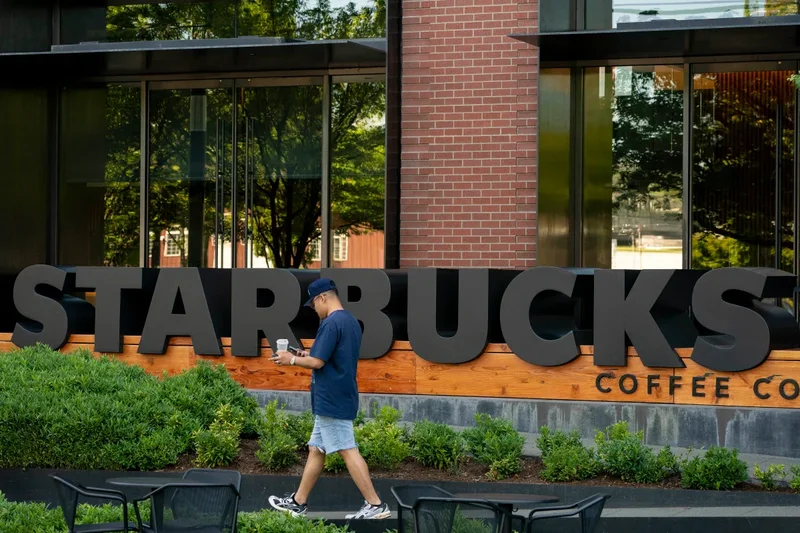
Starbucks, America’s largest coffee chain, has announced it will lay off 224 corporate and remote employees from its Seattle headquarters, according to a Worker Adjustment and Retraining Notification (WARN) notice obtained by The Independent.
“The expected date of the first separations will be October 19, 2026, with all separations completed by November 1, 2026,” the company wrote in the Thursday notice.
The cuts represent a small slice of the company’s global workforce of 381,000 people as of September 2025, according to Starbucks’ fiscal 2025 annual report.
The company laid off 120 employees at its Seattle headquarters who chose not to move to Nashville when Starbucks opens a new corporate office there in 2027, according to the notice. The other 104 were remote workers.
This is the eighth Washington layoff the company has done over the past two years, according to the state’s WARN database - 2,538 employees were laid off during that period.
Nearly 1,000 Starbucks employees lost their jobs in December 2025, when the company made significant cuts at its Seattle headquarters and roasting facilities, according to Washington’s WARN database.
Starbucks’ layoffs were announced soon after current CEO Brian Niccol took over the company after it fired his predecessor, Laxman Narasimhan. Niccol arrived with a reputation for turning around struggling companies.
Niccol arrived with a reputation for turning around struggling companies and promised to cut costs and improve culture at the 55-year-old brand.
Starbucks paid him handsomely in 2024, giving the executive $96 million to compensate for the stock value Niccol left behind when he exited Chipotle.
In his first month on the job, Niccol laid off 974 non-retail employees as part of his goal to reduce “non-retail headcount and expenses,” he wrote in a September 2025 statement.
Starbucks seems to have found the key to success this year, as its stock price has risen more than any other major restaurant brand in the country through July.
The company’s success comes at a time when diners across all incomes and generations entered the year planning to pull back on restaurant spending, according to a January study from consulting firm McKinsey.
Lower-income households were especially cost-conscious, with 38 percent of baby boomers saying they planned to lower their spending on food away from home.
Some 32 percent of Gen Zers planned dining cuts, followed by 31 percent of Gen Xers and 27 percent of millennials.