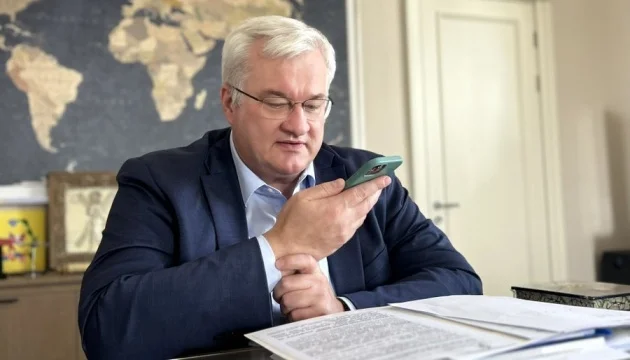
According to Ukrinform, Sybiha shared details of the conversation this on X.
Sybiha briefed Skau on Russia's massive attack on Kyiv today, as well as the security and humanitarian situation amid Russia's missile and drone terror against Ukrainian cities and critical infrastructure.
The two paid particular attention to Russia's systematic attacks on Ukrainian ports, maritime infrastructure and civilian vessels.
"For Ukraine, keeping our maritime grain corridors open is vital for our economy. But the consequences of disrupting them go far beyond Ukraine and Europe — affecting food security, prices, and supply chains across the world," Sybiha said.
They also discussed the situation around the Strait of Hormuz.
"Different circumstances, but a shared global challenge: when vital maritime routes are threatened or blocked, the effects quickly travel across borders and continents. Food, energy, trade, and global supply chains all depend on keeping these arteries open and secure," Sybiha said.
Read also:Sybiha comments on drone incidents in Moldova and Romania
He stressed that this requires a proper collective response and practical assistance.
"We need international determination to safeguard the freedom of navigation in the Black Sea and to protect global supply chains from disruption," he said.
"We agreed to continue working closely with the World Food Program. Freedom of navigation and global food security require collective solutions, and now is the time to work on them," Sybiha said.
Wheat prices could rise by about $80 per tonne, which on a global scale would mean an additional $16 billion in costs for consumers.
Global wheat prices have risen to nearly a three-year high amid Russian and Ukrainian strikes on Black Sea infrastructure.
Photo: Andrii Sybiha/X